



What is the sulfur content in titanium welding wire and its influence?
Hey there! As a supplier of Titanium Welding Wire, I often get asked about the sulfur content in titanium welding wire and how it impacts the welding process. In this blog, I'll break down what sulfur content is all about, its effects, and why it matters to you as a user.
What's the Deal with Sulfur Content in Titanium Welding Wire?
First off, let's talk about what sulfur is doing in titanium welding wire. Sulfur is one of those trace elements that can be found in the wire. It's not intentionally added in large amounts, but it can end up in the wire due to the raw materials used in its production or during the manufacturing process.
The sulfur content in titanium welding wire is usually kept at a very low level. For high - quality titanium welding wires, the sulfur content is typically less than 0.01%. This strict control is in place because sulfur can have some pretty significant effects on the welding process and the final weld quality.
The Influence of Sulfur Content
Weldability
One of the main areas where sulfur content has an impact is weldability. When the sulfur content is too high, it can lead to hot cracking in the weld. Hot cracking occurs during the solidification of the weld metal. Sulfur has a low melting point and tends to form low - melting - point compounds at the grain boundaries of the weld. As the weld cools and solidifies, these low - melting - point compounds can't withstand the shrinkage stresses, and cracks start to form.
This is a big deal because hot cracks can seriously compromise the integrity of the weld. They can reduce the strength of the joint and make it more susceptible to corrosion and fatigue. As a result, the welded structure may not be able to perform its intended function safely.

Mechanical Properties
Sulfur can also affect the mechanical properties of the weld. High sulfur content can decrease the ductility and toughness of the weld metal. Ductility is the ability of a material to deform plastically before fracturing, and toughness is its ability to absorb energy during deformation.
When the ductility and toughness are reduced, the weld is more likely to fail under stress. For example, in applications where the welded structure is subjected to dynamic loads or vibrations, a weld with low ductility and toughness may crack or break more easily. This can lead to costly repairs or even safety hazards.
Corrosion Resistance
Another important aspect is corrosion resistance. Titanium is known for its excellent corrosion resistance, but high sulfur content can undermine this property. Sulfur can react with other elements in the environment to form corrosive compounds. These compounds can attack the weld and cause it to corrode at a faster rate than the surrounding base metal.
In applications where the welded structure is exposed to corrosive environments, such as in the chemical industry or marine applications, poor corrosion resistance can significantly shorten the lifespan of the structure. This means more frequent maintenance and replacement, which can be expensive.
Our Titanium Welding Wire Offerings
At our company, we understand the importance of keeping sulfur content in check. That's why we offer high - quality titanium welding wires with extremely low sulfur content.
For instance, our [Erti - 5 Titanium Welding Wire] is a popular choice. It has a very low sulfur content, which ensures excellent weldability, good mechanical properties, and high corrosion resistance. This wire is suitable for a wide range of applications, from aerospace to automotive industries.
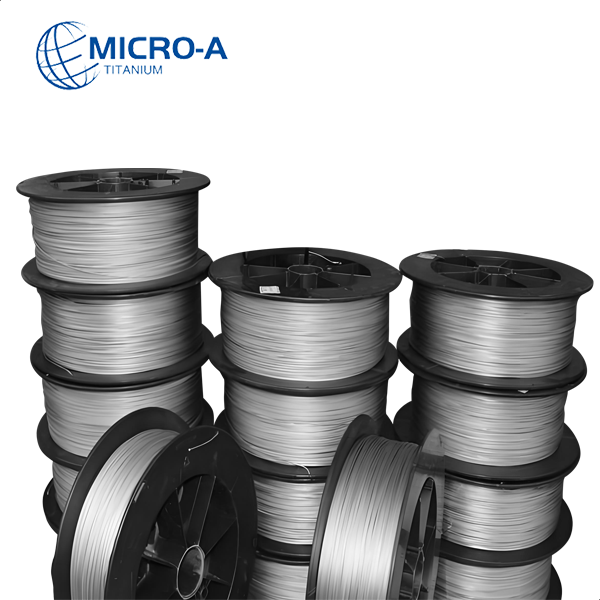
We also have [Titanium Welding Wire On Spool]. This product is convenient for continuous welding operations. The low sulfur content in this wire helps to prevent hot cracking and ensures a smooth and reliable welding process.
Another great option is our [Erti - 4 Titanium Welding Wire]. It's designed to provide high - quality welds with excellent strength and corrosion resistance. The strict control of sulfur content in this wire guarantees consistent performance in various welding applications.

Why Choose Our Titanium Welding Wire?
When you choose our titanium welding wire, you're getting a product that has been carefully manufactured to meet the highest standards. Our production process includes strict quality control measures to ensure that the sulfur content and other trace elements are within the specified limits.
We also offer technical support to our customers. If you have any questions about the sulfur content or how it affects your specific welding application, our team of experts is here to help. We can provide advice on the best welding techniques and wire selection based on your requirements.
Let's Talk!
If you're in the market for high - quality titanium welding wire, I encourage you to reach out to us. Whether you're a small - scale welder or a large manufacturing company, we can provide you with the right product at a competitive price.
We understand that every welding project is unique, and we're committed to finding the best solution for you. So, don't hesitate to contact us for more information or to discuss your specific needs. We're looking forward to working with you and helping you achieve great welding results.
References
- Metals Handbook: Welding, Brazing, and Soldering, ASM International
- Welding Metallurgy and Weldability of Titanium Alloys, John C. Lippold and David K. Matlock