




3D Printing Titanium: Technologies and Applications
Are you struggling with traditional titanium manufacturing limitations that result in excessive material waste, complex machining processes, and design constraints that prevent innovation? The revolutionary world of titanium 3D printing offers groundbreaking solutions that address these critical pain points while unlocking unprecedented possibilities in aerospace, medical, and industrial applications. This comprehensive guide explores how cutting-edge 3D titanium technologies are transforming manufacturing paradigms, delivering superior strength-to-weight ratios, exceptional corrosion resistance, and the ability to create complex geometries that were previously impossible or economically unfeasible through conventional methods.
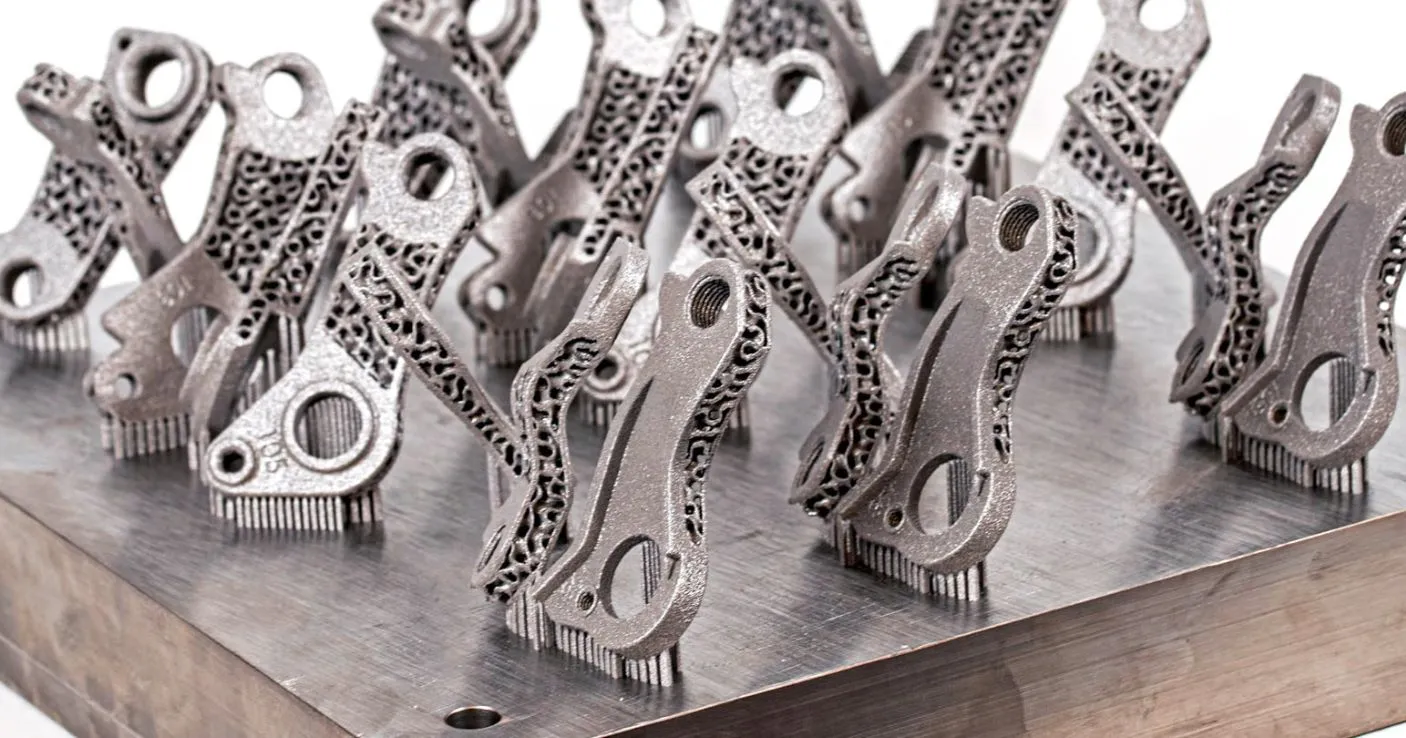
Core Technologies in Titanium 3D Printing Manufacturing
The landscape of titanium 3D printing is dominated by sophisticated additive manufacturing technologies that have revolutionized how we approach complex component production. These advanced systems enable manufacturers to transform titanium powder into high-precision, fully dense parts with exceptional mechanical properties. The most prominent technologies include Selective Laser Melting (SLM), Direct Metal Laser Sintering (DMLS), and Electron Beam Melting (EBM), each offering unique advantages for specific applications and material requirements.
Selective Laser Melting Technology for 3D Titanium Components
Selective Laser Melting represents the pinnacle of titanium 3D printing precision, utilizing high-powered lasers to selectively melt titanium powder layer by layer. This technology achieves remarkable accuracy with layer thicknesses ranging from 20 to 100 microns, enabling the production of intricate geometries with exceptional surface finish quality. The process operates in an inert atmosphere, typically argon or nitrogen, to prevent oxidation and ensure optimal material properties in the final 3d printed titanium strength components. SLM systems can achieve densities exceeding 99.5%, making them ideal for critical applications where material integrity is paramount. The technology supports various titanium alloys, including Ti-6Al-4V, commercially pure titanium grades, and specialized alloys for specific industrial requirements.
Electron Beam Melting Applications in Titanium Part 3D Printing
Electron Beam Melting technology utilizes a focused electron beam in a vacuum environment to melt titanium powder, offering distinct advantages for large-scale production and thick-walled components. This process operates at elevated temperatures, typically 700-1000°C, which reduces residual stresses and eliminates the need for support structures in many applications. EBM technology excels in producing porous structures and lattice designs commonly required in medical implants and aerospace components. The vacuum environment ensures exceptional material purity while the high processing temperatures result in superior metallurgical properties. This technology particularly benefits applications requiring high build rates and minimal post-processing, making it an ideal choice for production-scale Titanium Part 3D Printing operations.
Material Properties and Alloy Systems in 3D Titanium Production
Understanding the material characteristics of titanium alloys in additive manufacturing is crucial for optimizing component performance and ensuring application-specific requirements are met. The unique properties of titanium, including its exceptional strength-to-weight ratio, biocompatibility, and corrosion resistance, are maintained and often enhanced through carefully controlled 3D printing processes. These characteristics make titanium 3D printing an invaluable technology for demanding applications across multiple industries.
Ti-6Al-4V Grade 5 Titanium 3D Printing Characteristics
Ti-6Al-4V represents the most widely used titanium alloy in additive manufacturing, offering an optimal balance of strength, ductility, and processability. This alpha-beta alloy contains approximately 6% aluminum and 4% vanadium, providing enhanced strength and elevated temperature performance compared to commercially pure titanium. In 3d titanium applications, Ti-6Al-4V exhibits tensile strengths ranging from 900-1200 MPa, yield strengths of 800-1100 MPa, and elongation values of 6-15%, depending on the specific printing parameters and post-processing treatments employed. The alloy demonstrates excellent fatigue resistance and maintains its mechanical properties at temperatures up to 400°C, making it ideal for aerospace structural components, medical implants, and high-performance automotive applications.
Commercially Pure Titanium Grades for Additive Manufacturing
Commercially pure titanium grades, particularly Grade 1 and Grade 2, offer exceptional corrosion resistance and biocompatibility for specialized applications. These materials contain minimal alloying elements, typically less than 0.5% total, resulting in superior formability and weldability characteristics. Grade 1 titanium provides the highest ductility with elongation values exceeding 20%, while Grade 2 offers improved strength while maintaining excellent corrosion resistance. In titanium 3D printing applications, these grades are particularly valuable for chemical processing equipment, marine components, and medical devices where biocompatibility is essential. The low thermal expansion properties of commercially pure titanium, combined with its exceptional corrosion resistance, make it an ideal choice for components operating in harsh chemical environments.
Advanced Applications Across Multiple Industries
The versatility of titanium 3D printing technology has opened unprecedented opportunities across diverse industrial sectors, enabling the production of components that combine complex geometries with superior material properties. These applications demonstrate the transformative impact of additive manufacturing on traditional design constraints and manufacturing economics.
Aerospace Industry Applications for 3D Printed Titanium Components
The aerospace sector represents the largest and most demanding application area for titanium 3D printing, where weight reduction and performance optimization are critical design drivers. Modern aircraft engines utilize 3d printed titanium strength components for turbine blades, structural brackets, and heat exchangers that achieve weight reductions of 40-60% compared to traditionally manufactured parts. These components benefit from the design freedom offered by additive manufacturing, incorporating internal cooling channels, lattice structures, and optimized geometries that would be impossible to achieve through conventional machining. The excellent high-temperature performance of titanium alloys, combined with the precision of 3D printing, enables the production of components that operate reliably at temperatures exceeding 600°C while maintaining structural integrity under extreme mechanical loads.
Medical and Biomedical Titanium 3D Printing Solutions
The medical industry has embraced Titanium Part 3D Printing technology for producing patient-specific implants, surgical instruments, and prosthetic devices that offer superior biocompatibility and mechanical performance. Custom orthopedic implants manufactured through 3d titanium processes can be designed to match individual patient anatomy, incorporating porous structures that promote bone ingrowth and long-term implant stability. These implants demonstrate osseointegration rates exceeding 95% while reducing surgery time and improving patient outcomes. Dental applications include custom crowns, bridges, and implant abutments that provide excellent strength and aesthetic properties. The ability to create complex internal geometries allows for the integration of drug delivery systems and sensors within implant designs, representing the future of smart medical devices.
Industrial and Automotive High-Performance Applications
Industrial applications of titanium 3D printing span numerous sectors, including chemical processing, oil and gas exploration, and motorsport industries. In chemical processing applications, 3d printed titanium components offer exceptional resistance to aggressive chemicals and elevated temperatures, enabling the production of complex heat exchangers, reaction vessels, and piping systems. The automotive industry utilizes titanium 3D printing for high-performance racing components, including exhaust systems, suspension components, and engine parts that require maximum strength at minimum weight. These applications benefit from the ability to optimize designs for specific loading conditions while reducing material usage and manufacturing complexity.
Manufacturing Processes and Quality Control Systems
Successful implementation of titanium 3D printing requires sophisticated process control and quality assurance systems to ensure consistent part quality and performance. The complex nature of additive manufacturing processes demands comprehensive monitoring and control strategies that address material handling, process parameters, and post-processing requirements.
Process Parameter Optimization for Titanium Part 3D Printing
Achieving optimal results in Titanium Part 3D Printing requires precise control of numerous process variables, including laser power, scan speed, layer thickness, and hatch spacing. Careful optimization of these parameters ensures high part density, superior mechanical performance, and consistent surface quality. These parameters must be carefully balanced to achieve full density while minimizing residual stresses and surface roughness. Typical laser power settings range from 200-400W, with scan speeds of 500-2000 mm/s depending on the specific alloy and component geometry. Layer thickness optimization typically ranges from 30-60 microns for high-precision applications, while hatch spacing is adjusted to ensure complete powder melting and optimal surface finish. Advanced process monitoring systems utilize real-time feedback control to maintain consistent melt pool characteristics and prevent defect formation during the build process.
Quality Assurance and Testing Protocols
Comprehensive quality control measures are essential for ensuring the reliability and performance of 3d printed titanium strength components in critical applications. These protocols begin with incoming powder inspection, including particle size distribution analysis, chemical composition verification, and flowability testing. During the printing process, real-time monitoring systems track melt pool characteristics, layer adhesion quality, and dimensional accuracy. Post-processing quality control includes dimensional inspection using coordinate measuring machines, surface finish evaluation, and comprehensive mechanical testing including tensile, fatigue, and impact testing. Non-destructive testing methods such as X-ray computed tomography and ultrasonic inspection are employed to detect internal defects and ensure structural integrity.
Conclusion
The revolutionary field of 3D Printing Titanium: Technologies and Applications represents a paradigm shift in advanced manufacturing, offering unprecedented opportunities for innovation across aerospace, medical, and industrial sectors through superior material properties, design freedom, and manufacturing efficiency.
Cooperate with XI'AN MICRO-A Titanium Metals Co.,Ltd.
XI'AN MICRO-A Titanium Metals Co., Ltd., established in 2017, stands as your premier China titanium 3D printing manufacturer and China titanium 3D printing supplier, strategically located in Baoji, China's renowned titanium city. Our comprehensive product portfolio encompasses titanium sponge, titanium ingots, titanium plates, titanium tubes, titanium rods, titanium castings, titanium alloys, and specialized Titanium Part 3D Printing services. With our AS9100D aerospace certification, ISO 13485:2016 medical system certification, and strategic partnership with Baoti Group, we ensure unparalleled quality and reliability in every component we produce.
Our state-of-the-art production facilities feature advanced 3D printing systems, precision CNC machining centers, and comprehensive quality control equipment operated by experienced engineers and technicians. We offer complete customization services including drawing processing, non-standard parts manufacturing, and private customization solutions tailored to your specific requirements. Our expertise in low thermal expansion materials and exceptional corrosion resistance properties, combined with our ability to provide samples and support drawing customization, makes us the ideal China titanium 3D printing factory for your advanced manufacturing needs.
As a leading China titanium 3D printing wholesale provider, we guarantee competitive titanium 3D printing prices while maintaining the highest quality standards. Our comprehensive after-sales service includes technical support, warranty coverage, and ongoing consultation for future projects. Whether you're seeking best titanium 3D printing solutions or have titanium 3D printing for sale requirements, our team is ready to transform your concepts into reality. Contact us today at mayucheng188@aliyun.com to discover how our expertise can elevate your projects to new heights of excellence and innovation.
FAQ
Q: What titanium alloys are compatible with 3D printing technology?
A: The most commonly used alloys include Ti-6Al-4V Grade 5, commercially pure titanium Grades 1 and 2, and specialized alloys like Ti-6Al-7Nb for medical applications.
Q: What are the typical mechanical properties of 3D printed titanium components?
A: 3D printed Ti-6Al-4V typically exhibits tensile strengths of 900-1200 MPa, yield strengths of 800-1100 MPa, and elongation values of 6-15%, matching or exceeding traditionally manufactured parts.
Q: Which industries benefit most from titanium 3D printing applications?
A: Aerospace, medical device manufacturing, automotive, chemical processing, and marine industries are the primary beneficiaries due to titanium's unique combination of strength, corrosion resistance, and biocompatibility.
Q: What post-processing treatments are required for 3D printed titanium parts?
A: Common post-processing includes stress relief annealing, hot isostatic pressing (HIP), surface finishing through machining or chemical etching, and dimensional inspection to ensure specification compliance.
References
1. Frazier, William E. "Metal Additive Manufacturing: A Review of Processing, Properties, and Applications." Journal of Materials Engineering and Performance, 2014.
2. Herzog, Dirk, et al. "Additive Manufacturing of Metals: Process Characterization and Material Properties." Acta Materialia, 2016.
3. Sing, Swee Leong, et al. "Laser and Electron-beam Powder-bed Additive Manufacturing of Metallic Implants: A Review on Processes, Materials and Designs." Journal of Orthopaedic Research, 2016.
4. Liu, Sheng and Yung C. Shin. "Additive Manufacturing of Ti6Al4V Alloy: A Review of Process Parameters, Microstructure and Properties." Materials & Design, 2019.