




Aerospace Titanium Plate Selection Guide
Choosing the right aerospace titanium plate material has a direct effect on how well an airplane works, how safe it is to operate, and how much it costs in the long run for aerospace projects. When looking for materials for important structural parts, engine cases, or landing gear systems, it's important to know what makes aerospace-grade titanium high-quality. This guide shows you the most important properties, manufacturing methods, and buying strategies for titanium alloys for tough aerospace uses. It gives technically-savvy purchasing managers and sourcing specialists the tools they need to make smart, confident choices.
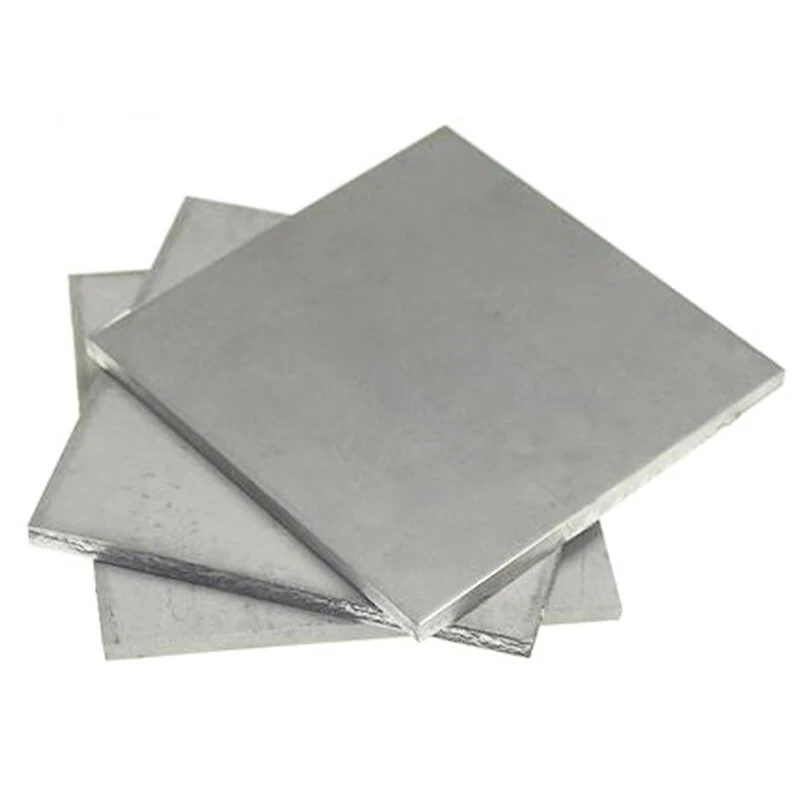
Understanding Aerospace Titanium Plates: Properties, Grades, and Specifications
Engineered flat-rolled aerospace titanium plates are mostly made from high-performance alloys like Ti-6Al-4V (Grade 5) and commercially pure grades. They are made to meet strict flight standards like AMS 4911, AMS 4902, and MIL-T-9046. These materials solve important problems in the industry by reducing weight by a large amount (about 45% lighter than steel) while still keeping their structure strong under the high cycle stress and temperature changes that happen during flight operations.
Key Material Grades and Their Applications
Ti-6Al-4V, also known as Grade 5, is the most popular type used in aircraft because it has the best mix of strength, weldability, and corrosion protection. This alpha-beta metal is made up of about 90% titanium, 6% aluminum, and 4% vanadium. It has a tensile strength of more than 895 MPa and great resistance to wear. Extra Low Interstitial (ELI) Grade 23 of Ti-6Al-4V is better at resisting breaking and being shaped, which makes it perfect for spaceship cryogenic fuel tanks. Grade 9 (Ti-3Al-2.5V), on the other hand, is used for things that need to be very easy to shape and not too strong, like hydraulic lines and parts of airplane frames that are exposed to acidic environments.
Critical Physical and Mechanical Properties
There are certain physical factors that affect how well titanium plates work in aircraft applications. Titanium has a very high strength-to-weight ratio (about 4.43 g/cm³), which is important for maximizing fuel economy and volume. The material's freezing point is around 1660°C, and its mechanical features stay the same at a lot of different temperatures. Its low elastic modulus of 110–114 GPa gives aero-structures the flexibility they need when they are loaded and unloaded quickly, and its high fracture toughness stops cracks from spreading during wear.
Another important feature is its resistance to corrosion. Titanium naturally creates a protective oxide layer that grows back when it gets broken. This gives it great resistance to hydraulic fluids, saltwater, and the weather without the need for coats. Components that are resistant to heat can work consistently in parts of an engine where temperatures hit 400°C, keeping their shape when aluminum would break.
Compliance with Industry Standards
In the aerospace buying process, you have to meet strict approval standards. For plate specs, materials must meet ASTM B265, and AMS standards set the rules for certain alloys and how they should be processed. These approvals make sure that the chemical make-up, mechanical qualities, and microstructural features are always the same. To keep the material from becoming weak, the hydrogen level must stay below 0.015 percent, and the alpha-beta microstructure needs to be carefully managed to make sure that the wear performance is the same from batch to batch.
Comparing Aerospace Titanium Plates with Other Materials: Making an Informed Choice
Material selection significantly impacts component performance, lifetime costs, and project feasibility. When purchasing workers know how aerospace titanium plates stack up against other materials, they can make smart choices that meet the needs of specific applications.
Titanium vs. Aluminum Alloys
Titanium is more expensive than aluminum types like 7075-T6, but they are easy to work with. While titanium does not need any safety processes, it keeps its power better at high temperatures and is very resistant to corrosion. Titanium's fatigue resistance makes it last a lot longer in high-stress areas like bulkheads and wing-box parts. This makes up for the higher starting material costs by lowering the number of repair gaps and increasing safety margins. Titanium cuts down on weight, which directly leads to better fuel economy and more payload capacity, which are measurable practical benefits.
Titanium vs. Stainless Steel
Although grades of stainless steel like 17-4PH are very strong and don't rust, their high density (about 7.8 g/cm³) makes them too heavy for aircraft uses that need to be light. Titanium plate are as strong as or stronger than steel plates, but they are almost half the weight. This lets builders make the most of how efficiently structures work. This weight advantage lets stronger designs be made for landing gear systems and connection parts without affecting the aircraft's performance.
Performance in High-Stress Environments
When parts are used for a long time and are loaded and unloaded millions of times, fatigue resistance becomes very important. Titanium is an important material for building parts because it has a high wear strength and is very resistant to stress corrosion cracking. The material is thermally stable, so it keeps its shape even when temperatures change a lot during takeoff, cruise, and landing. This is important because other materials might have problems with thermal expansion.
How Aerospace Titanium Plates Are Manufactured: Process and Quality Control?
The quality of the manufacturing process directly affects how reliable and consistent the performance of the material is. Knowing how aerospace titanium plates are made helps buyers judge the skills of suppliers and make sure supplies meet project requirements.
Raw Material Sourcing and Melting Techniques
The process starts with high-purity titanium sponge that comes from trusted suppliers that can be tracked back to their sources. To get rid of interstitial flaws and make sure microstructural uniformity, manufacturers use vacuum arc remelting (VAR) or electron beam melting. These special melting methods get rid of flaws and make the regular grain structure that is needed for knowing the mechanical properties ahead of time. Modern factories use 3-ton vacuum furnaces that keep the temperature and air pressure precisely controlled while the metal melts. This keeps the material from getting contaminated, which could weaken it.
Rolling, Heat Treatment, and Finishing
After being cast in an ingot, the material is hot-rolled at temperatures between 900°C and 1000°C until it is the right thickness, which can be anywhere from 0.5mm to 100mm. The process of cold rolling improves the surface finish and the accuracy of the dimensions, making plates that can be up to 2000 mm wide and 6000 mm long. Solution treatment and age processes improve the alpha-beta microstructure, making it strong and flexible enough to meet grade requirements. You can choose a mill finish, a polished surface, or unique treatments that are made to fit the needs of the application.
Rigorous Inspection Protocols
Quality assurance includes many steps of checking. Ultrasonic inspection is a type of non-destructive testing that finds problems inside a material, and X-ray analysis proves that the material is uniform. Chemical makeup analysis checks that the alloy content is within the limits set by the standard, and mechanical property testing checks that the tensile strength, yield strength, and elongation factors are correct. Checking the accuracy of the dimensions with high-precision tools makes sure that the plates match the drawing specs within the allowed ranges. Material tracking systems keep track of every step of the production process, from receiving the raw materials to the final review.
Procurement Strategies: How to Source and Buy Aerospace Titanium Plates?
To do buying right, you need a plan that balances quality control, cost control, and the dependability of the supply chain when sourcing aerospace titanium plates.
Evaluating Supplier Credentials
Verification of approval is the first step in choosing a supplier. ISO 9001 confirms basic quality standards, while AS9100D certification shows quality management systems that are specific to aircraft. Ask for proof that the materials meet certain standards, such as certificates, test results, and records of their traceability. Check out suppliers' equipment stocks to see how much they can make. For example, suppliers with 2,500-ton hydraulic presses and advanced CNC machining centers can handle complicated shaping tasks and close standards.
Ordering Considerations and Customization
Knowing the minimum order quantity, normal wait times, and sample availability for aerospace titanium plate helps make sure that the timelines for buying and the schedules for projects are in sync. Reliable providers offer custom sizing choices that can meet particular size needs without charging too much for tooling. Sample evaluation programs let you test the features of the material and the quality of the surface before committing to large amounts of production. This lowers the risk of starting a new relationship with a seller.
Supply Chain Transparency and Delivery Reliability
Lack of materials and changes in quality can be avoided with stable supply chains that can be tracked. Check your supplier's inventory amounts and production ability to make sure they can regularly meet your volume needs. Talk about operations and shipping options, like air freight for urgent needs or sea transport for large orders, to get the best arrival times and lowest shipping costs. Respondent technical contact during the procurement process shows that a seller cares about fixing problems and serving customers.
Trusted Brands and Suppliers: Finding Reliable Aerospace Titanium Plate Manufacturers
Supplier image and production skills have a big effect on the success of a project and the value of a long-term relationship in the aerospace titanium plate market.
Global Manufacturing Hubs
China's titanium industry, which is based in Baoji, has grown into a major production hub with high-tech factories and low production costs. Chinese suppliers like XI'AN MICRO-A Titanium Metals Co., Ltd. use both new and old quality control methods to serve aerospace companies around the world from production plants that are AS9100D-certified. The company's strategic relationship with Baoti Group gives it access to high-quality raw products and full support for its supply chain.
When looking at possible sources, the ability to make things is very important. Technically advanced facilities have vacuum melting systems, heavy forging presses that can hold up to 50 MN, and cold rolling lines that can make foil as thin as 0.005mm. Digital machining centers make it possible to precisely make complicated profiles based on models provided by the customer. This supports value-added services that go beyond just providing materials.
Certification Verification and Quality Assessment
Checking licensing papers isn't enough; you should also look at how quality control is actually done. When suppliers fully track materials from the sponge to the polished plate, it's clear, which meets the needs of aircraft audits. Ask for tours of the facility or thorough process documentation to make sure that the claimed skills match up with how the business actually works. Testimonials and case studies from satisfied customers can help you figure out how reliable, quick to respond, and good the expert support is.
Value of OEM Partnerships
Original equipment maker ties give you access to types and sizes that aren't easily found through commodity channels. If a supplier offers technical support, they can help you choose the best alloys for your needs, which will improve both performance and cost. During the creation of a component, technical consulting services that offer finite element analysis help or forming suggestions are very useful.
Conclusion
To choose the best aerospace titanium plate for aerospace uses, you need to know a lot about the material's qualities, how it's made, and what the provider can do. For most structural uses, Ti-6Al-4V is still the standard because it works well, is easy to find, and has been used in many different ways. For procurement to go well, it's important to find a balance between material requirements and seller dependability, cost competitiveness, and supply chain openness. Purchasing managers can get materials that meet strict aerospace requirements while staying within project timelines and budgets by working with qualified makers who have strong quality control, advanced production skills, and quick response times for technical support.
FAQ
What certifications are essential when purchasing titanium plates for aerospace use?
AS9100D certification proves that quality control systems used in aerospace are in line with best practices in the business. For plate specs, material approvals must use ASTM B265 and for alloy composition, they must use the appropriate AMS standards. Ask for mill test results that include records of chemical analysis, testing of mechanical properties, and heat treatment. Full traceability paperwork makes sure that materials meet the needs of aircraft audits and follow the rules.
How do different titanium grades affect aerospace component performance?
Grade 5 (Ti-6Al-4V) is the most suitable for general construction uses because it is strong, easy to join, and widely available. Grade 23 (Ti-6Al-4V ELI) is tougher and can be used in cold environments and for important safety parts. Grade 9 (Ti-3Al-2.5V) is easier to shape into complicated forms and use for tubes. To get the best performance, the material you choose should match the stress levels, working temperatures, and manufacturing needs.
Can suppliers provide custom dimensions and specialized processing?
Reliable aerospace titanium plate providers can cut to your exact specs, machine precisely, and apply special finishes to the surface. Dimensional limits of within ±0.1mm, a range of surface finishes from mill finish to finished, and changes to the heat treatment process are all things that are usually possible. Talk about the need for customization early on in the buying process to make sure that the buyer can meet the needs of the project without needing too many lead time extensions.
Partner with MICRO-A for Your Aerospace Titanium Plate Requirements
XI'AN MICRO-A Titanium Metals Co., Ltd. is ready to help you buy aerospace titanium plates because they have a wide range of manufacturing skills and scientific knowledge. Our production facilities in Baoji, China's titanium capital, are AS9100D-certified and use advanced vacuum melting systems, 2,500-ton forging equipment, and precise CNC machining centers to make titanium plates that meet the strictest aircraft requirements. We are experts at making Ti-6Al-4V (Grade 5) plates in a range of thicknesses and widths, from 0.5 mm to 100 mm and even unique sizes to fit your exact needs.
We are a direct manufacturer with more than five years of experience in this field. We offer reasonable prices, reliable delivery schedules, and full material tracking from the sponge to the final review. Our engineering team offers expert advice on how to choose the best alloy, tools for evaluating samples, and quick contact throughout the whole procurement process. Our wide range of services and focus on quality make sure that the materials you need meet your performance and approval needs, whether you need standard plates for structural parts or custom-made parts for engine systems. Get in touch with our team at mayucheng188@aliyun.com to talk about your unique project needs and see what makes MICRO-A the best at supplying aircraft titanium.
References
Boyer, R., Welsch, G., & Collings, E.W. (1994). Materials Properties Handbook: Titanium Alloys. ASM International, Materials Park, Ohio.
Donachie, M.J. (2000). Titanium: A Technical Guide, 2nd Edition. ASM International, Materials Park, Ohio.
Peters, M., Kumpfert, J., Ward, C.H., & Leyens, C. (2003). Titanium Alloys for Aerospace Applications. Advanced Engineering Materials, 5(6), 419-427.
Lutjering, G. & Williams, J.C. (2007). Titanium, 2nd Edition. Springer-Verlag, Berlin Heidelberg.
Fanning, J.C. (2005). Properties of TIMETAL 555 (Ti-5Al-5Mo-5V-3Cr-0.6Fe). Journal of Materials Engineering and Performance, 14(6), 788-791.
ASTM International (2021). ASTM B265-20a: Standard Specification for Titanium and Titanium Alloy Strip, Sheet, and Plate. West Conshohocken, Pennsylvania.