




Best Titanium Pipe Fitting Finishes and Surface Treatments
Are you facing premature equipment failure in your chemical processing plant due to corrosion? Worried about contamination risks in pharmaceutical piping systems? The right surface finish on your Titanium Pipe Fitting can mean the difference between decades of reliable service and costly downtime. This comprehensive guide reveals how specialized finishes and surface treatments transform titanium pipe fittings into exceptional performers across demanding industrial applications, ensuring maximum corrosion resistance, enhanced cleanability, and extended operational lifespan while reducing your total cost of ownership.
Understanding Titanium Pipe Fitting Surface Treatments
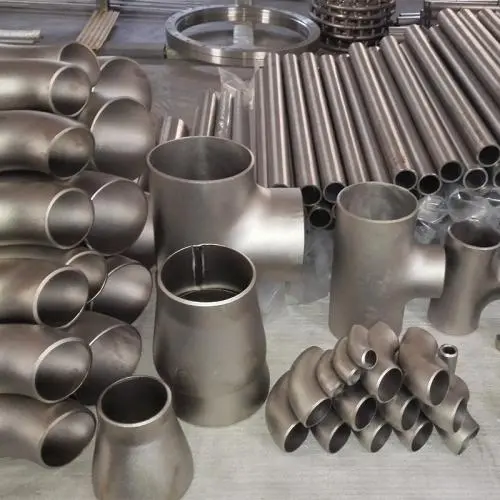
Titanium Pipe Fitting surface treatments represent critical engineering decisions that profoundly impact performance characteristics, operational longevity, and maintenance requirements across diverse industrial applications. The surface finish applied to titanium fittings fundamentally alters how these components interact with corrosive environments, abrasive fluids, and extreme operating conditions. Unlike cosmetic enhancements, professional surface treatments create functional improvements by modifying surface roughness, enhancing the protective oxide layer, eliminating microscopic imperfections, and optimizing fluid dynamics within piping systems. Surface treatments serve multiple essential functions beyond aesthetics. They enhance the naturally occurring titanium dioxide protective layer, which provides inherent corrosion resistance. Advanced finishing techniques can reduce surface roughness from several micrometers to near-mirror smoothness, dramatically improving cleanability in sanitary applications. These treatments also eliminate stress concentrators that could initiate fatigue cracks under cyclic loading conditions common in aerospace and offshore installations. Furthermore, proper surface preparation ensures optimal welding conditions and gasket sealing performance in assembled piping systems. The selection of appropriate surface treatment depends on specific application requirements, including exposure to corrosive chemicals, operating temperature ranges, cleanliness standards for pharmaceutical or food processing, and mechanical stress patterns. Industries such as chemical processing, marine engineering, aerospace manufacturing, and biomedical device production each impose unique surface finish requirements based on their operational challenges and regulatory compliance standards.
Critical Performance Benefits of Proper Surface Finishing
Properly finished Titanium Pipe Fitting components deliver measurable performance advantages that justify the additional processing investment. Enhanced corrosion resistance tops the list of benefits, as refined surface finishes eliminate microscopic crevices where aggressive ions can accumulate and initiate localized attack. The passive oxide layer on titanium naturally provides excellent protection, but advanced finishing techniques such as electropolishing or passivation treatments strengthen this protective barrier significantly, extending service life in chloride-rich environments like seawater desalination plants or chemical processing facilities handling hydrochloric acid. Reduced bacterial adhesion represents another crucial advantage, particularly for pharmaceutical, biotechnology, and food processing applications. Smooth, electropolished surfaces minimize surface area where microorganisms can attach and proliferate, simplifying cleaning validation protocols and reducing contamination risks. Research demonstrates that electropolished titanium surfaces exhibit up to seventy percent reduction in bacterial colonization compared to standard mill finishes, directly translating to improved product quality and regulatory compliance. Improved fatigue resistance emerges from eliminating surface defects that act as stress concentration points. Titanium components subjected to cyclic loading in offshore platforms, aircraft hydraulic systems, or reciprocating pump installations benefit substantially from finely polished surfaces that reduce crack initiation sites. Additionally, optimized surface finishes facilitate superior gasket sealing performance by providing consistent contact surfaces that prevent leakage under pressure cycling conditions common in high-performance piping systems.
Primary Surface Finish Options for Titanium Pipe Fitting Applications
Polished Finishes for Maximum Smoothness
Polished surface finishes represent the premium option for Titanium Pipe Fitting applications requiring exceptional smoothness, minimal surface roughness, and enhanced visual appeal. The polishing process employs progressively finer abrasive media to systematically remove surface irregularities, scratches, and machining marks left from manufacturing operations. Standard polishing progresses through multiple stages, beginning with coarse abrasives to eliminate gross imperfections, transitioning through medium grades to refine surface texture, and concluding with fine polishing compounds that achieve mirror-like finishes with surface roughness values below zero point four micrometers. Mechanical polishing delivers excellent aesthetic results and improved cleanability, making it ideal for visible architectural applications, sanitary piping in pharmaceutical manufacturing, and food processing equipment where hygiene standards demand smooth, easily sanitized surfaces. The polishing process not only enhances appearance but also incrementally improves corrosion resistance by eliminating microscopic surface defects where corrosive agents might accumulate. Polished titanium fittings demonstrate superior performance in applications involving frequent cleaning cycles, as smooth surfaces resist buildup of process residues and facilitate thorough decontamination. However, achieving consistent polishing results across complex fitting geometries such as elbows, tees, and reducers requires skilled craftsmanship and specialized equipment. Internal surfaces of Titanium Pipe Fitting components present particular challenges for mechanical polishing, often necessitating electropolishing techniques to ensure uniform finish quality throughout the component. The investment in polished finishes yields substantial returns through reduced maintenance intervals, simplified cleaning protocols, and extended service life in demanding hygienic applications.
Electropolishing for Superior Corrosion Protection
Electropolishing represents the most advanced surface treatment available for Titanium Pipe Fitting applications demanding ultimate corrosion resistance, biocompatibility, and surface cleanliness. This electrochemical process removes a thin controlled layer of surface material through anodic dissolution in a specialized electrolyte solution, preferentially attacking microscopic peaks while leaving valleys relatively unchanged. The result produces an exceptionally smooth, passive surface with enhanced chromium content in the oxide layer and elimination of embedded contaminants, work-hardened surface layers, and microscopic crevices. The electropolishing process delivers multiple concurrent benefits that mechanical polishing cannot achieve. First, it creates a truly uniform finish across complex geometries, including internal passages, threaded connections, and intricate fitting configurations where mechanical access proves impossible. Second, electropolishing removes surface contamination and embedded iron particles introduced during machining operations, preventing future corrosion initiation sites. Third, the treatment enhances the protective oxide layer's thickness and uniformity, providing superior resistance to pitting corrosion in chloride environments and crevice corrosion in stagnant fluid zones. Electropolished Titanium Pipe Fitting components demonstrate exceptional performance in pharmaceutical clean-in-place systems, semiconductor ultrapure water distribution, implantable medical devices, and aerospace hydraulic systems where contamination control and corrosion resistance represent critical requirements. The process achieves surface roughness values approaching zero point one micrometers, facilitating drainage, preventing particle entrapment, and enabling effective sterilization. Industries requiring FDA compliance, GMP validation, or aerospace certification increasingly specify electropolishing as mandatory for titanium piping components due to its documented performance advantages and quality consistency.
Pickling and Passivation Treatments
Pickling and passivation represent essential chemical surface treatments that remove manufacturing contaminants and optimize the natural protective oxide layer on Titanium Pipe Fitting components. Pickling employs acidic solutions, typically combinations of nitric acid and hydrofluoric acid, to dissolve heat tint, welding discoloration, mill scale, and surface contamination accumulated during manufacturing processes. This aggressive treatment removes damaged surface layers, exposes fresh titanium, and eliminates embedded foreign particles that compromise corrosion resistance. Following pickling, passivation treatments immerse components in oxidizing solutions that promote rapid, uniform formation of the protective titanium dioxide layer. This engineered oxide film provides significantly enhanced corrosion resistance compared to naturally formed oxides, particularly important for applications involving immediate exposure to corrosive environments. Passivation ensures consistent oxide layer characteristics across all component surfaces, eliminating weak spots that might initiate localized corrosion attack. The combined pickling and passivation treatment cycle proves particularly valuable for welded Titanium Pipe Fitting assemblies, where heat-affected zones exhibit altered surface characteristics and potential contamination from welding operations. Chemical processing facilities, offshore oil platforms, and desalination plants routinely specify these treatments for titanium piping systems exposed to seawater, acidic condensates, or chlorine-containing process streams. The relatively economical treatment costs and proven effectiveness make pickling and passivation standard practice for most industrial titanium fitting applications where enhanced corrosion resistance justifies the additional processing step.
Sandblasting and Abrasive Finishing
Sandblasting and abrasive finishing techniques provide practical, cost-effective surface treatment options for Titanium Pipe Fitting applications prioritizing mechanical adhesion, coating preparation, or specific aesthetic requirements over ultimate smoothness. These processes propel abrasive media against titanium surfaces under controlled pressure, systematically removing mill scale, rust, old coatings, and surface contaminants while creating uniform texture profiles. The resulting matte finish exhibits consistent roughness that enhances subsequent coating adhesion, provides visual uniformity across fabricated assemblies, and reduces reflectivity in applications where glare presents operational concerns. Abrasive media selection critically influences final surface characteristics and application suitability. Aluminum oxide produces angular textures suitable for maximum coating adhesion, glass beads create smoother satin finishes preferred for architectural applications, and ceramic media delivers controlled roughness profiles for specific coating systems. The process parameters, including media size, blasting pressure, standoff distance, and exposure duration, determine the resulting surface roughness and must be carefully controlled to achieve consistent results without inducing surface damage or contamination. Sandblasted Titanium Pipe Fitting components find widespread application in structural piping systems, painted installations, and applications where visual uniformity across welded assemblies outweighs the need for ultimate smoothness. The treatment effectively prepares surfaces for subsequent powder coating, paint application, or anodizing operations by providing mechanical anchoring sites that enhance coating adhesion and long-term durability. However, sandblasted surfaces generally exhibit slightly reduced corrosion resistance compared to polished alternatives due to increased surface area and potential for abrasive media embedment, making them less suitable for severe corrosive environments unless additional protective coatings are applied.
Specialized Advanced Surface Treatment Technologies
Anodizing for Enhanced Properties
Anodizing represents an electrochemical conversion process that grows thick, controlled oxide layers on Titanium Pipe Fitting surfaces, fundamentally transforming surface properties beyond what natural oxidation achieves. Unlike aluminum anodizing, titanium anodization produces extremely thin oxide films characterized by unique optical interference properties that generate vivid colors without pigments or dyes. The process precisely controls oxide layer thickness through voltage regulation, enabling engineers to specify exact colors while simultaneously enhancing corrosion resistance, wear resistance, and surface hardness. The anodizing process for titanium differs markedly from passivation by creating significantly thicker oxide layers through controlled electrochemical growth in dilute acid electrolytes. Applied voltages ranging from ten to one hundred volts generate oxide layers varying from approximately twenty nanometers to over one hundred nanometers thick, corresponding to color shifts from gray through bronze, blue, light blue, yellow, pink, purple, and green as layer thickness increases. These interference colors provide permanent, fade-resistant identification systems for piping networks while delivering functional surface improvements. Anodized Titanium Pipe Fitting components offer distinct advantages for applications requiring corrosion protection, wear resistance, electrical insulation, or color-coded identification systems. The hardened oxide layer demonstrates superior abrasion resistance compared to untreated titanium, extending service life in applications involving particulate-laden fluids or frequent handling during maintenance operations. Biomedical applications increasingly employ anodized titanium for implants and surgical instruments where color coding aids surgical teams while biocompatibility requirements preclude conventional coatings. The treatment proves particularly valuable for architectural installations where permanent, maintenance-free coloring eliminates painting requirements while preserving titanium's inherent corrosion resistance.
Thermal Spray Coatings and Surface Modifications
Thermal spray coating technologies enable dramatic expansion of Titanium Pipe Fitting performance capabilities by applying specialized materials that augment base metal properties. These processes deposit metallic, ceramic, or composite coatings through high-velocity impact of molten or semi-molten particles propelled by combustion gases or plasma jets. The resulting coatings bond mechanically and sometimes metallurgically to prepared titanium substrates, creating composite structures that combine titanium's strength and corrosion resistance with coating materials offering enhanced wear resistance, thermal insulation, or chemical compatibility. High-velocity oxygen fuel spraying and plasma spraying represent primary thermal spray technologies applicable to titanium fittings. HVOF processes achieve extremely dense coatings with minimal porosity by accelerating particles to supersonic velocities, producing wear-resistant layers suitable for erosive service conditions. Plasma spraying reaches higher temperatures, enabling deposition of refractory ceramics and specialized alloys impossible with other techniques. These coatings transform titanium fittings into specialized components capable of withstanding extreme wear, elevated temperatures, or uniquely aggressive chemical environments beyond titanium's inherent capabilities. Thermal spray coatings find application in power generation turbines, chemical processing involving fluorine compounds that attack titanium, and slurry transport systems where erosion resistance determines component lifespan. The coating selection depends on specific service requirements, with carbide coatings providing maximum wear resistance, ceramic coatings offering thermal insulation, and metallic coatings delivering enhanced chemical compatibility. Proper surface preparation through grit blasting ensures strong coating adhesion, while post-treatment sealing operations minimize porosity and optimize coating performance. XI'AN MICRO-A Titanium Metals Co., Ltd. leverages advanced machining centers and quality control protocols to prepare fitting surfaces that achieve optimal coating adhesion and long-term performance.
Selection Criteria for Titanium Pipe Fitting Surface Treatments
Application Environment Considerations
Selecting optimal surface treatments for Titanium Pipe Fitting applications demands comprehensive analysis of operating environments, exposure conditions, and performance requirements. Chemical composition of process fluids represents the primary consideration, as different corrosive agents attack titanium through distinct mechanisms requiring specific surface treatment strategies. Oxidizing acids like nitric acid and chlorine-containing solutions benefit from electropolished surfaces that maximize passive oxide layer quality, while reducing acids and hydrogen sulfide environments may require specialized coating systems to prevent hydrogen embrittlement. Operating temperature profoundly influences surface treatment selection and longevity. Elevated temperatures accelerate oxidation kinetics, potentially degrading organic coatings while enhancing natural titanium oxide formation. Cryogenic applications impose thermal shock concerns that favor mechanically robust finishes over brittle surface modifications. Pressure cycling frequency and amplitude affect fatigue performance, making smooth, defect-free finishes critical for high-cycle applications in reciprocating systems or pulsating flow conditions common in chemical metering pumps and hydraulic actuators. Fluid velocity and particulate content determine erosion resistance requirements. High-velocity slurries or abrasive process streams necessitate hardened surface treatments or wear-resistant coatings that extend component lifespan beyond what untreated titanium achieves. Conversely, low-velocity sanitary applications prioritize smoothness and cleanability over wear resistance, making electropolishing or fine mechanical polishing the appropriate choice. Understanding these application-specific factors enables engineers to specify surface treatments that optimize performance while controlling treatment costs through targeted application of premium finishes only where necessary.
Cost-Benefit Analysis of Treatment Options
Economic evaluation of Titanium Pipe Fitting surface treatment options requires holistic lifecycle cost analysis extending beyond initial treatment expenses to encompass maintenance intervals, replacement frequency, and operational downtime costs. Electropolishing commands premium pricing due to specialized equipment requirements and process complexity, yet delivers exceptional corrosion resistance and cleanability that reduce long-term maintenance costs in pharmaceutical and semiconductor applications. The extended service intervals and simplified cleaning protocols often justify initial treatment premiums through reduced total cost of ownership across multi-decade installations. Mechanical polishing offers intermediate pricing between basic mill finishes and electropolishing, providing excellent results for visible components and sanitary applications where ultimate corrosion resistance proves less critical than cleanability and aesthetic appeal. The treatment proves particularly cost-effective for architectural installations and food processing equipment where frequent inspection enables proactive maintenance before corrosion damage accumulates. Pickling and passivation represent economical treatments delivering significant corrosion resistance improvements at modest cost, making them standard practice for most industrial titanium piping systems. Project-specific factors including quantity of fittings, fitting complexity, delivery schedules, and quality documentation requirements significantly influence treatment costs. Large production runs benefit from economies of scale that reduce per-unit treatment costs, while prototype quantities or urgent deliveries may incur expediting surcharges. Quality certifications, material traceability documentation, and third-party inspection requirements add administrative costs that must be factored into total project budgets. XI'AN MICRO-A Titanium Metals Co., Ltd. provides competitive pricing on all surface treatment options by leveraging strategic partnerships, in-house processing capabilities, and efficient production planning that minimizes overhead costs while maintaining rigorous quality standards validated through ISO certification programs.
Industry Standards and Specification Compliance
Titanium Pipe Fitting surface treatments must conform to applicable industry standards that specify minimum performance requirements, testing protocols, and quality documentation for specific applications. ASTM B600 establishes standard practice for descaling and cleaning titanium and titanium alloy surfaces, defining acceptable procedures for pickling, alkaline cleaning, and mechanical methods. ASME B16.9 and ASME B16.5 govern dimensional tolerances and marking requirements for factory-made wrought fittings, while ASTM B363 specifies requirements for seamless and welded titanium pipe fittings used in corrosive service. Pharmaceutical and bioprocessing applications must satisfy FDA regulations, ASME BPE standards for bioprocessing equipment, and 3-A Sanitary Standards for food processing installations. These specifications mandate electropolished surface finishes with documented surface roughness values typically not exceeding thirty-two microinches, validated cleaning procedures, and material traceability throughout the supply chain. Aerospace applications require AS9100 quality system certification and compliance with AMS specifications governing titanium material properties, heat treatment, and surface treatment procedures.
Nuclear power installations demand ASME Boiler and Pressure Vessel Code compliance, NQA-1 quality assurance requirements, and comprehensive material testing including positive material identification, mechanical property verification, and non-destructive examination. Offshore oil and gas platforms specify NORSOK and API standards ensuring corrosion resistance adequate for seawater exposure, hydrogen sulfide environments, and pressure cycling service. Meeting these diverse regulatory requirements necessitates manufacturing partners with comprehensive certification portfolios, validated quality systems, and experienced technical personnel capable of interpreting complex specifications. XI'AN MICRO-A Titanium Metals Co., Ltd. maintains ISO 9001, AS9100, ISO 13485, and ISO 14001 certifications that demonstrate commitment to quality management across multiple regulated industries, supported by strategic partnerships with Baoti Group ensuring material quality and supply chain reliability.
Maintenance and Long-Term Performance of Surface-Treated Fittings
Proper maintenance practices maximize the performance benefits and service life of surface-treated Titanium Pipe Fitting components. Regular inspection protocols should document surface condition changes, identify early signs of coating degradation or corrosion initiation, and trigger timely intervention before minor defects propagate into system failures. Visual examination remains the primary inspection method for accessible surfaces, supplemented by borescope inspection of internal passages and non-destructive testing techniques including dye penetrant inspection for surface crack detection. Cleaning procedures must match surface finish characteristics to avoid inadvertent damage. Electropolished and polished surfaces require gentle cleaning agents and soft brushes or cloths that preserve smoothness without introducing scratches. Alkaline or mildly acidic cleaning solutions prove effective for most contaminants, while aggressive abrasives or steel wool must be avoided to prevent surface damage and iron contamination. Sandblasted or matte finishes tolerate more aggressive cleaning methods but still require caution to prevent abrasive media embedment or coating damage on protected surfaces. Periodic re-passivation treatments restore optimal corrosion resistance after extended service in aggressive environments or following maintenance activities that disrupt protective oxide layers. Chemical passivation re-establishes uniform oxide film characteristics, eliminating localized weak spots that might initiate corrosion. Documentation of treatment parameters, inspection findings, and maintenance actions creates valuable performance records that inform future material selection decisions and treatment specifications. The low thermal expansion coefficient and excellent corrosion resistance inherent to titanium, combined with proper surface treatments and maintenance practices, enable Titanium Pipe Fitting installations to deliver decades of reliable service with minimal maintenance requirements compared to alternative materials.
Conclusion
Selecting optimal surface treatments for Titanium Pipe Fitting components dramatically impacts performance, longevity, and operational costs across demanding industrial applications. Understanding treatment options, application requirements, and industry standards enables informed decisions that maximize value while ensuring regulatory compliance.
Cooperate with XI'AN MICRO-A Titanium Metals Co., Ltd.
Partner with XI'AN MICRO-A Titanium Metals Co., Ltd., your trusted China Titanium Pipe Fitting factory, China Titanium Pipe Fitting supplier, and China Titanium Pipe Fitting manufacturer. Since 2017, we've delivered superior titanium solutions from Baoji, China's titanium capital. Our comprehensive product range includes titanium sponge, ingots, plates, tubes, rods, castings, alloys, wires, flanges, and the best Titanium Pipe Fitting products for sale at competitive Titanium Pipe Fitting price points. With ISO 9001, AS9100, ISO 13485, and ISO 14001 certifications, we guarantee quality through advanced equipment including our 50 MN hammering press, 2500-ton forging press, and Japan Mazak five-axis CNC machining centers. We offer customized solutions based on your drawings, sample provision for quality verification, fast delivery through our organized logistics network, and comprehensive after-sales technical support. As a China Titanium Pipe Fitting wholesale partner connected to Baoti Group, we ensure stable supply chains and competitive pricing. Contact us today at mayucheng188@aliyun.com to discuss your requirements, request samples, or receive technical consultation for your titanium piping projects.
References
1. Davis, J.R., et al. "ASM Specialty Handbook: Titanium and Titanium Alloys." ASM International Materials Park, Ohio.
2. Schutz, R.W. and Watkins, H.B. "Recent Developments in Titanium Alloy Application in the Energy Industry." Materials Science and Engineering Journal.
3. Froes, F.H., Eylon, D., and Bomberger, H.B. "Titanium Technology: Present Status and Future Trends." Titanium Development Association Publication.
4. Donachie, M.J. "Titanium: A Technical Guide, Second Edition." ASM International Technical Reference.
5. American Society of Mechanical Engineers. "ASME B16.5 Pipe Flanges and Flanged Fittings: NPS 1/2 through NPS 24 Metric/Inch Standard." ASME Standards Committee.