




Buying Guide: Best Titanium Forged Blocks Grades (2, 5, 23)
Selecting the right titanium forged blocks for your critical applications can mean the difference between project success and costly failures. When aerospace engineers face extreme operating conditions, automotive manufacturers demand lightweight yet durable components, or medical device producers require biocompatible materials, choosing between Grade 2, Grade 5, and Grade 23 Titanium Forged Blocks becomes a crucial decision. This comprehensive buying guide walks you through everything you need to know about these three leading titanium grades, helping you make informed purchasing decisions that align with your specific performance requirements, budget constraints, and industry standards.
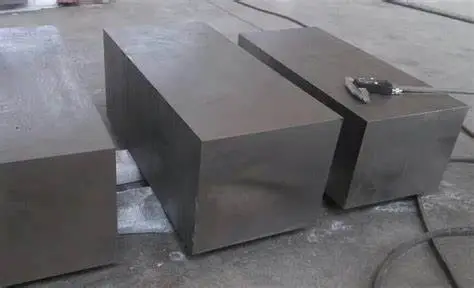
Understanding Titanium Forged Blocks Fundamentals
Titanium forged blocks represent the foundation of high-performance manufacturing across multiple industries. These solid blocks are produced through advanced forging processes that involve heating titanium ingots to specific temperatures and applying tremendous pressure through hydraulic presses or hammering equipment. The forging process fundamentally alters the internal grain structure of the material, creating superior mechanical properties compared to cast or machined alternatives. When you invest in quality Titanium Forged Blocks, you're securing material that offers exceptional strength-to-weight ratios, outstanding corrosion resistance, and remarkable durability under extreme conditions. The block shape provides manufacturers with maximum flexibility for subsequent machining operations, allowing for the creation of complex components while minimizing material waste. Modern forging techniques, including open die forging and closed die forging, enable precise control over dimensional accuracy and internal soundness, ensuring that each titanium forged block meets stringent quality specifications required by aerospace, automotive, energy, and medical sectors.
What Makes Titanium Forged Blocks Superior?
The forging process creates a refined grain structure that significantly enhances the mechanical properties of titanium materials. Unlike casting methods that can introduce porosity and inconsistencies, forging compresses and shapes the metal under controlled conditions, eliminating internal voids and creating uniform density throughout the block. This process results in Titanium Forged Blocks with predictable performance characteristics and superior fatigue resistance. The directional grain flow achieved through forging aligns with the principal stress directions in finished components, maximizing strength where it's needed most. Advanced heat treatment processes, such as solution treating and aging, further optimize the microstructure to achieve specific mechanical properties. For manufacturers working with critical applications, these forged blocks provide the reliability and consistency necessary to meet demanding safety standards and performance requirements.
Grade 2 Titanium Forged Blocks: Commercial Purity Excellence
Grade 2 titanium represents the most widely used commercially pure titanium grade, offering an excellent balance of strength, formability, and corrosion resistance. These Titanium Forged Blocks contain minimal alloying elements, typically consisting of at least 98.9% pure titanium with small amounts of iron and oxygen. The commercial purity of Grade 2 makes it exceptionally resistant to corrosive environments, including seawater, chlorinated solutions, and various chemical processing environments. With a tensile strength ranging from 345 to 450 MPa and excellent ductility, Grade 2 titanium forged blocks can be readily formed, welded, and machined into complex shapes without significant work hardening. This grade excels in applications where corrosion resistance takes priority over maximum strength requirements, making it ideal for chemical processing equipment, heat exchangers, offshore structures, and marine components. The biocompatibility of Grade 2 also makes it suitable for certain medical implants and devices where the highest strength isn't essential but biological compatibility is paramount.
Applications and Performance Characteristics
Grade 2 Titanium Forged Blocks find extensive use in industries where reliability in corrosive environments justifies the material investment. The aerospace sector utilizes these blocks for manufacturing non-structural components, ducting systems, and exhaust assemblies where weight reduction and corrosion resistance provide significant advantages. In the chemical processing industry, Grade 2 forged blocks serve as raw material for pumps, valves, pressure vessels, and piping systems that handle aggressive chemicals at elevated temperatures. The marine industry depends on this grade for critical underwater equipment, desalination plants, and offshore platform components that must withstand constant exposure to saltwater without degradation. Environmental engineering applications include scrubbers, pollution control equipment, and wastewater treatment systems where long-term durability reduces lifecycle costs. The excellent cold formability of Grade 2 allows manufacturers to produce complex geometries through various fabrication techniques while maintaining dimensional stability and surface integrity throughout processing operations.
Grade 5 Titanium Forged Blocks: The Workhorse Alloy
Grade 5 titanium, also known as Ti-6Al-4V, stands as the most popular and widely used titanium alloy in the world, accounting for approximately fifty percent of all titanium consumption globally. These Titanium Forged Blocks contain six percent aluminum and four percent vanadium as alloying elements, which dramatically enhance strength characteristics while maintaining excellent corrosion resistance and moderate density. The addition of aluminum provides solid solution strengthening and reduces density, while vanadium acts as a beta stabilizer that improves forgeability and strength. Grade 5 titanium forged blocks offer tensile strengths exceeding 895 MPa in the annealed condition and can reach over 1100 MPa with appropriate heat treatment, making them suitable for highly stressed structural applications. This grade demonstrates excellent performance across a wide temperature range, maintaining mechanical properties from cryogenic temperatures up to approximately 400 degrees Celsius. The combination of high strength, low density, and good corrosion resistance makes Grade 5 the preferred choice for aerospace structural components, including airframe structures, landing gear components, engine parts, and fasteners where weight savings directly translate to improved fuel efficiency and performance.
Industrial Applications and Manufacturing Advantages
The versatility of Grade 5 Titanium Forged Blocks extends across multiple high-performance sectors. Aerospace manufacturers rely on this grade for critical load-bearing structures, turbine blades, compressor discs, and rocket motor cases where the strength-to-weight ratio provides unmatched advantages. The automotive racing industry and high-performance vehicle manufacturers utilize Grade 5 forged blocks for connecting rods, valves, suspension components, and exhaust systems where reducing unsprung weight improves handling and acceleration. Energy sector applications include offshore drilling equipment, subsea components, and power generation turbine blades that must withstand extreme pressures and corrosive environments while maintaining structural integrity. Sporting goods manufacturers produce premium golf clubs, bicycle frames, and climbing equipment from these forged blocks to deliver professional-grade performance with maximum durability. The good machinability of Grade 5, despite its high strength, allows manufacturers to achieve tight tolerances and complex geometries using conventional CNC machining centers and specialized cutting tools designed for titanium processing.
Grade 23 Titanium Forged Blocks: Medical Grade Precision
Grade 23 titanium, designated as Ti-6Al-4V ELI (Extra Low Interstitial), represents the highest purity version of the Grade 5 alloy specifically developed for medical and implantable device applications. These Titanium Forged Blocks maintain the same nominal composition as Grade 5 but with significantly reduced interstitial element content, particularly oxygen, nitrogen, and carbon. The lower interstitial content, with oxygen limited to 0.13% maximum compared to 0.20% in Grade 5, results in improved ductility, fracture toughness, and fatigue crack propagation resistance. This enhanced purity makes Grade 23 exceptionally biocompatible, meeting the stringent requirements of ASTM F136 standard for surgical implant applications. The improved ductility allows for cold forming operations and reduces the risk of brittle fracture in critical implantable devices. While Grade 23 titanium forged blocks command premium pricing due to the controlled manufacturing processes required to maintain low interstitial levels, they provide unmatched performance in applications where human safety and long-term biological compatibility cannot be compromised. Beyond medical applications, this grade finds use in aerospace components requiring maximum damage tolerance and in any application where enhanced fatigue life justifies the additional material cost.
Medical and High-Reliability Applications
The medical device industry relies almost exclusively on Grade 23 Titanium Forged Blocks for manufacturing permanent implants including hip and knee replacements, spinal fusion devices, dental implants, and bone fixation plates. The combination of biocompatibility, corrosion resistance in bodily fluids, and favorable mechanical properties allows these implants to function effectively for decades within the human body without adverse reactions or degradation. Surgical instrument manufacturers use Grade 23 forged blocks to produce specialized tools that require sterilization resistance and long service life. The aerospace industry specifies Grade 23 for critical structural components in commercial aircraft where enhanced damage tolerance provides additional safety margins. Defense applications include ballistic protection systems and armor components where the superior fracture toughness of Grade 23 offers life-saving advantages. Research and development sectors utilize these forged blocks for prototype development and testing of next-generation technologies where material reliability cannot compromise experimental outcomes.
Comparing Grades: Making the Right Selection
Choosing between Grade 2, Grade 5, and Grade 23 Titanium Forged Blocks requires careful evaluation of multiple factors including mechanical property requirements, operating environment, biocompatibility needs, budget constraints, and regulatory compliance. Grade 2 provides the most cost-effective solution when maximum corrosion resistance matters more than ultimate strength, offering excellent value for chemical processing and marine applications. Grade 5 delivers the optimal strength-to-weight ratio for structural applications across aerospace, automotive, and industrial machinery sectors where high mechanical performance justifies the moderate price premium over commercial purity grades. Grade 23 represents the premium choice for medical implants and high-reliability aerospace components where enhanced ductility, fracture toughness, and biocompatibility provide critical performance advantages worth the additional investment. Understanding the specific ASTM standards applicable to your application helps ensure compliance with industry regulations and customer specifications. Grade 2 follows ASTM B381, Grade 5 conforms to ASTM B381 and AMS specifications, while Grade 23 must meet ASTM F136 for surgical implants. Working with experienced titanium suppliers who maintain proper certifications including AS9100D for aerospace and ISO13485 for medical applications ensures traceability and quality throughout the supply chain.
Technical Specifications and Quality Standards
Professional procurement of Titanium Forged Blocks demands attention to detailed specifications that define acceptable material properties and manufacturing requirements. Dimensional tolerances must be clearly specified, typically ranging from standard forging tolerances to precision machined specifications depending on the intended application and subsequent processing steps. Surface finish requirements vary from as-forged roughness suitable for heavy machining operations to finely machined surfaces ready for final finishing processes. Heat treatment conditions significantly impact mechanical properties, with options including annealed, solution treated and aged, or stress relieved conditions depending on the desired strength and ductility balance. Non-destructive testing requirements should be specified based on application criticality, potentially including ultrasonic inspection for internal soundness, liquid penetrant inspection for surface defects, and radiographic examination for critical aerospace components. Chemical composition certification through certified test reports ensures the material meets grade specifications and provides traceability back to the original heat of titanium. Mechanical property testing including tensile strength, yield strength, elongation, and reduction of area values should be documented with certified test certificates that accompany each shipment of forged blocks.
Conclusion
Selecting the best Titanium Forged Blocks among Grades 2, 5, and 23 ultimately depends on your specific application requirements, performance expectations, and budget parameters. Grade 2 excels in corrosive environments, Grade 5 dominates structural applications, and Grade 23 leads in medical and high-reliability sectors. Understanding these distinctions empowers you to make informed purchasing decisions that optimize performance while controlling costs.
Cooperate with XI'AN MICRO-A Titanium Metals Co.,Ltd.
XI'AN MICRO-A Titanium Metals Co., Ltd., founded in 2017 and headquartered in Baoji, China's renowned titanium city, stands as your premier China Titanium Forged Blocks manufacturer and China Titanium Forged Blocks supplier. Our comprehensive product range includes titanium sponge, titanium ingots, titanium plates, titanium tubes, titanium rods, titanium castings, titanium alloys, titanium wire, titanium flanges, and best Titanium Forged Blocks for sale at competitive Titanium Forged Blocks prices. As a certified China Titanium Forged Blocks factory holding ISO13485:2017 medical management system, AS/EN 9100 aerospace and defense quality management system, ISO14001 environmental management system certifications, and maintaining strategic partnerships with Baoti Group, we deliver unmatched quality and reliability. Our China Titanium Forged Blocks wholesale options feature original factory advantages ensuring stable supply chains, advanced equipment including 50 MN hammering presses and 2500-ton hydraulic presses for superior forging capabilities, rigorous quality assurance with multiple testing procedures meeting international standards, customized service supporting drawings and technical requirements, and fast delivery through well-organized logistics networks supporting air, sea, and express shipping methods. Contact us today at mayucheng188@aliyun.com to discuss your titanium forged blocks requirements and discover why leading aerospace, automotive, energy, and medical manufacturers trust XI'AN MICRO-A for their critical titanium needs. Save this guide for reference when evaluating suppliers and specifications for your next titanium procurement project.
References
1. Donachie, Matthew J. "Titanium: A Technical Guide, Second Edition." ASM International, 2000.
2. Lütjering, Gerd and Williams, James C. "Titanium, Second Edition: Engineering Materials and Processes." Springer-Verlag Berlin Heidelberg, 2007.
3. Boyer, Rodney, Welsch, Gerhard, and Collings, E.W. "Materials Properties Handbook: Titanium Alloys." ASM International, 1994.
4. American Society for Testing and Materials. "ASTM B381: Standard Specification for Titanium and Titanium Alloy Forgings." ASTM International.
5. American Society for Testing and Materials. "ASTM F136: Standard Specification for Wrought Titanium-6Aluminum-4Vanadium ELI Alloy for Surgical Implant Applications." ASTM International.