




Exploring the Strength and Durability of Titanium Wire
When critical aerospace components fail mid-flight or medical implants corrode within the human body, the consequences are catastrophic. Engineers and manufacturers constantly face the challenge of finding materials that can withstand extreme conditions without compromising on weight, biocompatibility, or longevity. High Strength Titanium Wire emerges as the ultimate solution to these demanding scenarios, offering an unparalleled combination of mechanical properties that traditional materials simply cannot match. This comprehensive exploration reveals why titanium wire strength has become the gold standard across industries where failure is not an option, from surgical instruments to spacecraft components.
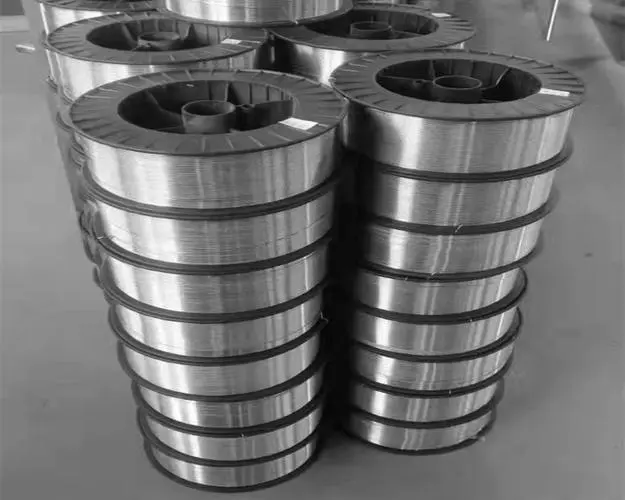
Understanding the Fundamental Properties of High Strength Titanium Wire
High Strength Titanium Wire represents a remarkable achievement in materials engineering, combining multiple advantageous characteristics that make it indispensable for critical applications. The titanium wire strength derives from its unique crystalline structure and alloying composition, particularly in grades like Ti-6Al-4V, which achieves tensile strengths up to 1380 MPa while maintaining exceptional ductility. This material demonstrates a strength-to-weight ratio that surpasses steel by approximately 40%, meaning components can be designed lighter without sacrificing structural integrity. The wire's density of only 4.5 g/cm³ compared to steel's 7.8 g/cm³ translates directly into fuel savings in aerospace applications and reduced fatigue in medical devices worn by patients. Beyond mere strength metrics, the titanium wire tensile strength remains stable across a broad temperature range from cryogenic conditions to 400°C, enabling its use in both space exploration and deep-sea environments where temperature fluctuations are extreme.
Corrosion Resistance and Environmental Stability
The exceptional corrosion resistance of High Strength Titanium Wire stems from the spontaneous formation of a protective titanium dioxide layer on its surface, which regenerates immediately when damaged. This passive oxide film provides outstanding resistance to chloride environments, making titanium wire the preferred choice for marine applications where stainless steel would rapidly deteriorate. In chemical processing facilities, the titanium wire strength remains uncompromised even when exposed to highly acidic or alkaline solutions that would destroy conventional materials within days. The material exhibits virtually no corrosion in seawater, body fluids, and most industrial chemicals, ensuring decades of reliable service without degradation. This resistance extends to high-temperature oxidation, where titanium maintains its protective layer at temperatures where other metals would scale and fail catastrophically.
Biocompatibility and Medical Applications
High Strength Titanium Wire demonstrates exceptional biocompatibility, making it the material of choice for permanent implantation within the human body. The body's immune system does not recognize titanium as a foreign material, resulting in excellent osseointegration where bone tissue actually bonds directly to the titanium surface. This property has revolutionized orthopedic surgery, dental implants, and cardiovascular devices where long-term stability is critical. The titanium wire tensile strength ensures that surgical sutures, bone fixation wires, and dental arch wires maintain their mechanical properties throughout the healing process without causing tissue irritation or inflammatory responses. Studies have shown that titanium implants can remain functional for over 30 years within the body, with failure rates below 1% when properly designed and installed.
Manufacturing Excellence and Quality Specifications
The production of High Strength Titanium Wire requires sophisticated metallurgical processes that ensure consistent quality and performance. Starting with high-purity titanium sponge, the material undergoes vacuum arc remelting to create ingots with precisely controlled alloy composition. These ingots are then hot-forged using equipment like the 50 MN hammering press to break down the cast structure and improve mechanical properties uniformly throughout the material. The forging process aligns the grain structure, enhancing the titanium wire strength in the drawing direction while maintaining adequate ductility for forming operations. Subsequent wire drawing operations reduce the diameter through multiple passes, each followed by annealing cycles to prevent work hardening and maintain optimal mechanical properties.
Advanced Testing and Quality Control Measures
Rigorous quality control ensures that every meter of High Strength Titanium Wire meets exacting specifications required by critical industries. Tensile testing verifies that the titanium wire tensile strength reaches minimum values of 1100 MPa for yield strength and up to 1380 MPa for ultimate tensile strength, with elongation values between 10-15% ensuring adequate ductility. Chemical composition analysis using spectroscopic methods confirms that alloying elements fall within narrow tolerance bands specified by standards like ASTM B863 and AMS 4967. Surface inspection using optical and electron microscopy detects any defects, inclusions, or surface irregularities that could initiate fatigue cracks during service. Dimensional verification ensures diameter consistency within ±0.01mm tolerance across entire coil lengths, critical for automated manufacturing processes using the wire.
Industrial Applications Driving Demand
Aerospace and Defense Systems
The aerospace industry represents the largest consumer of High Strength Titanium Wire, utilizing its exceptional properties in applications where weight reduction directly translates to fuel savings and increased payload capacity. Aircraft manufacturers employ the wire for safety-critical fasteners, locking mechanisms, and structural components that must maintain integrity through thousands of flight cycles experiencing extreme temperature variations and mechanical stresses. The titanium wire strength enables thinner cross-sections than steel alternatives while meeting or exceeding safety factors required by aviation authorities. Helicopter rotor systems benefit particularly from titanium's fatigue resistance, as these components experience millions of stress reversals during their service life. Military applications extend to missile guidance systems, ejection seat mechanisms, and armored vehicle components where the combination of strength, corrosion resistance, and weight savings provides tactical advantages.
Medical Device Innovation
Medical device manufacturers increasingly specify High Strength Titanium Wire for next-generation implants and surgical instruments that push the boundaries of minimally invasive procedures. Cardiovascular surgeons utilize ultra-fine titanium wire in stent construction, where the material must expand reliably during deployment while resisting corrosion from blood chemistry indefinitely. Orthopedic applications include cerclage wires for bone fracture fixation, where the titanium wire tensile strength allows secure compression of fracture fragments while the biocompatibility prevents adverse tissue reactions. Dental professionals rely on titanium arch wires that can apply consistent orthodontic forces over months of treatment without corrosion or mechanical degradation. The development of additive manufacturing using titanium wire feedstock enables custom implant production with complex internal geometries impossible to achieve through traditional machining.
Marine and Chemical Processing Environments
High Strength Titanium Wire excels in marine applications where the combination of strength and corrosion resistance justifies its premium cost through extended service life and reduced maintenance requirements. Offshore oil platforms utilize titanium wire rope and rigging components that maintain full strength despite continuous exposure to saltwater spray and chloride-rich atmospheres. Desalination plants employ titanium wire mesh and woven screens that resist fouling and corrosion far longer than alternatives, reducing costly shutdowns for replacement. Chemical processing facilities specify the material for heat exchanger construction, where the titanium wire strength allows thin-walled designs maximizing heat transfer efficiency while the corrosion resistance ensures decades of reliable operation with aggressive process fluids. Submarine systems benefit from titanium's resistance to deep-sea pressure combined with absolute immunity to galvanic corrosion in seawater environments.
Selecting the Right Specification for Your Application
Choosing the optimal grade and configuration of High Strength Titanium Wire requires careful consideration of the specific mechanical, thermal, and chemical requirements of your application. Grade Ti-6Al-4V represents the workhorse alloy, offering the best balance of strength, ductility, and corrosion resistance for general applications requiring titanium wire tensile strength approaching 1380 MPa. For lower-stress applications prioritizing formability and weldability, commercially pure (CP) titanium grades provide adequate strength while being more economical and easier to process. Specialized applications may require grades like Ti-3Al-2.5V for enhanced cold-forming characteristics or beta-titanium alloys for superelastic properties in medical devices. Diameter selection impacts both mechanical properties and processing capabilities, with finer wires exhibiting higher strength due to work hardening but reduced ductility compared to larger diameter products.
Surface Finish Considerations
The surface finish of High Strength Titanium Wire significantly influences its performance in specific applications, warranting careful specification based on end-use requirements. Bright annealed finishes provide the smoothest surface with superior corrosion resistance, ideal for medical implants and components requiring friction reduction. Pickled surfaces, while slightly rougher, offer excellent cleanliness by removing any surface contamination or oxide scale that could interfere with subsequent welding or coating operations. For applications requiring enhanced bonding with polymers or ceramics, specialized surface treatments can modify the native oxide layer to promote adhesion. Understanding how surface condition affects fatigue life proves critical for cyclic loading applications, as surface defects can initiate crack propagation that ultimately leads to component failure.
Conclusion
High Strength Titanium Wire represents the pinnacle of engineering materials, delivering unmatched performance across the most demanding applications in aerospace, medical, and industrial sectors. The exceptional titanium wire strength combined with corrosion resistance and biocompatibility makes it the material of choice where failure is not an option and long-term reliability is paramount.
Cooperate with XI'AN MICRO-A Titanium Metals Co.,Ltd.
XI'AN MICRO-A Titanium Metals Co., Ltd., founded in 2017 and headquartered in Baoji—China's titanium city—stands as a premier China High Strength Titanium Wire manufacturer, supplier, and factory offering the best High Strength Titanium Wire at competitive prices. Our comprehensive product portfolio includes titanium sponge, ingots, plates, tubes, rods, castings, alloys, wires, flanges, and standard parts, alongside rare metals like nickel, zirconium, tungsten, molybdenum, niobium, and tantalum. Certified under ISO 13485:2017, AS/EN 9100, ISO 14001, and ISO 9001 quality management systems, we maintain strategic partnerships with leading domestic enterprises including Baoti Group, ensuring stable supply chains and superior quality. Our state-of-the-art facilities feature 3-ton vacuum furnaces, 50 MN hammering presses, 2500-ton forging presses, and advanced CNC machining centers capable of processing complex titanium parts to your exact specifications. As a trusted China High Strength Titanium Wire wholesale provider, we offer High Strength Titanium Wire for sale with customization services including drawing processing, sample production, and non-standard part manufacturing. Experience our expertise through comprehensive sample delivery with full certifications, typically completed within 25-30 business days. Contact us today at mayucheng188@aliyun.com to discuss your requirements and discover why industry leaders choose us for their critical titanium wire applications.
References
1. "Titanium: A Technical Guide, Second Edition" by Matthew J. Donachie Jr., ASM International, 2000
2. "Aerospace Materials and Material Technologies: Volume 1: Aerospace Materials" edited by N. Eswara Prasad and R.J.H. Wanhill, Springer Singapore, 2017
3. "Metallic Materials Properties Development and Standardization (MMPDS-06)" by Battelle Memorial Institute, Federal Aviation Administration, 2011
4. "Biomedical Applications of Titanium and Its Alloys" by C. Leyens and M. Peters, Journal of Chronic Diseases, 2003
5. "Corrosion Resistance of Titanium and Its Alloys" by R.W. Schutz and D.E. Thomas, ASM Handbook Volume 13B: Corrosion: Materials, 2005