




How does titanium 3d printing work?
Imagine needing a complex aerospace component with intricate internal geometries that traditional manufacturing simply cannot produce - yet your project timeline is tight and material waste must be minimized. This scenario perfectly illustrates why titanium 3D printing has revolutionized modern manufacturing. Titanium 3D printing transforms powdered titanium alloys into precise, high-performance parts through layer-by-layer additive manufacturing processes, enabling the creation of complex geometries with superior material properties that were previously impossible to achieve through conventional methods.
Understanding the Core Titanium 3D Printing Technologies
Selective Laser Melting (SLM) Process
Selective Laser Melting represents the most widely adopted approach for titanium 3D printing, utilizing high-powered lasers to precisely melt titanium powder particles layer by layer. The process begins with a thin layer of titanium powder spread across the build platform, typically ranging from 20 to 100 microns in thickness. A focused laser beam, controlled by sophisticated scanning systems, selectively melts the powder according to the digital design parameters, creating a solid cross-section of the part. As each layer cools and solidifies, the build platform lowers, and a new layer of powder is deposited, continuing this cycle until the complete 3d titanium component is formed. The SLM process requires precise control of multiple parameters including laser power, scanning speed, hatch spacing, and layer thickness to achieve optimal 3d printed titanium strength and dimensional accuracy. The build chamber is maintained under an inert atmosphere, typically argon or nitrogen, to prevent oxidation of the reactive titanium powder during the melting process. Temperature management is critical, as the rapid heating and cooling cycles can induce thermal stresses that may lead to part distortion or cracking if not properly controlled.
Electron Beam Melting (EBM) Technology
Electron Beam Melting offers an alternative approach to titanium 3D printing that provides unique advantages for specific applications. Unlike SLM, EBM utilizes a high-energy electron beam operating in a vacuum environment to melt titanium powder. The process operates at elevated temperatures, typically between 700-1000°C, which helps reduce residual stresses in the final parts and can improve the mechanical properties of the 3d printed titanium strength compared to room-temperature processes. The EBM process begins with preheating the entire powder bed to approximately 700°C, creating a sintered cake that provides support for overhanging features and complex geometries. The electron beam then selectively melts the powder according to the part geometry, with the high-temperature environment promoting better layer adhesion and reducing the need for support structures. This elevated processing temperature also helps minimize the formation of brittle phases that can sometimes occur in titanium alloys processed at lower temperatures.
Direct Energy Deposition (DED) Applications
Direct Energy Deposition represents a versatile titanium 3D printing technology particularly suited for repair applications, hybrid manufacturing, and large-scale components. The DED process involves simultaneously feeding titanium powder or wire into a focused energy source, which can be a laser, electron beam, or plasma arc. The material is melted and deposited directly onto the build substrate, allowing for the creation of near-net-shape components or the addition of material to existing parts. DED technology excels in applications requiring Titanium Part 3D Printing for repair and refurbishment of high-value components such as turbine blades, engine parts, and aerospace structures. The process can deposit multiple titanium alloys within a single build, enabling the creation of functionally graded materials with varying properties throughout the component. This capability is particularly valuable for applications where different regions of a part require different material characteristics, such as wear resistance in one area and corrosion resistance in another.
Material Properties and Alloy Considerations in Titanium 3D Printing
Ti-6Al-4V Grade 5 Characteristics
Ti-6Al-4V represents the most commonly used titanium alloy in 3D printing applications, accounting for approximately 50% of all titanium consumption worldwide. This alpha-beta alloy combines excellent mechanical properties with good processability in additive manufacturing systems. When processed through titanium 3D printing, Ti-6Al-4V Grade 5 typically achieves tensile strengths exceeding 900 MPa with elongation values of 10-15%, depending on the processing parameters and post-processing treatments applied. The microstructure of 3d printed titanium Ti-6Al-4V consists of fine alpha and beta phases, with the cooling rates inherent in additive manufacturing processes promoting the formation of acicular alpha structures. This microstructure contributes to the high strength characteristics but may require post-processing heat treatments to optimize ductility and fatigue performance. The thermal expansion coefficient of Ti-6Al-4V is approximately 8.6 × 10⁻⁶/°C, which is significantly lower than many other structural materials, making it ideal for applications requiring dimensional stability across temperature variations.
Pure Titanium Grades in 3D Printing
Pure titanium grades, particularly Grade 1 and Grade 2, offer unique advantages for specific Titanium Part 3D Printing applications where maximum corrosion resistance and biocompatibility are paramount. These commercially pure titanium grades contain minimal alloying elements, resulting in excellent corrosion resistance in aggressive environments and superior biocompatibility for medical implant applications. The 3d printed titanium strength of pure grades is lower than Ti-6Al-4V, typically ranging from 240-550 MPa tensile strength, but the exceptional corrosion resistance makes them ideal for chemical processing equipment and medical devices. The processing characteristics of pure titanium grades in 3D printing require careful parameter optimization due to their high reactivity with oxygen and nitrogen. The powder particles must be handled in controlled atmospheres, and the printing process requires extremely low oxygen levels to prevent embrittlement. Post-processing treatments such as hot isostatic pressing (HIP) are often employed to eliminate residual porosity and optimize the mechanical properties of pure 3d titanium components.
Industrial Applications and Manufacturing Advantages
Aerospace Industry Integration
The aerospace industry has embraced titanium 3D printing as a transformative manufacturing technology, with applications ranging from structural components to complex engine parts. Major aerospace manufacturers have successfully integrated 3d printed titanium strength components into commercial aircraft, military fighters, and space exploration vehicles. The technology enables the production of lightweight, high-strength components with complex internal cooling channels and integrated features that would be impossible to manufacture using traditional methods. Boeing's implementation of titanium 3D printing for the 787 Dreamliner exemplifies the technology's potential for cost reduction and performance enhancement. By utilizing Titanium Part 3D Printing for structural brackets and fittings, Boeing has achieved significant weight reductions while maintaining the high strength-to-weight ratios required for aerospace applications. The ability to consolidate multiple traditionally manufactured parts into single 3d titanium components reduces assembly time, eliminates fasteners, and improves overall structural integrity.
Medical Device Manufacturing
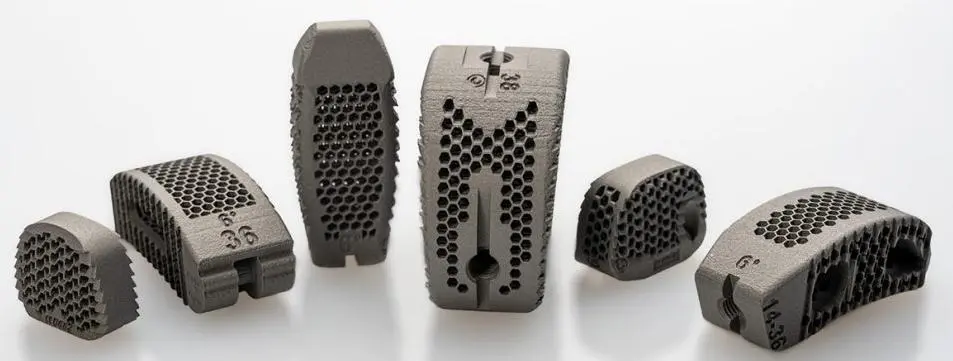
The medical device industry represents another critical application area for titanium 3D printing, particularly for custom implants and surgical instruments. The biocompatibility of titanium alloys, combined with the design freedom offered by additive manufacturing, enables the production of patient-specific implants with optimized mechanical properties and osseointegration characteristics. 3d printed titanium strength specifications can be tailored to match the elastic modulus of human bone, reducing stress shielding effects and improving long-term implant success rates. Orthopedic implants manufactured through titanium 3D printing can incorporate porous structures and surface textures that promote bone ingrowth and improve biological fixation. The ability to create complex internal architectures allows designers to optimize the mechanical properties of implants while minimizing material usage and reducing the overall implant mass. Custom surgical instruments and guides can be rapidly produced to support specific surgical procedures, improving precision and reducing operation times.
Quality Control and Post-Processing Requirements
Dimensional Accuracy and Surface Finish
Achieving consistent dimensional accuracy and surface finish in titanium 3D printing requires sophisticated quality control measures throughout the entire manufacturing process. The inherent characteristics of powder-based additive manufacturing result in as-printed surface roughnesses typically ranging from Ra 5-15 μm, depending on the printing parameters and part orientation. Post-processing techniques including machining, grinding, and chemical etching are often employed to achieve the final dimensional tolerances and surface finish requirements for critical applications. Thermal post-processing treatments play a crucial role in optimizing the properties of 3d printed titanium components. Hot isostatic pressing (HIP) is commonly applied to eliminate residual porosity and improve the fatigue performance of Titanium Part 3D Printing components. Stress relief annealing treatments help reduce residual stresses induced during the printing process, while solution treatment and aging cycles can be applied to optimize the mechanical properties of specific titanium alloys.
Inspection and Testing Protocols
Comprehensive inspection and testing protocols are essential for ensuring the reliability and performance of 3d titanium components in critical applications. Non-destructive testing methods including computed tomography (CT) scanning, ultrasonic testing, and dye penetrant inspection are routinely employed to detect internal defects, porosity, and surface discontinuities. Advanced metrology techniques using coordinate measuring machines (CMM) and optical scanning systems provide detailed dimensional verification against design specifications. Mechanical testing protocols for titanium 3D printing typically include tensile testing, fatigue testing, fracture toughness evaluation, and hardness measurements to verify that the 3d printed titanium strength meets the required specifications. Microstructural analysis using optical and electron microscopy provides insights into the grain structure, phase distribution, and defect characteristics that influence the mechanical properties and long-term performance of printed components.
Process Parameters and Optimization Strategies
Laser Power and Scanning Parameters
The optimization of laser power and scanning parameters represents a critical aspect of successful titanium 3D printing operations. Laser power settings typically range from 150-400 watts for most titanium alloys, with the specific value depending on the powder particle size, layer thickness, and desired processing speed. The laser scanning strategy, including hatch spacing and scan vector rotation between layers, significantly influences the thermal history of each layer and consequently affects the microstructure and mechanical properties of the final component. Scanning speed optimization involves balancing productivity requirements with quality considerations. Higher scanning speeds increase build rates but may result in incomplete melting or poor layer adhesion if the energy density falls below critical thresholds. The volumetric energy density, calculated from laser power, scanning speed, hatch spacing, and layer thickness, provides a useful parameter for process optimization, with typical values for titanium alloys ranging from 50-120 J/mm³ for optimal density and mechanical properties.
Powder Management and Recycling
Effective powder management is essential for maintaining consistent quality in titanium 3D printing operations while controlling material costs. Titanium powder represents a significant portion of the overall production cost, making powder recycling and reuse critical for economic viability. Fresh titanium powder typically exhibits excellent flowability and packing density, but exposure to the high-temperature printing environment can cause changes in particle morphology, oxygen content, and flow characteristics that affect printability. Powder recycling protocols typically involve sieving to remove oversized particles, blending recycled powder with fresh material to maintain consistent properties, and regular chemical analysis to monitor oxygen and nitrogen content. The reactive nature of titanium requires careful handling to prevent contamination, with powder storage and handling operations conducted in controlled atmosphere glove boxes or under inert gas purging systems to minimize oxygen pickup.
Economic Considerations and Market Trends
Cost Analysis and ROI Factors
The economic viability of titanium 3D printing depends on numerous factors including part complexity, production volume, material costs, and post-processing requirements. While the initial investment in 3D printing equipment and supporting infrastructure can be substantial, the technology offers significant cost advantages for low to medium production volumes, particularly for complex geometries that would require expensive tooling using conventional manufacturing methods. The elimination of material waste, reduced machining requirements, and ability to produce near-net-shape components contribute to favorable return on investment calculations for many applications. Material costs represent a significant component of titanium 3D printing economics, with high-quality titanium powder typically costing 10-20 times more than equivalent wrought material. However, the near-100% material utilization efficiency of additive manufacturing, combined with the ability to recycle unused powder, helps offset these higher raw material costs. The consolidation of multiple parts into single printed components can also reduce assembly costs and inventory requirements, further improving the overall economic proposition.
Future Technology Developments
The future of titanium 3D printing is characterized by rapid technological advancement across multiple fronts, including increased printing speeds, improved material properties, and expanded alloy availability. Next-generation printing systems are incorporating multiple lasers and advanced beam shaping technologies to increase build rates while maintaining quality. Research into new titanium alloys specifically designed for additive manufacturing is yielding materials with enhanced printability and optimized mechanical properties for specific applications. Advanced process monitoring and control systems are being developed to provide real-time feedback on melt pool characteristics, enabling adaptive process control and improved part quality consistency. Machine learning and artificial intelligence algorithms are being applied to optimize processing parameters and predict potential quality issues before they occur. The integration of in-situ inspection technologies with printing systems promises to enable real-time quality verification and reduce the need for extensive post-processing inspection.
Conclusion
Titanium 3D printing represents a transformative manufacturing technology that combines the exceptional properties of titanium alloys with the design freedom and efficiency of additive manufacturing. Through sophisticated processes including SLM, EBM, and DED, manufacturers can produce complex, high-performance components that meet the demanding requirements of aerospace, medical, and industrial applications while achieving significant cost and time savings.
Cooperate with XI'AN MICRO-A Titanium Metals Co.,Ltd.
XI'AN MICRO-A Titanium Metals Co.,Ltd., established in 2017 and headquartered in Baoji, China's titanium city, stands as your premier China titanium 3D printing manufacturer and China titanium 3D printing supplier. Our comprehensive product portfolio includes titanium sponge, titanium ingots, plates, tubes, rods, castings, alloys, and specialized Titanium Part 3D Printing services. With ISO13485:2017, AS/EN 9100, and ISO14001 certifications, we ensure the highest quality standards for your projects.
As a leading China titanium 3D printing factory, we offer advanced equipment including 50 MN hammering presses, 2500-ton forging presses, and digital machining centers capable of producing the best titanium 3D printing solutions. Our expertise in titanium 3D printing for sale includes support for drawing customization, low thermal expansion applications, and corrosion-resistant components with competitive titanium 3D printing price structures.
Our strategic partnership with Baoti Group and comprehensive supply chain ensure reliable China titanium 3D printing wholesale services. We provide customized solutions, quality samples, and fast delivery through multiple shipping methods. Contact our expert team at mayucheng188@aliyun.com for your next project consultation and discover why we're the preferred choice for premium titanium 3D printing solutions.
FAQ
Q: What are the main advantages of titanium 3D printing over traditional manufacturing?
A: Titanium 3D printing enables complex geometries impossible with traditional methods, reduces material waste by up to 90%, eliminates expensive tooling, and allows for rapid prototyping and customization.
Q: Which titanium alloys are most suitable for 3D printing applications?
A: Ti-6Al-4V Grade 5 is the most commonly used alloy for 3D printing, offering excellent strength-to-weight ratio, while pure titanium grades (Grade 1, 2) are preferred for maximum corrosion resistance and biocompatibility.
Q: What post-processing treatments are typically required for 3D printed titanium parts?
A: Common post-processing includes hot isostatic pressing (HIP) to eliminate porosity, stress relief annealing, surface finishing through machining or chemical etching, and heat treatments to optimize mechanical properties.
Q: How does the strength of 3D printed titanium compare to conventionally manufactured titanium?
A: 3D printed titanium can achieve comparable or superior mechanical properties to wrought titanium, with tensile strengths exceeding 900 MPa for Ti-6Al-4V, though specific properties depend on printing parameters and post-processing treatments.
References
1. "Additive Manufacturing of Titanium Alloys: State of the Art, Challenges and Opportunities" - Boyer, R.R., Materials Science and Engineering
2. "Electron Beam Melting of Titanium Alloys: Microstructure and Mechanical Properties" - Murr, L.E., Journal of Materials Research and Technology
3. "Selective Laser Melting of Titanium Components: Process Optimization and Mechanical Properties" - Thijs, L., Acta Materialia
4. "Direct Energy Deposition of Titanium: Process Parameters and Microstructural Evolution" - Dutta, B., Advanced Materials and Processes