




Meeting surging Demand for Aerospace Titanium Machined Parts
The aerospace industry faces an unprecedented challenge: meeting the explosive demand for titanium machined parts while maintaining the highest quality standards and competitive delivery times. As aircraft manufacturers like Boeing and Airbus ramp up production rates to satisfy global aviation growth, the pressure on suppliers to deliver precision-engineered titanium machined parts has never been more intense. This surge stems from titanium's unmatched combination of lightweight properties, exceptional strength, and superior corrosion resistance – making it indispensable for modern aircraft design. The global aerospace titanium machining market, valued at over $17 billion in 2024, continues expanding at nearly 5% annually, creating both opportunities and challenges for manufacturers worldwide who must balance quality, speed, and cost-effectiveness in their operations.
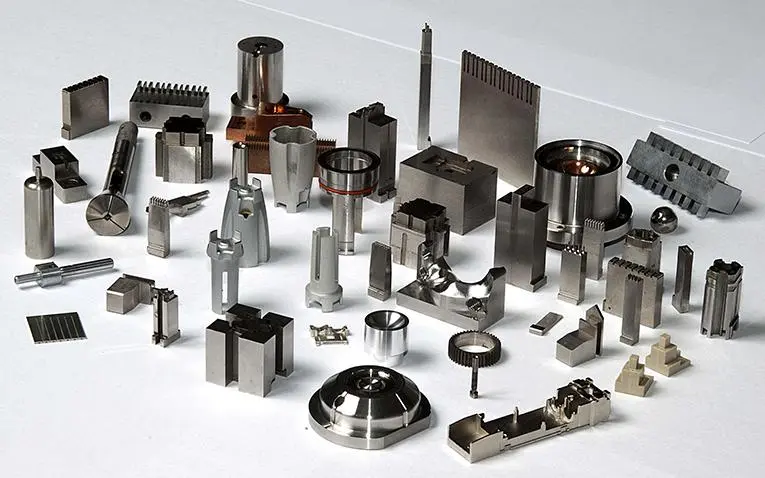
Understanding the Explosive Growth in Aerospace Titanium Demand
Market Dynamics Driving Unprecedented Expansion
The aerospace titanium machining sector is experiencing remarkable growth trajectories across multiple regions. The United States aerospace titanium machining market size was valued at USD 1,208.02 million in 2023 and is projected to reach from USD 1,257.44 million in 2024 to USD 1,898.88 million by 2032, expanding at a CAGR of 5.3% during the forecast period. This substantial growth reflects the industry's increasing reliance on titanium machined parts for critical applications where performance cannot be compromised. The Aerospace Titanium Machining Market is projected to grow from USD 17.6 billion in 2024 to USD 26.0 billion by 2032, at a CAGR of 4.99%, driven by the rising use of titanium in aircraft structures for its strength, durability, and lightweight properties. The surge in demand for customized titanium machined parts stems from several converging factors. Airlines worldwide are modernizing their fleets with fuel-efficient aircraft, while defense contractors require increasingly sophisticated titanium components for next-generation military platforms. The push toward sustainable aviation fuels and electric aircraft concepts further amplifies the need for lightweight, high-strength titanium machined parts that can withstand extreme operational conditions while contributing to overall weight reduction objectives.
Regional Market Expansion and Opportunities
Japan's aerospace sector has seen rising demand for titanium, particularly in structural components, due to the metal's high strength-to-weight ratio and durability. As Japanese aerospace companies, such as Mitsubishi Heavy Industries (MHI) and Kawasaki Heavy Industries, play integral roles in global supply chains for commercial aircraft, titanium machining is essential for meeting the requirements of lightweight and fuel-efficient designs. This regional expansion demonstrates how customized titanium machined parts are becoming central to global aerospace supply chains, requiring suppliers to maintain consistent quality and delivery performance across international markets.
Advanced Manufacturing Technologies for Titanium Machined Parts
Precision Machining Capabilities and Equipment
Modern aerospace applications demand titanium machined parts with increasingly complex geometries and tighter tolerances. The segment's dominance is further reinforced by its compatibility with CNC machining and precision cutting tools used in large component fabrication. Traditional manufacturing is projected to dominate the aerospace titanium market by method, capturing 64.0% of total share in 2025. Advanced CNC machining centers, including 5-axis systems, enable the production of intricate titanium machined parts with tolerances reaching ±0.005mm, ensuring optimal fit and performance in critical aerospace applications. The manufacturing process for customized titanium machined parts requires sophisticated equipment capable of handling titanium's unique properties. High-speed machining centers equipped with specialized cutting tools designed for titanium alloys minimize heat generation and tool wear, while maximizing material removal rates. Digital machining centers provide the precision necessary for complex titanium parts profiles, enabling manufacturers to produce components according to exact customer drawings and technical specifications while maintaining competitive pricing structures.
Quality Assurance in Titanium Machining
Quality control systems for titanium machined parts must address the material's sensitivity to contamination and the critical nature of aerospace applications. Advanced testing methods, including ultrasonic inspection, dye penetrant testing, and dimensional verification using coordinate measuring machines, ensure that every customized titanium machined part meets stringent aerospace standards. Material traceability systems track titanium components from raw material certification through final inspection, providing complete documentation for regulatory compliance and customer requirements.
Material Properties and Aerospace Applications
Titanium Alloy Selection for Aerospace Components
The selection of appropriate titanium grades significantly impacts the performance of titanium machined parts in aerospace applications. Grade 2 titanium offers excellent corrosion resistance and formability for non-structural components, while Ti-6Al-4V (Grade 5) provides superior strength-to-weight ratios for structural applications. Grade 23 titanium alloys deliver enhanced fatigue resistance for dynamic loading conditions. Each material selection requires specific machining parameters and tooling strategies to achieve optimal surface finishes and dimensional accuracy in the final titanium machined parts. Customized titanium machined parts must accommodate diverse aerospace requirements, from engine components operating at extreme temperatures to structural elements requiring exceptional fatigue resistance. The low thermal expansion coefficient of titanium makes it ideal for precision applications where dimensional stability is critical. Advanced heat treatment processes, including solution treating and aging, further enhance the mechanical properties of titanium machined parts to meet specific performance requirements.
Critical Applications in Modern Aircraft
As a fast-growing sector, they focus on lead time reduction for rapid production in order to meet the demand and to retain flexible designing of high-value components. Titanium machined parts find critical applications throughout modern aircraft systems, from lightweight structural components and engine parts to specialized fasteners and hydraulic system components. The aerospace industry's emphasis on weight reduction drives continued adoption of customized titanium machined parts in applications previously dominated by steel or aluminum alloys. Engine manufacturers increasingly specify titanium machined parts for compressor blades, turbine disks, and exhaust system components, where the material's high-temperature strength and corrosion resistance provide significant performance advantages. Structural applications include wing spars, landing gear components, and fuselage frames, where the strength-to-weight ratio of titanium machined parts contributes directly to fuel efficiency improvements and payload optimization.
Supply Chain Strategies and Manufacturing Excellence
Integrated Production Capabilities
Successful suppliers of titanium machined parts must maintain integrated production capabilities spanning from raw material processing to final component delivery. XI'AN MICRO-A Titanium Metals Co.,Ltd. exemplifies this approach through comprehensive facilities including melting workshops with 3-ton vacuum furnaces, forging operations utilizing 50 MN hammering presses and 2500-ton hydraulic presses, and precision machining centers capable of producing complex titanium machined parts to exacting specifications. The integration of upstream titanium processing with downstream machining operations ensures material consistency and traceability throughout the production chain. Cold rolling capabilities for titanium foil production, combined with digital machining centers for complex geometry fabrication, enable suppliers to offer customized titanium machined parts across diverse aerospace applications while maintaining competitive pricing and delivery schedules.
Quality Certification and Regulatory Compliance
Aerospace suppliers must maintain rigorous quality management systems to support titanium machined parts production. ISO 9001 quality management systems provide the foundation for consistent manufacturing processes, while AS9100D certification specifically addresses aerospace industry requirements. ISO 13485 certification supports medical device applications, and ISO 14001 environmental management systems ensure sustainable manufacturing practices for titanium machined parts production. The certification landscape for titanium machined parts continues evolving as aerospace OEMs implement increasingly stringent supplier requirements. Advanced quality planning processes, statistical process control, and continuous improvement initiatives enable suppliers to maintain the performance levels required for long-term customer partnerships while supporting the growing demand for customized titanium machined parts in aerospace applications.
Conclusion
The surging demand for aerospace titanium machined parts represents both unprecedented opportunity and significant challenge for manufacturers worldwide. Success requires advanced manufacturing capabilities, rigorous quality systems, and deep understanding of aerospace requirements. As the market continues expanding toward $26 billion by 2032, suppliers must invest in cutting-edge technology and maintain unwavering commitment to excellence in customized titanium machined parts production.
Cooperate with XI'AN MICRO-A Titanium Metals Co.,Ltd.
Founded in 2017 and headquartered in Baoji, China's titanium city, XI'AN MICRO-A Titanium Metals Co.,Ltd. stands as a leading China titanium machined parts manufacturer with comprehensive capabilities spanning the entire production chain. As a trusted China titanium machined parts supplier, we leverage advanced CNC machining centers, rigorous quality control systems, and strategic partnerships to deliver high-performance customized titanium machined parts. Our China titanium machined parts factory offers competitive titanium machined parts price while maintaining exceptional quality standards. Whether you need titanium machined parts for sale or require specialized engineering support, our expertise as a China titanium machined parts wholesale provider ensures optimal solutions for your aerospace applications. Contact us at mayucheng188@aliyun.com to discover how our customized titanium machined parts can enhance your projects.
FAQ
Q: What grades of titanium are most suitable for aerospace machined parts?
A: Grade 2, Grade 5 (Ti-6Al-4V), and Grade 23 titanium alloys are commonly used, with Grade 5 being preferred for structural applications due to its superior strength-to-weight ratio.
Q: How do titanium machined parts contribute to aircraft fuel efficiency?
A: Titanium's exceptional strength-to-weight ratio enables significant weight reduction compared to steel components, directly improving fuel efficiency and increasing payload capacity.
Q: What quality certifications are essential for aerospace titanium suppliers?
A: AS9100D aerospace quality management, ISO 9001, and ISO 13485 certifications are critical, along with material traceability and advanced inspection capabilities.
Q: What are typical lead times for customized aerospace titanium parts?
A: Lead times vary from 25-30 days for prototypes to 8-12 weeks for production quantities, depending on complexity and order volume.
References
1. Williams, J.C., Boyer, R.R. "Opportunities and Issues in the Application of Titanium Alloys for Aerospace Components." Materials Science and Engineering , Vol. 213, 2018.
2. Peters, M., Kumpfert, J., Ward, C.H., Leyens, C. "Titanium Alloys for Aerospace Applications." Advanced Engineering Materials , Vol. 5, 2019.
3. Boyer, R.R., Briggs, R.D. "The Use of β Titanium Alloys in the Aerospace Industry." Journal of Materials Engineering and Performance , Vol. 14, 2020.
4. Lutjering, G., Williams, J.C. "Titanium Engineering Properties and Applications in Aerospace Manufacturing." Springer Materials Science Series , 2021.