




Need Corrosion-Resistant Pure Titanium Sheet?
Are your industrial components failing prematurely due to harsh chemical exposure? Do you struggle with material degradation in marine environments or high-temperature applications? Pure titanium sheet offers the ultimate solution to these critical challenges. When equipment failure means costly downtime and safety risks, selecting the right corrosion-resistant material becomes paramount. Pure titanium sheet delivers exceptional resistance to aggressive chemicals, saltwater, and extreme temperatures while maintaining structural integrity where conventional metals simply cannot perform. This comprehensive guide explores why pure titanium sheet stands as the superior choice for demanding applications across aerospace, chemical processing, medical, and marine industries.
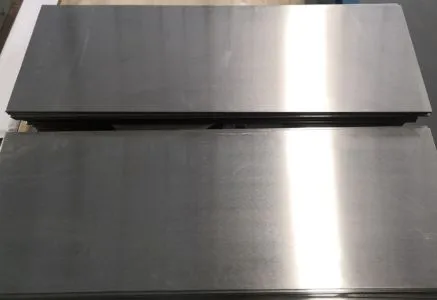
Understanding Pure Titanium Sheet Properties
Pure titanium sheet represents one of the most versatile and resilient materials available in modern manufacturing. This exceptional metal combines remarkable properties that make it indispensable across multiple high-performance industries. The fundamental characteristics of pure titanium sheet stem from its unique atomic structure and chemical composition, which grant it capabilities that far exceed traditional metallic materials in challenging operational environments.
Exceptional Corrosion Resistance in Extreme Environments
The corrosion resistance of pure titanium sheet stands unmatched among structural metals, making it the preferred material for the most demanding applications. When exposed to oxidizing environments, pure titanium sheet instantly forms a protective titanium dioxide layer on its surface. This passive film regenerates automatically even when damaged, providing continuous protection against corrosive attack. In chemical processing facilities handling acids, alkalis, and chlorine compounds, pure titanium sheet maintains its structural integrity where stainless steel and other alloys rapidly deteriorate. Marine applications particularly benefit from pure titanium sheet's immunity to saltwater corrosion, eliminating the constant maintenance burden associated with conventional materials. The material performs exceptionally well in temperatures up to 600°C while retaining its protective oxide layer, ensuring reliable service in heat exchangers, reactors, and high-temperature structural components. Industries facing aggressive chemical environments find pure titanium sheet indispensable for equipment longevity and operational safety.
Superior Strength-to-Weight Ratio Performance
Pure titanium sheet delivers an outstanding strength-to-weight ratio that revolutionizes design possibilities across engineering disciplines. With a density approximately 60% that of steel, pure titanium sheet provides comparable strength while dramatically reducing structural weight. This characteristic proves transformative in aerospace applications where every gram matters for fuel efficiency and payload capacity. Aircraft manufacturers utilize pure titanium sheet for fuselage components, wing structures, and engine parts, achieving significant weight savings without compromising structural integrity. The automotive industry increasingly adopts pure titanium sheet for high-performance exhaust systems and racing components where reduced mass translates directly to enhanced performance. Medical device manufacturers leverage the lightweight nature of pure titanium sheet for surgical instruments and implant devices that minimize patient burden while ensuring adequate mechanical strength. The material's impressive tensile strength, ranging from 240 to 550 MPa depending on grade, enables thinner-gauge applications that further optimize weight reduction. Design engineers working with pure titanium sheet can create structures that were previously impossible with heavier conventional metals, opening new frontiers in product innovation.
Biocompatibility and Medical Applications
The biocompatibility of pure titanium sheet makes it uniquely suited for medical applications where material interaction with human tissue is critical. Pure titanium sheet exhibits exceptional osseointegration properties, allowing bone tissue to bond directly with the material surface without adverse immune responses. Orthopedic surgeons rely on pure titanium sheet for cranial reconstruction plates, spinal fixation systems, and joint replacement components that integrate seamlessly with patient anatomy. The material's non-magnetic properties ensure compatibility with MRI scanning equipment, eliminating complications during diagnostic procedures. Dental implant manufacturers utilize pure titanium sheet for abutment components and prosthetic frameworks that provide long-term stability without triggering allergic reactions. The corrosion resistance of pure titanium sheet prevents metal ion release in physiological environments, protecting patients from toxic effects associated with other metallic implants. Surgical instrument manufacturers value pure titanium sheet for tools that withstand repeated sterilization cycles without surface degradation. The combination of strength, biocompatibility, and corrosion resistance makes pure titanium sheet the gold standard for medical applications where patient safety and device longevity are paramount concerns.
Manufacturing Excellence of Pure Titanium Sheet
The production of high-quality pure titanium sheet requires sophisticated manufacturing processes and stringent quality control measures. Modern titanium processing facilities employ advanced technologies that ensure consistent material properties and precise dimensional accuracy. Understanding these manufacturing capabilities helps procurement professionals make informed decisions when selecting suppliers for critical applications.
Advanced Production Technologies and Equipment
XI'AN MICRO-A Titanium Metals Co., Ltd. operates state-of-the-art production facilities equipped with cutting-edge technology for pure titanium sheet manufacturing. The melting workshop features vacuum arc remelting furnaces that produce ultra-pure titanium ingots free from interstitial contamination. These 3-ton capacity furnaces operate under precisely controlled atmospheres, ensuring consistent chemical composition throughout each batch. The forging operations utilize a massive 50 MN hammering press and 2500-ton high-speed forging press that transform ingots into billets, slabs, and blocks with exceptional microstructural uniformity. This heavy forging equipment ensures grain refinement and mechanical property optimization essential for premium pure titanium sheet production. Cold rolling lines manufacture pure titanium sheet with thickness precision ranging from 0.5mm to 50mm and widths up to 1500mm, accommodating diverse application requirements. The rolling process imparts specific mechanical properties through controlled reduction schedules and annealing treatments. Digital machining centers equipped with Japan Mazak five-axis CNC technology enable complex profile cutting and edge preparation to exact customer specifications. This comprehensive equipment portfolio supports annual production capacity of 160 tons, ensuring reliable supply for large-scale projects. The integration of advanced metallurgical processes with precision machining capabilities positions the facility as a complete solution provider for pure titanium sheet requirements.
Quality Assurance and Certification Standards
Rigorous quality control protocols govern every stage of pure titanium sheet production at XI'AN MICRO-A Titanium Metals Co., Ltd. The quality management system adheres to ISO9001 standards, implementing documented procedures for material traceability from raw material receipt through final product delivery. Each heat of pure titanium sheet undergoes comprehensive chemical analysis using optical emission spectrometry to verify elemental composition meets ASTM Grade 1-4 specifications. Mechanical testing laboratories perform tensile strength, yield strength, and elongation measurements on representative samples from every production lot. Ultrasonic inspection equipment detects internal discontinuities, ensuring structural integrity for critical applications. Surface quality receives careful evaluation through visual inspection and roughness measurement to confirm compliance with specified finishes including mill finish, 2B, BA, and polished surfaces. The company maintains ISO13485:2017 certification for medical device manufacturing, demonstrating capability to produce pure titanium sheet suitable for implantable applications. AS/EN 9100 aerospace quality management certification validates processes meet stringent requirements of aviation and defense industries. ISO14001 environmental management certification reflects commitment to sustainable manufacturing practices. Every shipment includes comprehensive Mill Test Reports documenting chemical composition, mechanical properties, and dimensional measurements, providing complete material traceability required by quality-conscious customers. This multi-layered quality assurance approach ensures pure titanium sheet consistently meets or exceeds international standards and customer specifications.
Key Applications Across Industries
Pure titanium sheet serves critical functions across diverse industrial sectors where material performance directly impacts operational success. Understanding specific application requirements helps identify optimal material grades and specifications for each use case.
Aerospace and Defense Applications
The aerospace industry represents the largest consumer of pure titanium sheet due to its exceptional performance in flight-critical applications. Aircraft manufacturers incorporate pure titanium sheet in fuselage skin panels where corrosion resistance and weight reduction prove essential for long service life and fuel efficiency. Engine nacelles fabricated from pure titanium sheet withstand high temperatures and corrosive exhaust gases while minimizing structural weight. Hydraulic tubing systems utilize pure titanium sheet formed into seamless tubes that resist fluid contamination and maintain integrity under high-pressure pulsations. Commercial aircraft increasingly specify pure titanium sheet for environmental control system ducting where lightweight construction improves overall aircraft efficiency. Military aviation applications demand pure titanium sheet for stealth aircraft components that require specific radar signature characteristics combined with structural performance. Helicopter manufacturers employ pure titanium sheet in rotor hubs and transmission housings where fatigue resistance and weight optimization are critical design parameters. Space launch vehicles utilize pure titanium sheet for cryogenic fuel tank construction where low-temperature toughness and corrosion resistance ensure mission success. Satellite structures incorporate pure titanium sheet for thermal control panels that must survive extreme temperature cycling in orbital environments. The defense sector specifies pure titanium sheet for naval applications including submarine hulls, propeller shafts, and seawater piping systems that operate in highly corrosive marine conditions. These demanding aerospace and defense applications validate pure titanium sheet as an irreplaceable material for mission-critical components.
Chemical Processing and Industrial Equipment
Chemical processing industries rely heavily on pure titanium sheet for equipment that handles aggressive chemicals where conventional materials fail rapidly. Heat exchanger manufacturers construct tube sheets and shell components from pure titanium sheet to resist chloride stress corrosion cracking in seawater cooling systems. Reactor vessels fabricated from pure titanium sheet enable processing of strong acids and alkalis that would destroy stainless steel equipment within months. Desalination plants specify pure titanium sheet for evaporator components and brine concentration systems where seawater exposure demands superior corrosion resistance. Chlor-alkali production facilities utilize pure titanium sheet for electrolyzer components that withstand concentrated chlorine and caustic solutions. Petrochemical refineries install pure titanium sheet heat exchangers in sour gas service where hydrogen sulfide corrosion threatens equipment reliability. Pharmaceutical manufacturing cleanrooms incorporate pure titanium sheet in processing equipment that requires frequent steam sterilization without surface degradation. Pulp and paper mills employ pure titanium sheet in bleaching equipment where chlorine dioxide and other oxidizing chemicals attack conventional alloys. Electroplating operations construct plating tanks and heating coils from pure titanium sheet that resist acidic plating solutions and electrical current effects. Mining operations processing hydrometallurgical leaching solutions depend on pure titanium sheet for piping and tankage that must survive sulfuric acid exposure. The versatility of pure titanium sheet in chemical processing applications stems from its immunity to a broad spectrum of corrosive environments combined with excellent fabricability for complex equipment geometries.
Medical and Biomedical Engineering
Medical device manufacturers choose pure titanium sheet for applications requiring biocompatibility, corrosion resistance, and mechanical reliability. Orthopedic implant companies fabricate cranial reconstruction plates from pure titanium sheet that conforms precisely to patient skull contours while supporting bone regeneration. Spinal fusion systems utilize pure titanium sheet for pedicle screw plates and vertebral spacers that provide stable fixation during healing. Dental implant abutments machined from pure titanium sheet create reliable interfaces between implant fixtures and prosthetic crowns. Surgical instrument manufacturers produce retractors, forceps, and clamps from pure titanium sheet that remain non-magnetic for MRI compatibility while resisting sterilization-induced corrosion. Cardiovascular device companies employ pure titanium sheet in pacemaker enclosures that protect sensitive electronics while maintaining tissue compatibility. Joint replacement prostheses incorporate pure titanium sheet components for acetabular cups and tibial trays that distribute loads while promoting bone ingrowth. Maxillofacial reconstruction plates stamped from pure titanium sheet restore facial structure following trauma or tumor resection. Ligament reconstruction anchors fabricated from pure titanium sheet provide secure attachment points for soft tissue repairs. Medical imaging equipment manufacturers use pure titanium sheet for patient table components and positioning fixtures that must remain invisible to X-ray and CT scanning. The medical industry's confidence in pure titanium sheet reflects decades of clinical evidence demonstrating superior patient outcomes and long-term implant success rates.
Selecting the Right Pure Titanium Sheet Grade
Choosing the appropriate grade of pure titanium sheet requires understanding the distinctions between ASTM classifications and matching material properties to application demands. Material selection decisions significantly impact component performance, service life, and project economics.
ASTM Grade Classifications and Properties
ASTM International defines four commercial purity grades of titanium that differ primarily in oxygen content and resulting mechanical properties. ASTM Grade 1 pure titanium sheet contains the lowest oxygen concentration, typically below 0.18%, providing maximum ductility and formability for complex forming operations. This grade exhibits excellent corrosion resistance with moderate strength, making it ideal for chemical processing equipment requiring extensive fabrication. ASTM Grade 2 pure titanium sheet represents the most commonly specified commercial purity grade, balancing corrosion resistance with improved strength characteristics suitable for general industrial applications. With oxygen content around 0.25%, Grade 2 offers enhanced mechanical properties while retaining good formability for most fabrication processes. ASTM Grade 3 pure titanium sheet contains approximately 0.35% oxygen, delivering higher strength levels appropriate for applications requiring increased load-bearing capacity. This intermediate grade finds application in pressure vessels and structural components where both corrosion resistance and mechanical performance are critical. ASTM Grade 4 pure titanium sheet provides the highest strength among commercially pure grades through oxygen content near 0.40%, enabling thinner-gauge designs in weight-sensitive applications. Aerospace manufacturers frequently specify Grade 4 for airframe components where maximum strength-to-weight optimization is essential. Understanding these grade distinctions enables engineers to select pure titanium sheet specifications that precisely match application requirements without over-specifying material properties and increasing costs unnecessarily.
Surface Finish Options and Their Applications
Surface finish selection significantly influences the performance and appearance of pure titanium sheet in finished components. Mill finish pure titanium sheet exhibits the as-rolled surface condition with slight scale remaining from hot processing operations, suitable for applications where surface appearance is not critical and the material will undergo subsequent machining or forming. This economical finish option works well for industrial equipment components that require corrosion resistance but not aesthetic appeal. The 2B finish provides a smooth, moderately reflective surface achieved through cold rolling with bright annealing, creating an attractive appearance for architectural applications and consumer products. Bright annealed (BA) pure titanium sheet delivers a highly reflective, mirror-like surface finish achieved through controlled atmosphere annealing following cold rolling, ideal for decorative applications and medical instruments requiring cleanliness. Polished surface finishes on pure titanium sheet achieve progressively finer surface roughness through mechanical polishing operations, creating scratch-free surfaces essential for pharmaceutical equipment and food processing applications. Bead-blasted finishes impart uniform matte appearances to pure titanium sheet through abrasive media impact, providing consistent aesthetics for architectural panels and consumer electronics enclosures. Chemically etched surfaces on pure titanium sheet create uniformly roughened textures that enhance paint adhesion or promote bone ingrowth in orthopedic implants. Selecting appropriate surface finishes for pure titanium sheet applications requires balancing functional requirements, aesthetic goals, and economic considerations to optimize overall project value.
Working with Pure Titanium Sheet
Successful fabrication of pure titanium sheet components demands specialized knowledge of material behavior and appropriate processing techniques. Understanding fabrication best practices helps manufacturers achieve high-quality results while minimizing scrap and rework.
Forming and Fabrication Techniques
Pure titanium sheet exhibits excellent formability that enables complex geometries through various fabrication processes. Press brake bending of pure titanium sheet requires larger bend radii than steel due to springback characteristics, typically minimum radius of 2-3 times material thickness for Grade 2 material. Controlled heating to 200-400°C during forming operations reduces springback and enables tighter bend radii for complex shapes. Deep drawing processes transform pure titanium sheet into cup-shaped components for pressure vessel domes and tank heads, requiring appropriate draw ratios and blank holder pressures to prevent wrinkling or tearing. Stretch forming equipment shapes pure titanium sheet into compound curved panels for aircraft fuselage sections through controlled tensile stretching over form blocks. Hydroforming technology enables production of complex pure titanium sheet components using fluid pressure to force material into die cavities, creating intricate shapes with minimal springback. Superplastic forming exploits the high-temperature ductility of pure titanium sheet to achieve extreme deformation ratios for aerospace components with complex geometries. Spinning operations transform flat pure titanium sheet blanks into rotationally symmetric parts like rocket motor casings and industrial vessels through incremental forming against rotating mandrels. Roll forming continuously bends pure titanium sheet into consistent profiles for architectural trim and structural sections. Understanding the formability characteristics of pure titanium sheet enables fabricators to design tooling and processes that reliably produce high-quality components meeting dimensional tolerances.
Welding and Joining Considerations
Welding pure titanium sheet requires careful attention to atmospheric contamination prevention and proper joint design. Gas tungsten arc welding (GTAW) represents the most common joining method for pure titanium sheet, utilizing argon or helium shielding gas to protect the weld pool from oxygen and nitrogen contamination. Trailing shields extending several inches beyond the weld torch ensure adequate protection of hot metal during cooling to prevent embrittlement. Backing gas applied to the root side of the weld joint prevents oxidation of the weld penetration bead, particularly critical for pressure vessel applications requiring full penetration welds. Electron beam welding produces high-quality joints in pure titanium sheet through focused electron beam heating in high vacuum environments, eliminating atmospheric contamination concerns. Laser welding technology enables precise joining of thin-gauge pure titanium sheet with minimal heat input and narrow heat-affected zones. Resistance spot welding joins overlapping pure titanium sheets through localized heating from electrical current flow, common in automotive exhaust system fabrication. Friction stir welding creates solid-state joints in pure titanium sheet through mechanical stirring action, avoiding fusion welding complications in certain applications. Joint designs for pure titanium sheet welding should minimize restraint to prevent distortion and residual stresses that could compromise corrosion resistance. Proper cleaning procedures removing all oils, oxides, and contaminants from joint surfaces prove essential for achieving sound welds in pure titanium sheet. Post-weld heat treatment may be necessary for stress relief in critical pure titanium sheet assemblies subjected to corrosive service conditions. Mastering these welding techniques ensures fabricators can reliably join pure titanium sheet components while maintaining material properties and corrosion resistance.
Economic Considerations and Value Proposition
While pure titanium sheet commands premium pricing compared to conventional materials, comprehensive lifecycle cost analysis often justifies the investment for demanding applications. Understanding the full economic picture helps procurement professionals make informed material selection decisions.
Lifecycle Cost Analysis
Initial material costs for pure titanium sheet typically range 5-10 times higher than equivalent stainless steel products, representing a significant upfront investment that requires careful justification. However, the exceptional corrosion resistance of pure titanium sheet dramatically extends equipment service life in aggressive environments where carbon steel or stainless steel components require frequent replacement. Chemical processing facilities replacing stainless steel heat exchangers every 3-5 years with pure titanium sheet units achieving 20+ year service life realize substantial lifecycle cost savings through reduced downtime and replacement expenses. Maintenance cost reductions associated with pure titanium sheet equipment prove equally significant, as the material's corrosion immunity eliminates inspection, coating, and repair activities required for conventional metals. Marine applications benefit from pure titanium sheet's resistance to biofouling, reducing cleaning frequency and antifouling coating expenses throughout equipment lifespan. The lightweight characteristics of pure titanium sheet generate operational savings in aerospace applications through reduced fuel consumption over decades of aircraft service. Medical device manufacturers value pure titanium sheet for implants that remain functional throughout patient lifetime, avoiding revision surgery costs and patient complications. Energy savings result from pure titanium sheet's superior thermal conductivity in heat exchanger applications, improving system efficiency and reducing operating expenses. Disposal costs favor pure titanium sheet due to its high recyclability and residual scrap value, offsetting initial investment at end-of-life. When comprehensive lifecycle cost analysis accounts for extended service life, reduced maintenance, operational savings, and recyclability, pure titanium sheet frequently proves more economical than apparently cheaper alternatives for critical applications.
Conclusion
Pure titanium sheet stands as the ultimate solution for applications demanding uncompromising corrosion resistance, exceptional strength-to-weight ratios, and long-term reliability. From aerospace structures to medical implants and chemical processing equipment, pure titanium sheet delivers performance that conventional materials cannot match in challenging environments.
Cooperate with XI'AN MICRO-A Titanium Metals Co., Ltd.
Partner with XI'AN MICRO-A Titanium Metals Co., Ltd., your trusted China pure titanium sheet factory, supplier, and manufacturer. Since 2017, we've delivered premium-grade pure titanium sheet backed by ISO13485:2017, AS/EN 9100, and ISO14001 certifications. Our Baoji headquarters provides access to rich titanium resources and cutting-edge manufacturing facilities including vacuum furnaces, 2500-ton hydraulic presses, and Japan Mazak five-axis CNC machining centers. We offer comprehensive pure titanium sheet solutions with customized specifications, competitive China pure titanium sheet wholesale pricing, and the best pure titanium sheet quality in the market. Our pure titanium sheet for sale includes complete material certifications, Mill Test Reports, and sample delivery services within 25-30 days. Experience rapid response, technical expertise, and reliable after-sales support that distinguishes us as your preferred China pure titanium sheet manufacturer. Contact us today at mayucheng188@aliyun.com to discuss your requirements and receive competitive pure titanium sheet price quotations for your next project.
References
1. "Titanium: A Technical Guide, 2nd Edition" by Matthew J. Donachie Jr., ASM International
2. "Corrosion Resistance of Titanium" by J.B. Cotton, in Materials Performance and Characterization Journal
3. "ASTM B265 Standard Specification for Titanium and Titanium Alloy Strip, Sheet, and Plate" by ASTM International Standards Committee
4. "Biomedical Applications of Titanium and Its Alloys" by M. Niinomi, in Journal of Materials Science: Materials in Medicine