




Role of titanium in bio implants and additive manufacturing: An overview
When patients face the reality of joint replacement, dental implant procedures, or critical surgical interventions, the success of their treatment hinges on one fundamental question: will their body accept the implant? This pain point drives medical device manufacturers to seek materials that seamlessly integrate with human tissue while maintaining structural integrity for decades. Titanium, particularly in the form of Biocompatible Titanium Bars, has emerged as the definitive solution, revolutionizing bio-implants through superior biocompatibility, corrosion resistance, and mechanical reliability. With the advent of additive manufacturing technologies, these materials now enable personalized, complex implant designs that were previously impossible to fabricate, fundamentally transforming patient outcomes across orthopedics, dentistry, and cardiovascular medicine.
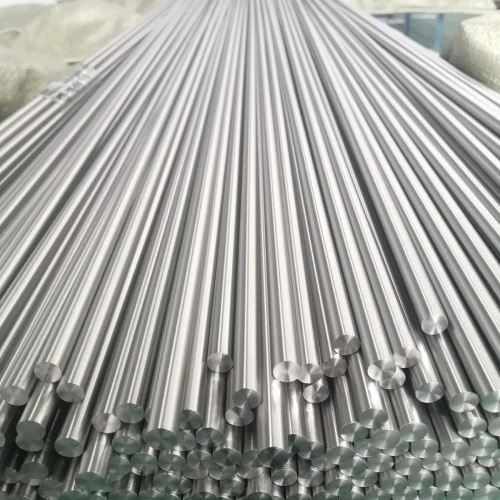
Understanding Titanium's Dominance in Biomedical Applications
Titanium and its alloys have maintained an unrivaled position in biomedical engineering since the 1950s, fundamentally reshaping how medical professionals approach implantable devices. The metal's dominance stems from a unique combination of properties that address critical clinical requirements: exceptional biocompatibility that prevents adverse tissue reactions, outstanding corrosion resistance that ensures decades-long implant survival, and mechanical strength approaching that of stainless steel while weighing approximately half as much. Biocompatible Titanium Bars manufactured according to ASTM F136 standards represent the pinnacle of medical-grade titanium production, specifically engineered for applications where patient safety and long-term reliability are paramount. These bars serve as the foundational material for orthopedic implants including hip and knee replacements, dental prosthetics, spinal fusion devices, and cardiovascular equipment such as pacemaker casings and stents.
Material Properties That Define Excellence
The superiority of titanium in medical applications originates from its fundamental material characteristics. Titanium forms a stable, thin oxide layer (TiO2) upon exposure to oxygen, creating a passive surface that resists corrosion in the aggressive environment of human body fluids. This oxide layer measures only nanometers thick yet provides comprehensive protection against electrochemical degradation, ensuring implant stability even after decades of exposure to blood, saliva, and interstitial fluids. Commercially pure titanium and titanium alloys such as Ti-6Al-4V ELI (Extra Low Interstitial) exhibit tensile strengths exceeding 860 MPa with yield strengths above 795 MPa, providing the mechanical robustness necessary for load-bearing applications while maintaining a density of approximately 4.5 g/cm³. The low thermal expansion coefficient of Biocompatible Titanium Bars minimizes dimensional changes under temperature fluctuations, which is critical during surgical procedures and subsequent healing processes where temperature variations occur naturally within the body.
Biocompatibility: The Foundation of Clinical Success
Biocompatibility represents the most critical property determining whether an implant material succeeds or fails in clinical applications. Titanium's exceptional biocompatibility stems from its biologically inert nature and its ability to facilitate osseointegration—the direct structural and functional connection between living bone tissue and the implant surface. When Biocompatible Titanium Bars are implanted, the stable oxide layer prevents ion release that could trigger inflammatory responses or allergic reactions, allowing surrounding tissues to accept the implant as a permanent structural component. Research demonstrates that titanium surfaces promote osteoblast adhesion, proliferation, and differentiation, enabling new bone formation directly on the implant surface without intervening fibrous tissue. This phenomenon, first documented by Swedish orthopedic surgeon Per-Ingvar Brånemark in the 1960s, revolutionized dental and orthopedic implantology by proving that titanium could achieve permanent integration with bone tissue. Modern Biocompatible Titanium Bars undergo rigorous quality control procedures including X-ray fluorescence analysis for composition verification and mechanical testing to ensure they meet ISO 13485:2017 medical device quality management standards, guaranteeing consistent biocompatibility performance across production batches.
Additive Manufacturing: Transforming Implant Production Paradigms
Additive manufacturing, commonly known as 3D printing, has fundamentally transformed how medical professionals conceptualize and fabricate titanium implants. Traditional manufacturing methods including machining and casting imposed significant design constraints, limiting implants to relatively simple geometries and requiring extensive post-processing to achieve acceptable surface finishes. Powder bed fusion technologies—specifically selective laser melting and electron beam melting—enable the layer-by-layer construction of complex three-dimensional structures directly from digital designs, eliminating many traditional manufacturing limitations. These advanced processes allow manufacturers to create patient-specific implants with intricate porous architectures that mimic natural bone structure, promoting superior osseointegration while reducing stress shielding effects that can lead to implant loosening and failure. Biocompatible Titanium Bars now serve as feedstock for wire-based additive manufacturing systems, or they are processed into powders for powder bed fusion applications, expanding the range of fabrication options available to medical device manufacturers.
Selective Laser Melting and Electron Beam Melting Technologies
Selective laser melting utilizes high-powered lasers to selectively fuse titanium powder particles in precisely controlled patterns, building components layer by layer with resolution capabilities approaching 50 micrometers. The process occurs in an inert atmosphere—typically argon or nitrogen—preventing oxidation and contamination during fabrication. Electron beam melting operates on similar principles but employs a focused electron beam in a high vacuum environment, enabling higher build speeds and reduced residual stresses due to elevated process temperatures. Both technologies can produce Biocompatible Titanium Bars components with mechanical properties comparable to or exceeding traditionally manufactured equivalents, though microstructural differences exist due to the rapid solidification rates characteristic of additive processes. The ability to manufacture complex geometries including lattice structures with controllable porosity percentages ranging from 30% to 90% represents a revolutionary advancement, allowing orthopedic surgeons to specify implants with elastic moduli closely matching surrounding bone tissue, thereby minimizing the stress shielding phenomenon that causes bone resorption around conventional solid implants.
Design Freedom and Customization Capabilities
Additive manufacturing liberates medical device designers from the geometric constraints imposed by traditional subtractive manufacturing methods. Complex internal channels, variable-density lattice structures, and patient-specific anatomical geometries—features previously impossible or economically prohibitive to manufacture—now represent routine capabilities. Surgeons can obtain computed tomography scans of a patient's anatomy, convert the imaging data into three-dimensional digital models, and collaborate with engineers to design implants precisely conforming to the patient's unique anatomical requirements. This customization extends beyond external geometry to include internal architecture, enabling the creation of graded porosity structures where the density transitions smoothly from the implant core to the bone interface. Such designs optimize mechanical load transfer while providing interconnected porous networks that facilitate vascular ingrowth and nutrient transport, critical factors for long-term implant success. Manufacturing facilities equipped with state-of-the-art additive manufacturing equipment, including Mazak five-axis CNC machines and precision forging systems, can translate these complex designs into physical Biocompatible Titanium Bars components with tolerances achieving h7 to h9 precision standards, ensuring proper fit and function during surgical implantation procedures.
Critical Quality Standards and Manufacturing Excellence
The production of medical-grade Biocompatible Titanium Bars demands adherence to rigorous international standards that govern material composition, mechanical properties, surface characteristics, and manufacturing processes. ASTM F136 represents the primary specification for titanium-6aluminum-4vanadium extra low interstitial alloy for surgical implant applications, defining strict limits for alloying elements and interstitial impurities including oxygen, nitrogen, carbon, and iron. These specifications ensure consistent material performance across production batches, eliminating variability that could compromise implant safety or effectiveness. ISO 13485:2017 certification requires manufacturers to implement comprehensive quality management systems specifically designed for medical device production, encompassing everything from raw material traceability through finished product inspection and post-market surveillance. Advanced manufacturing facilities utilize sophisticated analytical equipment including X-ray fluorescence spectrometers for chemical composition verification, universal testing machines for mechanical property characterization, and coordinate measuring machines for dimensional inspection, collectively ensuring that every Biocompatible Titanium Bars product meets or exceeds specified requirements.
Surface Finishing and Tolerance Requirements
Surface quality profoundly influences implant performance, affecting both mechanical integrity and biological response. Additive manufacturing processes typically produce surfaces with roughness values ranging from 10 to 30 micrometers Ra, requiring post-processing treatments to achieve biomedically acceptable finishes. Centerless grinding and polishing operations reduce surface roughness while maintaining precise dimensional tolerances, with modern equipment capable of consistently achieving h7, h8, or h9 tolerance grades depending on application requirements. These tight tolerances prove essential for components such as modular joint replacement systems where precise mating surfaces ensure proper mechanical function and prevent fretting corrosion at interfaces. Titanium bar peeling machines remove surface layers affected by manufacturing processes, exposing fresh material and eliminating potential contamination sources. Some applications benefit from deliberately roughened surfaces that enhance osseointegration; in these cases, controlled surface treatments including acid etching, sandblasting, or anodization create micro-scale textures that promote cellular adhesion and bone formation. The selection of appropriate surface treatments depends on the specific clinical application, with load-bearing orthopedic implants typically requiring different surface characteristics than dental implants or cardiovascular devices.
Material Traceability and Quality Assurance Protocols
Complete material traceability represents a fundamental requirement in medical device manufacturing, enabling manufacturers to track every component from raw material reception through final product delivery and implantation. Biocompatible Titanium Bars producers implement comprehensive traceability systems that assign unique identifiers to each production batch, recording critical information including raw material certifications, processing parameters, inspection results, and final product destination. This documentation proves invaluable during adverse event investigations or product recalls, allowing manufacturers to quickly identify affected products and notify customers. One hundred percent inspection of critical dimensions ensures that geometric specifications are met, while destructive testing of representative samples from each batch verifies mechanical properties including tensile strength, yield strength, elongation, and hardness values. Sophisticated quality control laboratories equipped with metallographic microscopes, scanning electron microscopes, and energy-dispersive X-ray spectrometers conduct detailed microstructural analyses, confirming that phase compositions, grain structures, and potential defects remain within acceptable limits. This multi-layered quality assurance approach provides the confidence necessary for surgeons and patients to trust that implanted devices will perform safely and effectively throughout their intended service life.
Real-World Applications Driving Industry Innovation
The practical application of Biocompatible Titanium Bars spans virtually every medical specialty requiring implantable devices. Orthopedic surgery represents the largest application sector, with hip and knee replacement procedures alone accounting for millions of implants annually worldwide. These joint replacement systems consist of multiple titanium components including femoral stems, acetabular cups, and tibial trays, each manufactured to exacting specifications and often featuring porous surfaces or coatings that promote biological fixation. Spinal fusion devices constructed from Biocompatible Titanium Bars provide structural support while facilitating bone ingrowth, eliminating the need for autogenous bone grafting in many cases. The dental implant industry has experienced exponential growth as titanium dental implants have achieved success rates exceeding 95% over ten-year periods, replacing traditional bridgework and dentures with permanent tooth replacements that function and appear virtually identical to natural dentition. Cardiovascular applications including pacemaker casings benefit from titanium's combination of electrical conductivity, corrosion resistance, and biocompatibility, while coronary stents manufactured from ultra-thin titanium alloys maintain vessel patency without triggering thrombosis or excessive inflammatory responses. Sports medicine specialists utilize titanium bone anchors and interference screws to repair torn ligaments and tendons, providing mechanical strength sufficient to withstand rehabilitative loads while facilitating tissue healing and remodeling.
Emerging Applications and Future Directions
Advanced manufacturing capabilities continue expanding the boundaries of what titanium implants can achieve. Custom craniofacial reconstruction plates manufactured via additive manufacturing from Biocompatible Titanium Bars enable surgeons to restore complex facial anatomy following trauma or tumor resection, improving both functional and aesthetic outcomes. Researchers are investigating surface modifications including nanostructured coatings and bioactive molecule incorporation that could enhance osseointegration rates and reduce healing times. The integration of sensor technologies directly into titanium implants represents another frontier, potentially enabling real-time monitoring of implant loading, tissue healing, and early detection of complications. Beta titanium alloys with elastic moduli more closely matching natural bone are being developed specifically for additive manufacturing, promising to further reduce stress shielding while maintaining adequate strength for load-bearing applications. Antibacterial surface treatments applied to Biocompatible Titanium Bars could significantly reduce infection rates, addressing one of the most serious complications in implant surgery. As material science, manufacturing technology, and biological understanding advance synergistically, the capabilities and applications of titanium in biomedicine will continue expanding, improving patient outcomes and quality of life for millions of individuals worldwide.
Conclusion
Titanium's unique combination of biocompatibility, mechanical properties, and manufacturability has established it as the premier material for medical implants. When coupled with additive manufacturing technologies, Biocompatible Titanium Bars enable unprecedented customization and performance optimization that directly translate to improved patient outcomes and reduced complication rates.
Cooperate with XI'AN MICRO-A Titanium Metals Co.,Ltd.
XI'AN MICRO-A Titanium Metals Co., Ltd., founded in 2017 and headquartered in Baoji—China's renowned titanium city—stands as your premier China Biocompatible Titanium Bars factory and China Biocompatible Titanium Bars supplier. As a leading China Biocompatible Titanium Bars manufacturer offering China Biocompatible Titanium Bars wholesale, we provide Biocompatible Titanium Bars for sale at competitive Biocompatible Titanium Bars price points, delivering the best Biocompatible Titanium Bars on the market. Our comprehensive product portfolio includes titanium sponge, ingots, plates, tubes, rods, castings, alloys, wire, flanges, standard parts, and specialized medical-grade bars manufactured to ASTM standards with tolerances from h7 to h9. Our ISO 13485:2017, AS/EN 9100, and ISO14001 certifications, combined with our strategic partnership with Baoti Group, ensure exceptional quality through our 20,000 m² facility housing advanced equipment including 50 MN hammering presses, 2500-ton hydraulic presses, and precision CNC machining centers. We offer original factory supply ensuring stable inventory, advanced equipment guaranteeing exceptional precision, rigorous quality control meeting international standards, customized services based on your drawings and technical requirements, and fast delivery through multiple shipping methods. Whether you need private customization, non-standard components, or drawing processing services, our experienced team provides comprehensive technical consultation, sample delivery within 25-30 business days with full material certifications, and dedicated after-sales support ensuring your project success. Contact us today at mayucheng188@aliyun.com to discuss how our expertise in Biocompatible Titanium Bars can elevate your medical device manufacturing capabilities. Bookmark this resource for future reference as you navigate the evolving landscape of bio-implant materials and additive manufacturing technologies.
References
1. Kaur M, Singh K. Review on titanium and titanium based alloys as biomaterials for orthopaedic applications. Materials Science and Engineering: C, 2019.
2. Liu X, Chu PK, Ding C. Surface modification of titanium, titanium alloys, and related materials for biomedical applications. Materials Science and Engineering: R: Reports, 2004.
3. Elias CN, Lima JHC, Valiev R, Meyers MA. Biomedical applications of titanium and its alloys. JOM: The Journal of The Minerals, Metals & Materials Society, 2008.
4. Niinomi M, Nakai M, Hieda J. Development of new metallic alloys for biomedical applications. Acta Biomaterialia, 2012.
5. Geetha M, Singh AK, Asokamani R, Gogia AK. Ti based biomaterials, the ultimate choice for orthopaedic implants – A review. Progress in Materials Science, 2009.