




Titanium Machining Benefits for Precision Parts
In today's demanding industrial landscape, engineers and manufacturers face an increasingly critical challenge: finding materials that can withstand extreme conditions while maintaining precise tolerances and exceptional performance. Whether you're developing aerospace components that must endure high-altitude pressures, medical implants requiring perfect biocompatibility, or automotive parts demanding lightweight strength, the selection of machining materials often determines project success or failure. This comprehensive guide explores how titanium machined parts revolutionize precision manufacturing, delivering unmatched benefits that solve the most demanding engineering challenges across industries worldwide.
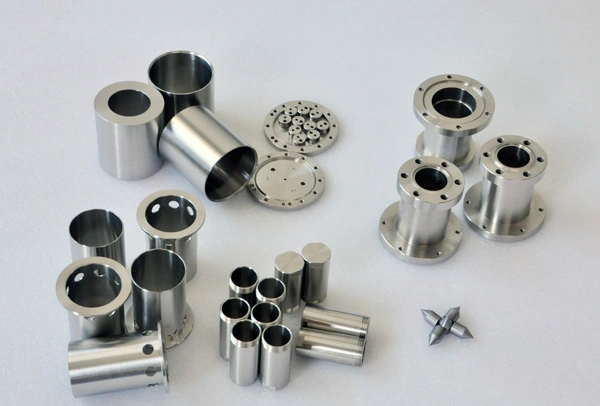
Superior Material Properties of Titanium Machined Parts
Exceptional Strength-to-Weight Ratio Performance
Titanium machined parts represent the pinnacle of engineering material science, offering an extraordinary combination of high tensile strength and remarkably low density. Titanium and its alloys are lightweight and exceptionally robust, making them ideal for applications where weight reduction is crucial without compromising structural integrity. This unique characteristic allows manufacturers to create titanium machined parts that are significantly lighter than steel alternatives while maintaining superior mechanical properties. The exceptional strength-to-weight ratio of machined titanium parts enables designers to optimize component geometry, reduce overall system weight, and improve fuel efficiency in aerospace applications or enhance patient comfort in medical devices. The Grade 2 and Grade 5 (Ti-6Al-4V) titanium alloys commonly used in precision machining offer tensile strengths ranging from 345 MPa to over 1000 MPa, depending on the specific alloy and heat treatment applied. This remarkable strength allows titanium machined parts to withstand extreme mechanical stresses while maintaining dimensional stability over extended service life. The low modulus of elasticity of titanium also provides enhanced flexibility compared to steel, enabling the design of components that can absorb shock and vibration while maintaining their structural integrity.
Outstanding Corrosion Resistance Capabilities
One of the most significant advantages of titanium machined parts lies in their exceptional corrosion resistance properties. Titanium has superior corrosion resistance due to its low electrical conductivity which allows for electrochemical oxidation. This electrochemical oxidation provides a passive, oxide layer which equates to corrosion resistance. This natural protective barrier forms spontaneously when titanium is exposed to oxygen, creating a self-healing surface that continuously regenerates even when scratched or damaged. The corrosion resistance of machined titanium parts extends across a wide range of aggressive environments, including saltwater, acidic solutions, and high-temperature oxidizing conditions. This property makes titanium machined parts particularly valuable in marine applications, chemical processing equipment, and offshore drilling platforms where traditional materials would rapidly deteriorate. The passive oxide layer not only prevents corrosion but also contributes to the biocompatibility of titanium, making it the material of choice for surgical implants and medical devices that must remain inert within the human body.
Low Thermal Expansion Characteristics
Titanium machined parts exhibit remarkably low thermal expansion coefficients, providing exceptional dimensional stability across wide temperature ranges. This characteristic is crucial for precision applications where thermal cycling could compromise component fit and function. The coefficient of thermal expansion for titanium is approximately 8.6 × 10⁻⁶ per degree Celsius, which is significantly lower than many other engineering materials, including aluminum and steel. This low thermal expansion property ensures that machined titanium parts maintain their precise dimensions and tolerances even when subjected to extreme temperature variations. In aerospace applications, where components may experience temperature swings from -65°C at altitude to several hundred degrees Celsius near engine compartments, the dimensional stability of titanium machined parts prevents binding, clearance issues, and premature wear. Similarly, in precision instrumentation and measurement devices, the thermal stability of titanium components ensures consistent accuracy and reliability over the entire operating temperature range.
Advanced Manufacturing Capabilities for Precision Titanium Parts
State-of-the-Art CNC Machining Technologies
The production of high-quality titanium machined parts requires sophisticated manufacturing technologies and specialized expertise. CNC machining titanium is known for its ability to achieve a high level of precision and accuracy. This is why it is used in the aerospace, medical, and other high-precision applications where dimensional tolerances are critical. Modern CNC machining centers equipped with advanced spindle systems, rigid machine structures, and precise positioning controls enable the creation of complex titanium components with tolerances as tight as ±0.005mm. Five-axis CNC machining capabilities allow for the production of intricate geometries in titanium machined parts that would be impossible to achieve with conventional three-axis equipment. This advanced machining technology enables the creation of undercuts, complex curves, and internal features in a single setup, reducing setup time, improving accuracy, and minimizing the risk of dimensional variations between operations. The use of specialized cutting tools designed specifically for titanium machining, combined with optimized cutting parameters and coolant systems, ensures consistent surface finishes and dimensional accuracy across production runs. Advanced machining centers utilize adaptive control systems that continuously monitor cutting forces, tool wear, and part dimensions during the machining process. These systems automatically adjust cutting parameters to maintain optimal machining conditions, ensuring consistent quality in titanium machined parts while maximizing tool life and productivity. The integration of in-process measurement systems enables real-time verification of critical dimensions, allowing for immediate corrections and ensuring that every machined titanium part meets stringent quality requirements.
Precision Surface Finishing and Quality Control
The surface finish quality of titanium machined parts directly impacts their performance in critical applications. Advanced finishing techniques, including centerless grinding, electrochemical polishing, and precision lapping, enable the achievement of surface finishes ranging from Ra 0.2 to 3.2 μm depending on application requirements. These superior surface finishes not only improve the aesthetic appearance of machined titanium parts but also enhance their functional properties, including fatigue resistance, corrosion resistance, and biocompatibility. Quality control processes for titanium machined parts involve comprehensive inspection protocols using coordinate measuring machines (CMMs), optical measurement systems, and specialized surface roughness analyzers. Each component undergoes rigorous dimensional verification, ensuring compliance with specifications and maintaining the high precision standards required for critical applications. Material traceability systems track each batch of titanium material from source to finished component, providing complete documentation of material properties, heat treatment records, and inspection results. Non-destructive testing methods, including ultrasonic inspection, dye penetrant testing, and radiographic examination, are employed to detect internal defects or surface discontinuities that could compromise the performance of titanium machined parts. These comprehensive quality assurance measures ensure that every component meets or exceeds customer specifications and industry standards, providing confidence in the reliability and performance of the finished products.
Industry Applications and Performance Benefits
Aerospace and Defense Applications
The aerospace industry represents one of the largest markets for high-performance titanium machined parts, driven by the demanding requirements for lightweight, high-strength components that can withstand extreme operating conditions. Titanium machined parts are extensively used in aircraft engines, where they provide exceptional performance in high-temperature, high-stress environments while contributing to overall weight reduction and fuel efficiency improvements. Critical engine components such as compressor blades, turbine discs, and structural supports benefit from the unique properties of machined titanium parts, including their ability to maintain mechanical properties at elevated temperatures and resist oxidation in combustion environments. The excellent fatigue resistance of titanium enables these components to withstand millions of stress cycles throughout their service life, ensuring reliable operation and extended maintenance intervals. In aircraft structures, titanium machined parts are used for landing gear components, wing attachments, and fuselage elements where their corrosion resistance and strength-to-weight ratio provide significant advantages over traditional materials. The dimensional stability of titanium under thermal cycling ensures proper fit and function of critical joints and interfaces, contributing to overall aircraft safety and reliability.
Medical Device and Biomedical Applications
Titanium is considered the most biocompatible metal, thanks to its high resistance to corrosion caused by bodily fluids, its capacity for osseointegration, its bio-inertness, and its high fatigue limit. This exceptional biocompatibility makes titanium machined parts the preferred choice for surgical implants, prosthetic devices, and medical instruments that must function safely and reliably within the human body. Orthopedic implants manufactured from machined titanium parts demonstrate superior performance compared to other metallic materials, with reduced risk of adverse tissue reactions and improved long-term stability. The modulus of elasticity of titanium closely matches that of human bone, reducing stress shielding effects and promoting natural bone remodeling around implanted devices. This compatibility enhances patient outcomes and extends implant longevity. Dental applications also benefit significantly from the properties of titanium machined parts, particularly in implant fixtures and abutments where osseointegration is crucial for successful treatment outcomes. The surface characteristics of precision-machined titanium components can be optimized to promote bone ingrowth while maintaining the mechanical strength necessary to support masticatory forces over extended periods.
Industrial and Chemical Processing Equipment
The exceptional corrosion resistance of titanium machined parts makes them invaluable in chemical processing applications where exposure to aggressive media would rapidly degrade conventional materials. Heat exchangers, reaction vessels, and piping systems manufactured from machined titanium parts provide extended service life and reduced maintenance requirements in chlorine production, petrochemical processing, and pharmaceutical manufacturing facilities. The ability of titanium to resist pitting, crevice corrosion, and stress corrosion cracking in chloride-containing environments makes machined titanium parts particularly valuable in desalination plants and marine systems. These components maintain their structural integrity and performance characteristics even when subjected to continuous exposure to seawater and other corrosive media, providing reliable operation and reduced lifecycle costs. Industrial applications also benefit from the thermal stability and low thermal expansion of titanium machined parts, particularly in high-temperature processing equipment where dimensional stability is critical for proper operation. The ability to maintain precise clearances and tolerances across wide temperature ranges ensures consistent performance and prevents premature wear or failure of critical components.
Cost-Effectiveness and Long-Term Value
Lifecycle Cost Analysis of Titanium Machined Parts
While the initial cost of titanium machined parts may be higher than conventional materials, their superior performance characteristics and extended service life often result in lower total cost of ownership over the component lifecycle. The exceptional durability and corrosion resistance of machined titanium parts significantly reduce maintenance requirements, replacement frequency, and associated downtime costs in critical applications. The lightweight nature of titanium machined parts provides ongoing operational benefits, particularly in aerospace and automotive applications where weight reduction directly translates to improved fuel efficiency and reduced operating costs. Over the service life of an aircraft or vehicle, the fuel savings achieved through weight reduction can substantially exceed the initial premium paid for titanium components. The reliability and consistent performance of titanium machined parts also contribute to reduced warranty costs and improved customer satisfaction. The predictable behavior and extended service life of these components enable manufacturers to offer longer warranty periods and reduce the risk of field failures, providing competitive advantages in demanding markets.
Manufacturing Efficiency and Quality Assurance
Modern manufacturing techniques for titanium machined parts have evolved to maximize efficiency while maintaining the highest quality standards. Advanced tooling systems, optimized cutting parameters, and sophisticated workholding solutions enable manufacturers to produce complex titanium components with minimal waste and maximum precision. The use of near-net-shape forging and casting processes for raw material production further reduces machining time and material waste. The implementation of lean manufacturing principles and continuous improvement methodologies ensures that production processes for titanium machined parts are constantly optimized for efficiency and quality. Statistical process control systems monitor critical parameters throughout production, enabling immediate identification and correction of any variations that could affect component quality or performance. Automated handling systems and robotic integration further enhance manufacturing efficiency while reducing the risk of damage or contamination that could compromise the performance of finished titanium machined parts. These advanced manufacturing capabilities enable suppliers to offer competitive pricing while maintaining the stringent quality standards required for critical applications.
Conclusion
Titanium machining benefits for precision parts represent a transformative solution for industries demanding exceptional performance, reliability, and longevity. The unique combination of superior strength-to-weight ratio, outstanding corrosion resistance, and dimensional stability makes titanium machined parts indispensable for aerospace, medical, and industrial applications where failure is not an option.
Cooperate with XI'AN MICRO-A Titanium Metals Co.,Ltd.
As a leading China titanium machined parts manufacturer and China titanium machined parts supplier, XI'AN MICRO-A Titanium Metals Co., Ltd. offers unparalleled expertise in precision titanium fabrication since 2017. Headquartered in Baoji, China's titanium city, we provide comprehensive solutions from titanium sponge to finished machined titanium parts, ensuring complete control over quality and delivery. Our advanced CNC machining capabilities, including 5-axis machining centers and precision grinding equipment, deliver titanium machined parts with tolerances up to ±0.005mm and surface finishes of Ra 0.2-3.2 μm.
Our ISO 13485:2017, AS/EN 9100, and ISO 14001 certifications, combined with our strategic partnership with Baoti Group, ensure that every titanium machined parts order meets the highest international standards. We specialize in Grade 2 and Grade 5 (Ti-6Al-4V) titanium alloys, offering customized solutions based on your drawings and technical requirements. With our 98% on-time delivery rate and 99.7% first-time quality pass rate, we guarantee reliable service as your trusted China titanium machined parts factory.
Looking for the best titanium machined parts at competitive titanium machined parts price? Our China titanium machined parts wholesale solutions serve aerospace, medical, automotive, and industrial markets globally. Contact us for titanium machined parts for sale and experience our commitment to excellence. Bookmark this page for future reference and reach out to mayucheng188@aliyun.com for your titanium machining needs.
FAQ
Q: What are the main advantages of titanium machined parts over steel components?
A: Titanium machined parts offer superior strength-to-weight ratio, exceptional corrosion resistance, and lower thermal expansion compared to steel, making them ideal for aerospace and medical applications.
Q: Can titanium machined parts be customized for specific applications?
A: Yes, titanium machined parts can be fully customized based on drawings, samples, and technical specifications, with capabilities including 5-axis CNC machining and precision grinding to tight tolerances.
Q: What quality certifications should I expect from titanium machined parts suppliers?
A: Look for suppliers with ISO 9001, AS/EN 9100 aerospace certification, and ISO 13485 medical device certification to ensure consistent quality and traceability in titanium machined parts.
Q: How long is the typical delivery time for custom titanium machined parts?
A: Delivery times vary by complexity, but experienced manufacturers typically provide prototypes within 25-30 days and production quantities based on volume and specifications.
References
1. Boyer, R., Welsch, G., & Collings, E.W. (1994). Materials Properties Handbook: Titanium Alloys. ASM International.
2. Donachie, M.J. (2000). Titanium: A Technical Guide, 2nd Edition. ASM International.
3. Peters, M., Kumpfert, J., Ward, C.H., & Leyens, C. (2003). Titanium alloys for aerospace applications. Advanced Engineering Materials, 5(6), 419-427.
4. Niinomi, M. (2008). Mechanical biocompatibilities of titanium alloys for biomedical applications. Journal of the Mechanical Behavior of Biomedical Materials, 1(1), 30-42.