




What Are the Benefits of Welding AMS 4911 Titanium Sheet?
When critical aerospace components fail due to poor weld integrity, or when medical implants face premature degradation from inadequate joining processes, the consequences can be catastrophic. Welding ASTM 4911 Titanium Sheet offers exceptional joint strength, superior corrosion resistance, and unmatched reliability in high-performance applications where structural integrity is non-negotiable. This comprehensive guide explores the transformative advantages of welding ASTM 4911 Titanium Sheet and why it has become the material of choice for industries demanding excellence.
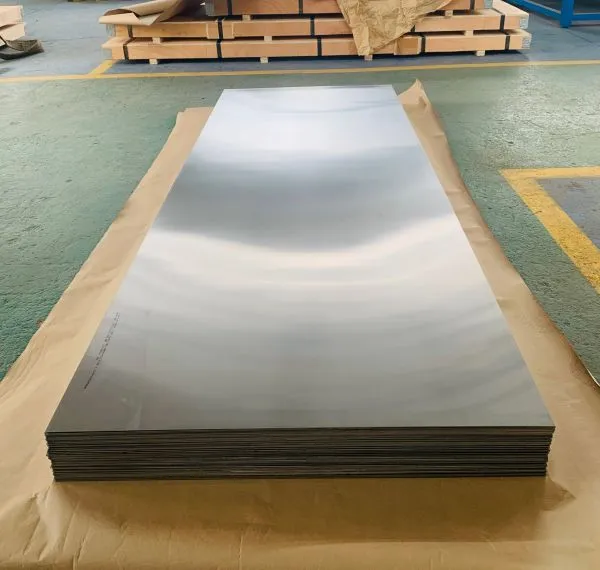
Understanding ASTM 4911 Titanium Sheet Weldability Characteristics
ASTM 4911 Titanium Sheet, which corresponds to Grade 5 Ti-6Al-4V titanium alloy, exhibits remarkable welding characteristics that distinguish it from other metallic materials. This alpha-beta titanium alloy contains six percent aluminum and four percent vanadium, creating a metallurgical structure that responds exceptionally well to various welding techniques. The material's excellent weldability stems from its balanced composition, which maintains stability during thermal cycling and prevents common welding defects such as hot cracking or brittleness in the heat-affected zone. When properly welded, ASTM 4911 Titanium Sheet maintains approximately ninety percent of its base metal strength, making it ideal for load-bearing applications in aerospace structures, medical devices, and chemical processing equipment. The cold-rolling process used to manufacture ASTM 4911 Titanium Sheet enhances its welding properties by creating a uniform grain structure throughout the material. This consistent microstructure allows for predictable heat distribution during welding operations, reducing the risk of localized stress concentrations that could compromise joint integrity. Engineers and fabricators particularly value this material because it can be welded using multiple techniques including gas tungsten arc welding, electron beam welding, and laser welding, providing flexibility in manufacturing processes. The annealed condition of ASTM 4911 Titanium Sheet further improves its weldability by reducing residual stresses and creating an optimal metallurgical state for fusion welding operations.
Metallurgical Stability During Welding Operations
The metallurgical stability of ASTM 4911 Titanium Sheet during welding operations represents a critical advantage for manufacturers working with complex assemblies. Unlike many materials that undergo significant phase transformations during heating and cooling cycles, this titanium alloy maintains its alpha-beta structure throughout the welding process, resulting in consistent mechanical properties across the weld zone. The aluminum content provides solid solution strengthening while enhancing oxidation resistance at elevated temperatures, protecting the weld pool from atmospheric contamination. Vanadium acts as a beta stabilizer, improving the material's formability and ensuring that the weld metal possesses comparable ductility to the base material. During the welding process, ASTM 4911 Titanium Sheet exhibits minimal distortion compared to conventional structural materials, allowing for tighter dimensional tolerances in finished components. This dimensional stability proves particularly valuable in aerospace applications where precise fit-up requirements are essential for aerodynamic performance and structural efficiency. The material's low thermal expansion coefficient reduces thermal stresses during welding, minimizing the risk of warping or buckling in thin-section components. Fabricators working with ASTM 4911 Titanium Sheet can achieve consistent weld penetration and fusion characteristics, reducing the need for extensive post-weld inspection and rework operations that increase manufacturing costs and lead times.
Compatibility with Advanced Welding Technologies
ASTM 4911 Titanium Sheet demonstrates exceptional compatibility with advanced welding technologies that enable precision manufacturing of complex components. Electron beam welding produces exceptionally deep, narrow welds in this material with minimal heat-affected zones, making it ideal for joining thick sections or creating hermetically sealed assemblies for aerospace and medical applications. The vacuum environment used in electron beam welding eliminates atmospheric contamination, ensuring that ASTM 4911 Titanium Sheet welds achieve maximum purity and mechanical properties. Laser welding technology offers similar advantages with greater flexibility in part geometry and accessibility, allowing manufacturers to create intricate weld patterns in three-dimensional assemblies without extensive fixturing requirements. Gas tungsten arc welding remains the most widely used technique for joining ASTM 4911 Titanium Sheet, offering excellent control over heat input and weld bead appearance. This process allows welders to produce visually superior joints with smooth surface finishes that require minimal post-weld machining or finishing operations. The use of argon or helium shielding gases protects the molten weld pool and heat-affected zone from oxygen and nitrogen pickup, which would otherwise cause embrittlement and reduce ductility. Proper shielding gas coverage on both sides of the joint ensures that ASTM 4911 Titanium Sheet welds maintain their characteristic silver-gray color, indicating proper protection from atmospheric contamination and excellent corrosion resistance properties.
Superior Strength-to-Weight Ratio in Welded Assemblies
The exceptional strength-to-weight ratio of welded ASTM 4911 Titanium Sheet assemblies provides significant performance advantages in weight-critical applications across aerospace, medical, and industrial sectors. With a density of approximately 4.43 grams per cubic centimeter, this titanium alloy weighs roughly forty-five percent less than steel while offering comparable or superior strength characteristics. When properly welded, ASTM 4911 Titanium Sheet joints achieve tensile strengths exceeding 900 megapascals, enabling engineers to design lighter structures without compromising safety factors or load-carrying capacity. This remarkable combination of low weight and high strength translates directly into improved fuel efficiency for aircraft, increased payload capacity for space vehicles, and enhanced patient comfort for medical implants. Aerospace manufacturers particularly value the weight savings achieved through welded ASTM 4911 Titanium Sheet construction, as every kilogram removed from an aircraft structure results in significant fuel savings over the vehicle's operational lifetime. The material's high specific strength allows designers to reduce section thicknesses while maintaining structural integrity, creating opportunities for innovative designs that would be impractical with heavier materials. Welded titanium assemblies in aircraft bulkheads, landing gear components, and engine mounts demonstrate excellent fatigue resistance under cyclic loading conditions, ensuring reliable performance throughout extended service lives. The combination of lightweight construction and robust welded joints in ASTM 4911 Titanium Sheet enables next-generation aerospace platforms to achieve unprecedented performance metrics.
Enhanced Load Distribution Through Welded Joints
Welded joints in ASTM 4911 Titanium Sheet provide superior load distribution characteristics compared to mechanically fastened assemblies, eliminating stress concentrations associated with bolt holes and fastener interfaces. The continuous metallurgical bond created through fusion welding allows forces to flow smoothly through structural members without the localized stress risers that can initiate fatigue cracks in drilled or punched connections. This uniform stress distribution enables designers to optimize material utilization throughout structures, placing ASTM 4911 Titanium Sheet precisely where strength is required while minimizing material in lower-stress regions. The resulting weight savings compound the inherent density advantage of titanium, creating structures that achieve maximum performance with minimum mass. The elimination of mechanical fasteners through welding also reduces part counts and assembly complexity, streamlining manufacturing processes and reducing opportunities for assembly errors. Welded ASTM 4911 Titanium Sheet assemblies require fewer individual components, translating into reduced inventory costs, simplified supply chain management, and faster production throughput. The absence of fastener holes also improves the aerodynamic smoothness of external surfaces in aerospace applications, reducing drag and further enhancing fuel efficiency. In medical implant applications, welded titanium structures eliminate crevices where bacteria could accumulate, improving biocompatibility and reducing infection risks for patients receiving implantable devices fabricated from ASTM 4911 Titanium Sheet.
Optimized Structural Efficiency in Multi-Axis Loading
ASTM 4911 Titanium Sheet welded structures excel in applications involving complex, multi-directional loading scenarios where traditional materials struggle to maintain structural efficiency. The isotropic properties of properly welded titanium joints ensure consistent strength regardless of load direction, providing reliable performance in components subjected to combined tension, compression, bending, and torsional forces. This multi-axial strength capability proves essential in aerospace landing gear assemblies, where loads vary dramatically during takeoff, flight, and landing operations. Engineers designing with welded ASTM 4911 Titanium Sheet can optimize structural configurations for actual service loads rather than designing around material limitations, resulting in lighter, more efficient structures. The excellent creep resistance of ASTM 4911 Titanium Sheet at elevated temperatures ensures that welded joints maintain their dimensional stability and load-carrying capacity during extended exposure to operational temperatures up to 400 degrees Celsius. This high-temperature performance capability extends the application envelope for welded titanium structures in engine compartments, exhaust systems, and other thermally challenging environments. The material's low thermal conductivity also provides some insulation value, protecting adjacent components from excessive heat exposure while maintaining structural integrity in the weld zones. These thermal management characteristics make ASTM 4911 Titanium Sheet an attractive choice for hybrid structures where welded titanium components interface with temperature-sensitive materials or electronic systems requiring thermal protection.
Outstanding Corrosion Resistance in Welded Applications
The exceptional corrosion resistance of welded ASTM 4911 Titanium Sheet represents one of its most valuable attributes for applications in aggressive chemical environments, marine atmospheres, and biological systems. The passive oxide layer that forms spontaneously on titanium surfaces provides robust protection against chloride-induced corrosion, acidic solutions, and alkali exposures that rapidly degrade conventional materials. When properly welded with appropriate shielding gas protection, ASTM 4911 Titanium Sheet joints exhibit corrosion resistance equivalent to or better than the base material, ensuring long-term durability without protective coatings or cathodic protection systems. This inherent corrosion immunity eliminates maintenance requirements associated with painting, plating, or periodic replacement of corroded components, significantly reducing lifecycle costs for equipment operating in harsh environments. Chemical processing facilities rely on welded ASTM 4911 Titanium Sheet for reactors, heat exchangers, and piping systems handling corrosive media that would quickly destroy stainless steel or exotic nickel alloys. The material's resistance to chloride stress corrosion cracking provides critical safety margins in applications involving concentrated chloride solutions or marine environments where catastrophic failures could result from localized corrosion attack. Offshore oil and gas platforms utilize welded titanium structures in seawater service, taking advantage of the material's ability to resist pitting, crevice corrosion, and microbiologically influenced corrosion without degradation. The excellent corrosion performance of ASTM 4911 Titanium Sheet welds ensures that structural integrity remains intact throughout decades of continuous exposure to corrosive conditions.
Biocompatibility for Medical Implant Applications
The outstanding biocompatibility of welded ASTM 4911 Titanium Sheet makes it the material of choice for permanent medical implants where long-term compatibility with human tissue is essential. The passive oxide layer on titanium surfaces integrates seamlessly with bone tissue through a process called osseointegration, creating strong biological bonds that anchor implants securely within the skeletal system. Welded titanium structures used in orthopedic implants, dental fixtures, and surgical instruments demonstrate no toxic reactions or inflammatory responses when implanted in the human body, providing patients with reliable, long-lasting medical devices. The ability to weld ASTM 4911 Titanium Sheet enables manufacturers to create complex implant geometries that accommodate individual patient anatomies while maintaining the smooth, continuous surfaces necessary for optimal tissue integration. Cardiovascular surgeons utilize welded ASTM 4911 Titanium Sheet components in pacemaker cases, heart valve frames, and vascular stents where the material's combination of strength, corrosion resistance, and biocompatibility proves essential for patient safety and device longevity. The non-magnetic properties of titanium ensure compatibility with magnetic resonance imaging equipment, allowing patients with titanium implants to undergo diagnostic procedures without safety concerns or image artifacts. The radiolucency of ASTM 4911 Titanium Sheet permits clear visualization of surrounding tissues during X-ray examinations, enabling physicians to monitor healing progress and detect potential complications without interference from implant materials. These clinical advantages, combined with the excellent mechanical properties of welded titanium joints, explain why ASTM 4911 Titanium Sheet has become the standard material for critical medical implant applications worldwide.
Long-Term Durability in Marine Environments
Welded ASTM 4911 Titanium Sheet structures demonstrate exceptional durability in marine service, withstanding decades of exposure to saltwater, biofouling organisms, and cyclic loading from wave action without degradation. Naval architects specify welded titanium for submarine hulls, propeller shafts, and seawater piping systems where the material's corrosion resistance eliminates the need for sacrificial anodes or impressed current cathodic protection. The ability to maintain structural integrity in deep ocean environments makes ASTM 4911 Titanium Sheet ideal for subsea equipment operating at extreme pressures where material failures could have catastrophic consequences. Offshore renewable energy installations increasingly incorporate welded titanium components in tidal turbines and wave energy converters, capitalizing on the material's ability to withstand corrosive seawater while resisting marine growth accumulation that degrades performance. The erosion-corrosion resistance of welded ASTM 4911 Titanium Sheet proves particularly valuable in applications involving high-velocity seawater flow, where conventional materials suffer rapid degradation from combined mechanical and chemical attack. Desalination plants utilize welded titanium heat exchanger tubes that maintain smooth internal surfaces and high heat transfer efficiency throughout extended service lives, avoiding the scaling and corrosion problems that plague copper-nickel or stainless steel alternatives. The superior corrosion performance of ASTM 4911 Titanium Sheet allows designers to specify thinner wall sections compared to corrosion-allowance materials, optimizing weight and cost while ensuring adequate safety margins. This combination of longevity, reliability, and minimal maintenance requirements makes welded titanium structures an economically attractive choice for marine applications despite higher initial material costs.
Process Flexibility and Manufacturing Advantages
ASTM 4911 Titanium Sheet offers exceptional process flexibility that enables manufacturers to select optimal welding techniques based on specific application requirements, production volumes, and quality specifications. The material's compatibility with manual, semi-automatic, and fully automated welding processes allows fabricators to balance production efficiency with quality requirements across diverse product portfolios. Small-batch custom manufacturers can produce high-quality welded assemblies using gas tungsten arc welding with minimal capital investment, while high-volume aerospace suppliers implement robotic welding cells that deliver consistent quality at production rates matching assembly line throughput. This scalability in manufacturing capability ensures that ASTM 4911 Titanium Sheet remains accessible to organizations ranging from innovative startups to multinational corporations. The excellent formability of ASTM 4911 Titanium Sheet before welding enables manufacturers to create complex three-dimensional shapes through forming operations such as press brake bending, stretch forming, and hydroforming. These pre-formed components can subsequently be welded into finished assemblies without compromising the mechanical properties achieved during forming operations. The material's ability to maintain its properties through multiple thermal cycles allows for repair welding when necessary, extending component service lives and reducing waste. Manufacturers particularly value the reworkability of ASTM 4911 Titanium Sheet, as minor weld defects can be removed and re-welded without degrading surrounding material properties, improving production yields and reducing scrap costs.
Reduced Post-Weld Processing Requirements
Welded ASTM 4911 Titanium Sheet assemblies typically require minimal post-weld processing compared to alternative materials, streamlining manufacturing operations and reducing production costs. The low distortion characteristics of titanium during welding minimize the need for post-weld straightening or stress relieving operations that add time and expense to fabrication processes. The excellent as-welded surface finish achievable with proper welding technique often eliminates grinding or machining operations required to meet dimensional specifications or surface roughness requirements. When post-weld heat treatment is required for specific applications, ASTM 4911 Titanium Sheet responds predictably to thermal processing, allowing manufacturers to optimize properties through controlled aging treatments that enhance strength without sacrificing ductility. The inherent cleanliness of properly welded ASTM 4911 Titanium Sheet surfaces eliminates the need for chemical cleaning or passivation treatments required with stainless steels to restore corrosion resistance after welding. The absence of welding flux or slag in gas tungsten arc and electron beam welding processes means that weld zones emerge clean and ready for inspection without intermediate cleaning steps. This process simplification reduces handling operations, decreases chemical waste generation, and shortens manufacturing cycle times. The visual appearance of properly welded titanium joints provides immediate feedback on weld quality, as the characteristic silver-gray color indicates adequate shielding gas protection while discoloration suggests potential contamination requiring corrective action.
Quality Assurance and Inspection Advantages
The metallurgical characteristics of welded ASTM 4911 Titanium Sheet facilitate comprehensive quality assurance through multiple non-destructive testing methods that verify weld integrity without damaging finished components. Radiographic examination reveals internal weld defects such as porosity, incomplete fusion, or included tungsten particles that could compromise structural performance. Ultrasonic testing provides detailed information about weld penetration, fusion quality, and the presence of subsurface discontinuities that might escape visual detection. Liquid penetrant inspection detects surface-breaking cracks or porosity in weld beads and heat-affected zones, ensuring that critical components meet stringent quality specifications before entering service. The excellent acoustic transmission properties of ASTM 4911 Titanium Sheet enable advanced phased-array ultrasonic inspection techniques that generate detailed three-dimensional images of weld zones, identifying subtle defects that conventional ultrasonic methods might overlook. These sophisticated inspection capabilities provide manufacturers with confidence that welded titanium assemblies meet aerospace and medical quality standards requiring near-zero defect rates. The traceability of ASTM 4911 Titanium Sheet through material certifications and heat lot numbers allows manufacturers to maintain complete documentation of material properties and welding parameters for critical components, satisfying regulatory requirements and customer specifications. This comprehensive quality assurance infrastructure supporting welded titanium fabrication ensures that components perform reliably throughout their intended service lives.
Economic Advantages of Welded Titanium Structures
While ASTM 4911 Titanium Sheet commands premium pricing compared to conventional structural materials, the economic advantages of welded titanium structures often result in lower total ownership costs when lifecycle factors are properly evaluated. The exceptional durability and corrosion resistance of welded titanium eliminate recurring maintenance expenses associated with painting, coating repair, and component replacement that drain budgets throughout equipment service lives. The material's high strength-to-weight ratio enables designers to reduce material usage while meeting performance requirements, partially offsetting higher raw material costs through optimized structural efficiency. When engineers conduct comprehensive lifecycle cost analyses incorporating material costs, fabrication expenses, maintenance requirements, and replacement frequency, welded ASTM 4911 Titanium Sheet structures frequently emerge as the most economical solution for demanding applications. The energy efficiency gains achieved through lightweight titanium construction deliver ongoing operational cost savings that accumulate throughout vehicle service lives. Aircraft operators save millions of dollars in fuel costs over typical airframe lifetimes when titanium components replace heavier materials in primary structures. The extended service intervals enabled by corrosion-resistant titanium reduce aircraft downtime for maintenance, improving fleet utilization rates and revenue generation potential. These operational advantages provide compelling economic justification for specifying welded ASTM 4911 Titanium Sheet in aerospace applications despite higher initial capital investments. Similar economic arguments apply in chemical processing, marine, and medical equipment applications where material performance directly impacts operational efficiency and reliability.
Manufacturing Efficiency Through Welded Construction
Welded construction techniques using ASTM 4911 Titanium Sheet offer significant manufacturing efficiency advantages compared to mechanically fastened assemblies, reducing labor costs and production cycle times. The elimination of drilling operations for mechanical fasteners removes time-consuming and error-prone processes that require precise hole location, drilling, deburring, and inspection. Automated welding systems can produce consistent, high-quality joints at production rates far exceeding manual fastener installation, improving throughput and reducing unit costs for high-volume components. The reduction in part count achieved through welded construction simplifies assembly operations, reduces inventory carrying costs, and minimizes supply chain complexity for manufacturers managing large product portfolios. The design flexibility enabled by welding ASTM 4911 Titanium Sheet allows engineers to consolidate multiple components into single welded assemblies, reducing part counts and eliminating assembly operations entirely. This design consolidation streamlines manufacturing flows, reduces work-in-process inventory, and shortens lead times from raw material to finished product. The ability to create complex geometries through welding expands design possibilities beyond the limitations of casting or machining, enabling innovative structures that optimize performance while minimizing material usage. These manufacturing advantages translate directly into improved competitiveness for organizations utilizing welded ASTM 4911 Titanium Sheet in their product designs, allowing them to deliver superior performance at competitive prices in demanding market segments.
Conclusion
Welding ASTM 4911 Titanium Sheet delivers transformative advantages including exceptional strength-to-weight ratios, outstanding corrosion resistance, and superior manufacturing flexibility for aerospace, medical, and industrial applications requiring uncompromising performance and reliability.
Cooperate with XI'AN MICRO-A Titanium Metals Co.,Ltd.
As a leading China ASTM4911 Titanium Sheet manufacturer and China ASTM4911 Titanium Sheet supplier, XI'AN MICRO-A Titanium Metals Co., Ltd. delivers premium-quality titanium products from our headquarters in Baoji, China's renowned titanium city. Since our establishment in 2017, we have built a reputation as a trusted China ASTM4911 Titanium Sheet factory offering competitive ASTM4911 Titanium Sheet prices and the best ASTM4911 Titanium Sheet for sale in the global market. Our comprehensive product range includes titanium sponge, titanium ingots, titanium plates, titanium tubes, titanium rods, and specialized titanium alloys manufactured through cold rolling processes in our advanced production facilities equipped with 50 MN hammering presses, 2500-ton high-speed forging presses, and digital machining centers. We maintain ISO13485:2017 medical management system certification, AS/EN 9100 aerospace quality system certification, and ISO14001 environmental management system certification, ensuring consistent quality for our customers worldwide. As an original factory supplier and China ASTM4911 Titanium Sheet wholesale provider, we guarantee stable supply chains, advanced equipment capabilities, strict quality assurance through multiple testing procedures, customized services based on your drawings and specifications, and fast delivery through our well-organized logistics network supporting air, sea, and express shipping methods. Our strategic partnership with Baoti Group and comprehensive titanium product supply chain ensures high-quality, efficient service for aerospace components, medical implants, chemical processing equipment, and industrial applications. Contact us today at mayucheng188@aliyun.com to discuss your ASTM4911 Titanium Sheet requirements and discover how our expertise, quality commitment, and customer-focused approach can support your next innovative project with reliable, high-performance titanium solutions.
References
1. Davis, J.R. (2003). "Titanium Alloy Welding Metallurgy." ASM International Handbook Committee, Materials Park, Ohio.
2. Donachie, M.J. (2000). "Titanium: A Technical Guide, Second Edition." ASM International, Materials Park, Ohio.
3. Leyens, C. and Peters, M. (2003). "Titanium and Titanium Alloys: Fundamentals and Applications." Wiley-VCH Verlag GmbH & Co. KGaA, Weinheim, Germany.
4. Boyer, R., Welsch, G., and Collings, E.W. (1994). "Materials Properties Handbook: Titanium Alloys." ASM International, Materials Park, Ohio.