




What Makes High Temperature Titanium Bars a Preferred Material for Energy Industries?
Energy facilities worldwide face a critical challenge: equipment failures caused by extreme operating temperatures that exceed 500°C, leading to costly downtime and safety risks. High Temperature Titanium Bars emerge as the solution to this persistent problem, offering unmatched thermal stability and structural integrity in demanding energy applications. This comprehensive guide explores why High Temperature Titanium Bars have become indispensable in modern energy infrastructure, from nuclear power plants to renewable energy systems, and how they solve the most pressing challenges facing energy engineers today.
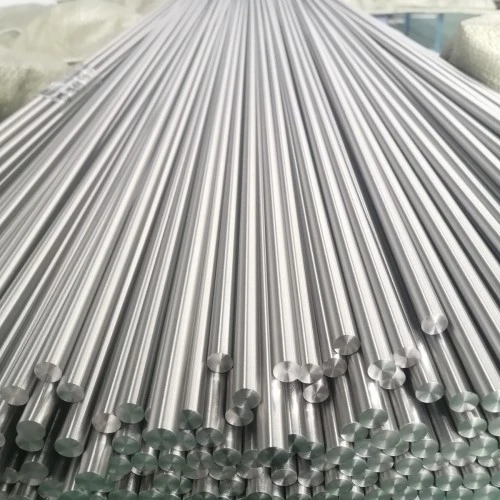
Understanding the Unique Properties of High Temperature Titanium Bars
High Temperature Titanium Bars possess a remarkable combination of characteristics that make them ideal for energy sector applications. Unlike conventional metals that lose structural integrity at elevated temperatures, these specialized titanium products maintain their mechanical properties even when exposed to sustained heat stress. The titanium alloys used in High Temperature Titanium Bars, particularly Ti-6Al-4V and Ti-6Al-2Sn-4Zr-2Mo, demonstrate exceptional performance in thermal environments that would cause traditional materials to fail. These bars can operate continuously at temperatures up to 600°C while retaining their original tensile strength of 860-1100 MPa and yield strength of 790-970 MPa, making them essential components in power generation equipment. The microstructure of High Temperature Titanium Bars undergoes specialized processing that enhances their thermal stability. Through precision forging using equipment such as 2500-ton hydraulic presses and controlled cooling processes in vacuum furnaces, manufacturers create a grain structure that resists thermal degradation. This advanced manufacturing approach ensures that High Temperature Titanium Bars maintain dimensional stability even under thermal cycling conditions common in energy facilities. The bars also exhibit low thermal expansion coefficients, which prevents the development of thermal stresses that could compromise structural integrity during repeated heating and cooling cycles.
Heat Resistance Capabilities in Extreme Energy Environments
The heat resistance of High Temperature Titanium Bars represents their most critical advantage in energy applications. These materials maintain their structural integrity at temperatures where steel components would soften and aluminum alloys would melt. In gas turbine applications, High Temperature Titanium Bars function reliably in combustion zones where temperatures regularly exceed 550°C, providing the durability needed for turbine blade assemblies and rotor components. The titanium alloys retain approximately 90% of their room-temperature strength at 400°C, significantly outperforming competing materials. Energy industry engineers specifically value High Temperature Titanium Bars for their resistance to creep deformation at elevated temperatures. Creep, the gradual deformation of materials under constant stress at high temperatures, poses a serious concern in power generation equipment that operates continuously for years. High Temperature Titanium Bars manufactured with precise tolerance levels of h7 to h9 maintain their dimensional accuracy even after thousands of hours of high-temperature operation. This stability proves essential in applications such as heat exchanger tubes, where even minor dimensional changes could reduce efficiency or cause catastrophic failure. The bars' ability to withstand thermal shock also protects equipment during rapid temperature changes that occur during startup and shutdown procedures.
Superior Strength-to-Weight Ratio for Energy Infrastructure
High Temperature Titanium Bars deliver exceptional strength while maintaining remarkably low density compared to traditional energy sector materials. With a density of approximately 4.5 g/cm³, titanium is roughly 45% lighter than steel while providing comparable or superior strength in many applications. This strength-to-weight advantage becomes particularly valuable in rotating machinery used throughout the energy sector, where reduced mass translates directly to lower inertial forces and improved efficiency. Turbine components manufactured from High Temperature Titanium Bars allow for higher rotational speeds without increasing mechanical stress on supporting structures. The lightweight nature of High Temperature Titanium Bars also facilitates easier installation and maintenance of energy infrastructure. Large-scale power generation facilities benefit from reduced structural support requirements when titanium components replace heavier alternatives. Engineers can design more compact equipment assemblies using High Temperature Titanium Bars, optimizing space utilization in crowded industrial facilities. The combination of high tensile strength and low weight makes these bars ideal for applications ranging from piping systems that transport superheated steam to structural supports for solar thermal collectors. Advanced processing methods, including centerless grinding and precision machining on five-axis CNC equipment, ensure that High Temperature Titanium Bars meet exact specifications while maintaining their inherent weight advantages.
Critical Applications of High Temperature Titanium Bars in Energy Generation
High Temperature Titanium Bars find extensive use across diverse energy generation technologies, each leveraging the material's unique properties to solve specific operational challenges. In nuclear power facilities, these bars serve as critical components in reactor cooling systems where they must withstand both elevated temperatures and corrosive environments. The bars' resistance to stress corrosion cracking makes them invaluable for piping systems that carry high-temperature coolants under pressure. Nuclear engineers specify High Temperature Titanium Bars for applications where material failure could have catastrophic consequences, relying on the material's proven reliability and adherence to ASTM standards. Fossil fuel power plants utilize High Temperature Titanium Bars in numerous high-stress applications throughout their operations. Boiler feed water systems employ these bars in pump components and valve assemblies that must endure temperatures approaching 300°C while resisting corrosion from water treatment chemicals. Steam turbine applications represent another critical use case, where High Temperature Titanium Bars manufactured to precise h7 and h8 tolerances ensure proper fit and function in high-speed rotating assemblies. The bars' low thermal expansion characteristics prevent binding and interference issues that could arise from differential thermal expansion between mating components.
Renewable Energy Systems and Titanium Bar Integration
The renewable energy sector increasingly depends on High Temperature Titanium Bars to improve the efficiency and reliability of next-generation power systems. Concentrated solar power facilities use these bars in receiver systems that absorb focused sunlight to heat working fluids to temperatures exceeding 500°C. The thermal stability of High Temperature Titanium Bars ensures long-term performance in these demanding conditions where continuous thermal cycling occurs daily. Geothermal power installations benefit from titanium's exceptional corrosion resistance combined with heat tolerance, using High Temperature Titanium Bars in well casings and surface equipment exposed to high-temperature geothermal fluids containing dissolved minerals and gases. Advanced biomass energy plants incorporate High Temperature Titanium Bars in combustion chambers and heat recovery systems where temperatures fluctuate rapidly and corrosive combustion byproducts challenge material durability. The bars resist oxidation and maintain structural integrity despite exposure to aggressive chemical environments at elevated temperatures. Emerging energy storage technologies, particularly high-temperature thermal energy storage systems, specify High Temperature Titanium Bars for heat exchanger applications where efficient thermal transfer and material longevity directly impact system economics. The availability of various alloy compositions including Ti-5Al-5Sn-5Zr-5Mo allows engineers to select optimal material specifications for specific operating conditions.
Thermal Management in Power Distribution Equipment
High Temperature Titanium Bars play essential roles in electrical power transmission and distribution infrastructure exposed to elevated temperatures. High-voltage transformer installations use these bars in structural components that must maintain dimensional stability despite heat generated by electrical losses. The bars' low thermal expansion coefficient prevents the development of mechanical stresses that could damage sensitive electrical insulation systems. Underground power cable systems benefit from High Temperature Titanium Bars in cable support structures and junction boxes where accumulated heat from electrical current flow creates challenging operating environments. Substations and switching yards incorporate High Temperature Titanium Bars in equipment racks and mounting structures that support heavy electrical apparatus while withstanding temperature extremes. The material's excellent fatigue resistance ensures reliability even when subjected to thermal cycling caused by varying electrical loads throughout daily and seasonal cycles. High Temperature Titanium Bars manufactured with polished or milled surface finishes provide optimal conditions for electrical grounding applications where consistent contact resistance must be maintained regardless of temperature fluctuations. The bars' compatibility with various protective coating systems allows engineers to further enhance performance in specific applications while maintaining the underlying benefits of titanium's inherent properties.
Manufacturing Excellence and Quality Standards for High Temperature Titanium Bars
The production of High Temperature Titanium Bars requires sophisticated manufacturing processes that ensure consistent quality and performance. Starting with titanium sponge as the base material, manufacturers employ vacuum melting in 3-ton furnaces to create ingots with precise chemical compositions that meet stringent specifications. The vacuum environment prevents contamination that could compromise the material's high-temperature properties. Heavy lathes machine the surface of these titanium alloy ingots to remove any surface irregularities before the material proceeds to forging operations. This initial processing stage proves critical for producing High Temperature Titanium Bars that will perform reliably in demanding energy applications. Forging operations using 50 MN hammering presses and 2500-ton high-speed forging presses transform the machined ingots into bars with refined grain structures optimized for elevated temperature service. The controlled deformation during forging aligns the material's internal structure to maximize strength and thermal stability. Multiple forging passes with precise temperature control ensure uniformity throughout the cross-section of High Temperature Titanium Bars, eliminating internal voids or inclusions that could serve as failure initiation points. Quality control personnel monitor the forging process using advanced measurement equipment including altimeters and projectors to verify dimensional accuracy at each stage.
Precision Machining and Surface Treatment Processes
After forging, High Temperature Titanium Bars undergo precision machining operations that bring them to final dimensions with extremely tight tolerances. Digital machining centers equipped with Japan Mazak five-axis CNC machines produce complex profiles according to customer drawings and specifications. The advanced capabilities of these machining centers allow production of High Temperature Titanium Bars with intricate geometries that would be impossible using conventional manufacturing methods. Centerless grinding operations further refine the surface finish and dimensional accuracy, achieving tolerance levels of h7, h8, or h9 as specified by customers. These tight tolerances ensure proper fit and function when High Temperature Titanium Bars are installed in critical energy infrastructure applications. Surface treatment of High Temperature Titanium Bars significantly influences their performance in high-temperature service. Peeling machines remove surface layers that may have been affected by oxidation during forging, exposing fresh titanium with optimal properties. Polishing operations create smooth surfaces that resist crack initiation and propagation under thermal stress. Some applications require specific surface finishes ranging from as-rolled conditions for maximum strength to highly polished surfaces for reduced friction in moving assemblies. High Temperature Titanium Bars can be supplied with customized surface treatments tailored to specific application requirements, with options for protective coatings that enhance corrosion resistance without compromising thermal performance.
Certification and Testing Protocols for Energy Applications
High Temperature Titanium Bars destined for energy sector applications undergo rigorous testing to verify compliance with international standards. ISO13485:2017 medical management system certification demonstrates manufacturing quality control appropriate for critical applications, while AS/EN 9100 aerospace and defense organization quality management system certification confirms processes meet the highest industry standards. ISO14001 environmental management system certification ensures manufacturing operations minimize environmental impact while maintaining product quality. These certifications provide energy industry customers with confidence that High Temperature Titanium Bars meet or exceed specification requirements. Material testing procedures verify the mechanical properties and chemical composition of each batch of High Temperature Titanium Bars. Tensile testing confirms that bars achieve specified strength levels of 860-1100 MPa tensile strength and 790-970 MPa yield strength. Elongation testing ensures adequate ductility of 10-15% for applications requiring some degree of formability. Chemical analysis verifies alloy compositions match specifications for Ti-6Al-4V, Ti-6Al-2Sn-4Zr-2Mo, or Ti-5Al-5Sn-5Zr-5Mo grades. Non-destructive testing methods including ultrasonic inspection detect any internal defects that could compromise performance. High Temperature Titanium Bars are supplied with complete material certifications documenting test results and confirming ASTM standards compliance.
Economic Advantages of High Temperature Titanium Bars in Energy Operations
While High Temperature Titanium Bars command premium prices compared to conventional materials, their total cost of ownership often proves significantly lower over the operational life of energy infrastructure. The extended service life of titanium components reduces replacement frequency, minimizing maintenance downtime that represents substantial lost revenue for power generation facilities. A turbine blade manufactured from High Temperature Titanium Bars might operate reliably for 100,000 hours or more, whereas alternative materials may require replacement every 30,000-50,000 hours. This durability advantage translates directly to reduced lifecycle costs despite higher initial material investment. Energy efficiency improvements enabled by High Temperature Titanium Bars also contribute to favorable economic outcomes. The lightweight nature of these bars allows designers to optimize equipment configurations for maximum efficiency, reducing energy consumption throughout the operating life of the facility. In rotating machinery, lower inertial masses achievable with High Temperature Titanium Bars decrease parasitic power losses, improving overall system efficiency by measurable percentages. Higher operating temperatures made possible by titanium's thermal stability allow thermodynamic cycles to operate closer to ideal efficiency levels, extracting more useful work from each unit of fuel consumed.
Supply Chain Reliability and Material Availability
Establishing reliable sources for High Temperature Titanium Bars proves essential for energy companies managing large infrastructure projects and ongoing maintenance operations. Manufacturers located in Baoji, China's titanium city, benefit from proximity to primary titanium production facilities, ensuring stable access to raw materials including titanium sponge and titanium ingots. This geographic advantage enables consistent pricing and reliable delivery schedules for High Temperature Titanium Bars even during periods of market volatility. Strategic partnerships with established titanium producers like Baoti Group further strengthen supply chain resilience. Large-scale energy projects require substantial quantities of High Temperature Titanium Bars delivered according to tight construction schedules. Manufacturers with annual production capacities of 160 tons and sophisticated logistics networks can meet these demanding requirements through multiple shipping methods including air freight for urgent deliveries, sea freight for large volume shipments, and express services for critical replacement parts. The availability of diverse product forms spanning diameter ranges from 10mm to 300mm and lengths up to 6 meters allows energy companies to source exactly the configurations needed for specific applications without extensive additional processing. Maintaining adequate inventory levels of commonly specified High Temperature Titanium Bars enables rapid response to customer requirements.
Long-Term Performance and Reduced Maintenance Costs
The exceptional durability of High Temperature Titanium Bars in energy applications directly impacts maintenance budgets and operational planning. Components manufactured from these materials resist degradation mechanisms that plague alternative materials, including oxidation, thermal fatigue, and stress corrosion cracking. This resilience means equipment using High Temperature Titanium Bars requires less frequent inspection and maintenance, reducing both direct maintenance costs and indirect costs associated with facility downtime. Power plants can extend intervals between major overhauls when critical components are made from titanium, improving asset utilization and revenue generation. Predictable performance characteristics of High Temperature Titanium Bars simplify maintenance planning and spare parts inventory management. Unlike materials that exhibit variable degradation rates depending on specific operating conditions, titanium components demonstrate consistent behavior across a wide range of service environments. This predictability allows maintenance managers to implement condition-based maintenance strategies with confidence, replacing components based on actual condition rather than conservative time-based schedules. The result is optimized maintenance spending that eliminates premature replacements while still ensuring reliability and safety in critical energy infrastructure.
Technical Considerations for Specifying High Temperature Titanium Bars
Engineers selecting High Temperature Titanium Bars for energy applications must consider numerous factors to ensure optimal performance and cost-effectiveness. Alloy selection represents the first critical decision, with different titanium compositions offering varying combinations of strength, thermal stability, and corrosion resistance. Ti-6Al-4V, the most widely used titanium alloy, provides excellent general-purpose properties suitable for many energy applications operating at temperatures up to 400°C. For higher temperature service approaching 600°C, near-alpha alloys like Ti-6Al-2Sn-4Zr-2Mo offer superior creep resistance and thermal stability. Ti-5Al-5Sn-5Zr-5Mo represents a beta-rich alloy providing maximum strength with good elevated temperature properties. Dimensional specifications for High Temperature Titanium Bars must account for the specific installation requirements and operating conditions of each application. Diameter selections ranging from 10mm for small components to 300mm for large structural elements accommodate diverse needs across energy infrastructure. Length specifications up to 6 meters minimize the number of joints required in piping systems and structural assemblies, reducing potential failure points. Tolerance requirements of h7, h8, or h9 should be specified based on the criticality of fit and function, with tighter tolerances justified for precision assemblies and looser tolerances acceptable where exact dimensional control is less critical.
Surface Finish Selection and Processing Requirements
The surface condition of High Temperature Titanium Bars significantly influences their performance in specific applications. Polished finishes provide the smoothest surfaces, ideal for components requiring minimal friction or optimal corrosion resistance. The polishing process removes minor surface irregularities that could serve as stress concentrators or corrosion initiation sites. Milled surfaces offer a balance between cost and performance, providing adequate surface quality for most structural applications while requiring less processing than polished finishes. As-rolled surfaces represent the most economical option, suitable for applications where surface finish is not critical to performance. Custom processing of High Temperature Titanium Bars allows engineers to specify exactly the features needed for particular applications. CNC machining capabilities enable production of complex profiles, threaded sections, and precision-machined ends that simplify installation and improve performance. Some energy applications require High Temperature Titanium Bars with specific heat treatment conditions to optimize mechanical properties for particular service environments. Manufacturers with comprehensive processing capabilities including vacuum plasma welding equipment can produce complex assemblies incorporating High Temperature Titanium Bars joined to other components, delivering ready-to-install systems that reduce on-site construction time and ensure quality through factory-controlled processing.
Integration with Existing Energy Infrastructure
Successful implementation of High Temperature Titanium Bars in energy facilities often requires careful consideration of compatibility with existing equipment and materials. Galvanic corrosion concerns arise when titanium contacts dissimilar metals in the presence of electrolytes, necessitating proper isolation or selection of compatible materials for adjacent components. Engineers must account for differences in thermal expansion between High Temperature Titanium Bars and surrounding materials, providing appropriate clearances or flexible connections to accommodate dimensional changes during temperature cycling. The low thermal expansion of titanium compared to steel can be either advantageous or challenging depending on specific design details. Joining High Temperature Titanium Bars to other structural elements requires appropriate techniques that maintain material properties and performance characteristics. Welding titanium demands specialized procedures including inert gas shielding to prevent contamination, but when properly executed produces joints with strength approaching that of base material. Mechanical fastening methods using titanium bolts and fasteners provide reliable connections while avoiding the complexity of welding operations. Some applications benefit from interference fit assemblies where High Temperature Titanium Bars are press-fit into receiving components, creating strong mechanical connections without additional hardware. The selection of appropriate joining methods influences both initial installation costs and long-term reliability of titanium components in energy infrastructure.
Conclusion
High Temperature Titanium Bars represent the optimal material choice for energy industries facing extreme operating conditions, combining exceptional thermal stability, superior strength-to-weight ratios, and outstanding corrosion resistance. These specialized materials enable energy infrastructure to operate reliably at elevated temperatures while reducing maintenance costs and improving overall system efficiency. The proven performance of High Temperature Titanium Bars across diverse energy applications from nuclear power to renewable systems establishes them as essential components for modern power generation facilities worldwide.
Cooperate with XI'AN MICRO-A Titanium Metals Co., Ltd.
XI'AN MICRO-A Titanium Metals Co., Ltd., established in 2017 and headquartered in Baoji, China's titanium hub, stands as your trusted China High Temperature Titanium Bars manufacturer offering comprehensive titanium solutions. As a leading China High Temperature Titanium Bars supplier, we maintain strategic partnerships with Baoti Group, ensuring the best High Temperature Titanium Bars quality at competitive High Temperature Titanium Bars prices. Our ISO13485:2017, AS/EN 9100, and ISO14001 certifications guarantee excellence in every China High Temperature Titanium Bars wholesale order. We offer High Temperature Titanium Bars for sale with custom processing capabilities, meeting your exact specifications through advanced equipment including 3-ton vacuum furnaces and Japan Mazak five-axis CNC machines. As your preferred China High Temperature Titanium Bars factory, we provide comprehensive services including private customization, non-standard parts manufacturing, and drawing processing with fast global delivery. Contact us today at mayucheng188@aliyun.com to discuss your High Temperature Titanium Bars requirements and experience why leading energy companies worldwide trust our expertise for their critical applications.
References
1. Donachie, Matthew J. "Titanium: A Technical Guide, 2nd Edition" ASM International, Materials Park, Ohio, 2000.
2. Peters, Manfred and Leyens, Christoph. "Titanium and Titanium Alloys: Fundamentals and Applications" Wiley-VCH Verlag GmbH & Co. KGaA, Weinheim, Germany, 2003.
3. Boyer, Rodney, Welsch, Gerhard, and Collings, E.W. "Materials Properties Handbook: Titanium Alloys" ASM International, Materials Park, Ohio, 1994.
4. Lütjering, Gerd and Williams, James C. "Titanium, 2nd Edition" Springer-Verlag Berlin Heidelberg, 2007.