




Wire of Purity: Unveiling the Wonders of Pure Titanium Wire
When purchasing materials for important industry uses, procurement managers always have to deal with the same problem: they can't find a single material that is resistant to rust, biocompatible, and very strong without being too heavy. This need is met by pure titanium wire, which is over 99% pure titanium in wire form and meets ASTM B863 standards. This pure material for sale fixes long-standing problems in many fields, ranging from galvanic rust problems in chemical processing to bio-rejection problems in medical implants. Unlike titanium alloys like Ti-6Al-4V, unalloyed titanium wire quickly forms a self-repairing oxide layer when exposed to oxygen. This makes it last much longer in harsh settings. Knowing what makes a product special helps buying teams make smart choices that lower costs over the product's life and improve its performance.
Understanding Pure Titanium Wire: Properties and Composition
What Makes Commercially Pure Titanium Wire Unique?
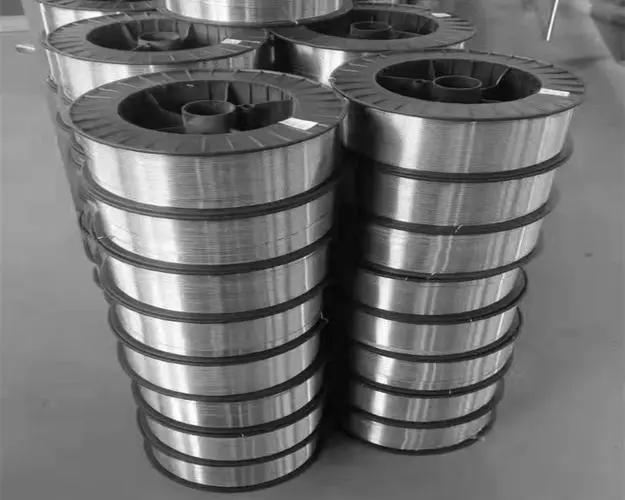
Commercially pure titanium wire is made of pure titanium that doesn't have any other metals added to it. It has very little oxygen, nitrogen, carbon, or iron in it, which is tightly managed to describe its grade. The most common grades are 1 through 4. Grade 2 is the driver of the business because it has the right amount of power and flexibility. Ti wire weighs about 4.51 g/cm³ less than stainless steel wire but has the same tensile strengths, ranging from 240 MPa (Grade 1) to 740 MPa (Grade 4). This edge in density to strength directly saves fuel in aircraft uses and makes the material easier to work with during manufacturing.
Chemical Stability Through Passive Oxide Formation
Unalloyed titanium forms a solid film of titanium dioxide (TiO2) on its own, which is what makes it unique. If this inactive layer gets broken, it grows back within milliseconds. This makes the steel permanently resistant to chloride stress corrosion cracking, which is a common way for stainless steel to break in chemical and sea settings. When buying teams look at different material choices, this ability to fix itself lowers the risk and makes tools last decades longer.
Mechanical Performance Across Temperature Ranges
In addition to being resistant to rust, commercially pure titanium wire has very consistent performance. It can be used in high-temperature situations because its melting point is 1668°C, and its low thermal expansion (8.6 × 10⁻⁶/°C) keeps its shape during thermal cycling to a minimum. The material keeps its shape in very cold temperatures and is not magnetic, which is important for sensitive electrical systems. Because of these qualities, titanium wire can't be used in places where stainless steel or aluminium metals would not work well or would need to be replaced often.
Applications and Benefits of Pure Titanium Wire in Industry
Medical Device Manufacturing Excellence
Biocompatibility is what determines the choice of materials in the medical field. Because it doesn't release any harmful ions, our commercially pure titanium wire is the standard for medical implants, oral braces, and orthopaedic fixing devices. Titanium is accepted by the body with little inflammation, which lowers the rejection rates that happen with other metals. Medical device procurement managers like this material because it meets ASTM F67 standards for implant-grade materials and is flexible enough to make complicated wire shapes. The radiolucency of the material makes it possible to get clear images during tracking after surgery, which adds practical value and has a direct effect on patient results and the time it takes for regulatory approval.
Aerospace and Defense Applications
Every gram counts in aircraft engineering. Pure titanium wire is used as bolt stock, safety wire, and spring material in engine parts where other materials would be too heavy or break when the engine shakes. Its ability to resist wear under repeated loads and its ability to work reliably at temperatures ranging from -253°C to 300°C make it an essential material for aeroplane structural parts and power systems. Defence companies ask for Grade 2 and Grade 4 wire in particular for AS9100-certified uses, where batch uniformity and tracking have a direct impact on mission readiness. The extra cost compared to stainless steel is worth it because it saves money on fuel and upkeep over time.
Chemical Processing and Industrial Equipment
Every day, chemical production plants have to deal with hostile media. Where wet chlorine, organic acids, and high-salinity water would quickly deteriorate stainless steel, commercially pure titanium wire finds widespread use in heat exchangers, desalination plants, and reactor parts. Because the material doesn't rust or crack, it doesn't need to be shut down unexpectedly, which is a big problem for businesses that use ongoing processes. Maintenance teams say that service lives are longer than 25 years in places where other materials needed to be replaced every 3 to 5 years. This makes the starting cost of the materials into long-term business saves, especially when shutdown costs and replacement labour are taken into account.
Consumer and Specialty Markets
Pure titanium wire is used in high-end market goods in addition to heavy industry. Frames for glasses made of this material are very expensive in optical stores because they are lightweight, comfortable, and hypoallergenic. Jewellery makers like its natural shine and ability to avoid rust, especially for pieces that will be worn in water activities. Titanium wire is used by companies that make sporting goods in fishing leads, tennis stick strings, and shooting parts where the strength-to-weight ratio affects performance directly. These uses show that materials can be used in a lot of different ways, going beyond the usual limits of industry.
Welding, Standards, and Quality: Ensuring Optimal Use of Pure Titanium Wire
Critical Welding Parameters and Contamination Prevention
To weld commercially pure titanium wire, the atmosphere must be carefully controlled. Because the material reacts badly with oxygen, nitrogen, and hydrogen at high temperatures, it needs to be surrounded by an inert gas cover, usually 99.99% pure argon, on both the weld face and root sides. When contamination happens during welding, it shows up as weakening, discolouration, and failure before its time. We tell buying teams to define AWS A5.16 ERTi-1 or ERTi-2 replacement wire types to make sure they work with the base metal chemistry. Porosity that weakens the weld in pressure-containing uses can be avoided by properly preparing the joint, which includes liquid degreasing and mechanical cleaning.
Compliance with International Material Standards
Material tracking is the first step in quality security. ASTM B863 standards say that commercially pure titanium wire has to meet certain chemical makeup limits, mechanical qualities, and surface finish requirements. More ASTM F67 compliance is needed for medical uses, while AS9100 quality system approval is needed for aircraft buying. To make sure we meet these strict standards, MICRO-A's manufacturing method includes keeping track of heat lots, mill test records, and third-party proof. Purchasing managers should ask for certified material test reports (CMTRs) that include tensile testing, chemical analysis, and measurement proof. These reports are important for audits and failure reviews because they show what tests were done and how they were done.
Diameter Selection and Gauge Considerations
The choice of pure titanium wire thickness has a direct effect on the success of production. Our product range goes from 0.1mm to 10mm, so it can be used for everything from microsurgical stitches to solid aircraft parts. Smaller sizes (0.1–1.0 mm) give you the most options for complicated shaping tasks, but they need to be handled in a certain way to keep them from hardening. Larger sizes (5–10 mm) make structures stronger, but they need more creating force and heat treatment thought. The best width to use depends on how the stress is distributed in the application, how much wear is acceptable, and how the product can be made. This choice impacts both the ease of production and the performance of the finished product.
Procuring Pure Titanium Wire: A Practical B2B Buying Guide
Evaluating Supplier Capabilities and Certifications
There's more to choosing a titanium wire provider than just looking at prices. Professionals in procurement have to check that a company has the right manufacturing skills, such as vacuum freezing tools, accurate cold drawing, and a system for quality control. At MICRO-A, our 3-ton vacuum oven controls the interstitial material, and our 2,500-ton hydraulic press makes sure that the mechanical features stay the same from one production run to the next. Our dedication to meeting controlled industry standards is shown by our ISO13485:2017 medical certification and AS9100 aircraft approval. Ask for facility checks and process paperwork to make sure that providers keep up the level of expert knowledge that your requirements call for.
Understanding Total Cost of Ownership
The initial cost of materials is only one part of buying economics. Pure titanium wire for commercial use usually costs more per kilogram than options made of stainless steel, but a lifetime study shows significant savings. Less weight means less money spent on shipping and less work needed for assembly. Replacement rounds and the downtime that comes with them are eliminated by corrosion protection. When used in medicine, biocompatibility keeps expensive product refunds from happening. When comparing quotes, you should find the total cost of ownership, which includes the cost of material waste during production, the cost of keeping supplies, and the risk of a guarantee. This thorough study often explains why titanium costs more because it is more valuable in the long run.
Customization Options and Technical Support
These days, buying things requires more freedom than just looking at a catalogue. Our tech team works with customers to create special wire specs that meet the needs of each application. We offer special surface processes, mechanical property goals, and packing options that are made to work with automatic feeding systems. Customisation based on drawings makes sure that the dimensions are exact for CNC cutting and additive manufacturing material. Technical help is given at all stages of a product's existence, from choosing the materials to fixing problems during production. With this relationship method, providers stop being transactional sellers and become strategic partners.
Logistics and Supply Chain Reliability
Delivery trustworthiness for pure titanium wire has become an important factor in buying things because of problems in the global supply chain. We keep a smart stock of popular grades and sizes, which lets us meet pressing needs quickly. Our transportation network can handle both air freight for urgent deliveries in the aerospace industry and containerised ocean shipping for large orders in chemical processing. Minimum order amounts depend on the specification. Standard grades are shipped in 100-kilogram increments, while special standards may need bigger promises to support setting up production. Framework deals should be made with chosen suppliers by procurement teams to make sure they get supplies when the market is short while negotiating terms based on volume.
Choosing the Right Pure Titanium Wire Supplier
Certification Verification and Quality Documentation
Picking a supplier requires a lot of careful research. Check that ISO9001 quality management systems meet the basic standards, and then make sure that certifications specific to your business match the area where you want to use the software. Medical device makers need ISO13485 approval to show that their factories are controlled and that they follow strict tracking rules. Aerospace companies require AS9100 registration along with proof of systems for controlling and fixing nonconforming materials. Environmental compliance is becoming more important. Our ISO14001 certification and environmental assessment training handle worries about sustainability that affect how companies buy things. Instead of taking direct promises, ask for copies of the certifications and audit reports.
Manufacturing Capability Assessment
Product uniformity is directly affected by the tools used in production. Ask about the heating technique. Vacuum arc remelting (VAR) makes the chemicals more uniform than other ways. The width sizes and clarity of the surface finish are limited by the cold drawing powers. Our cutting edge CNC machines allow for precise cutting and end preparation, which lowers the need for extra processing. Ask possible providers about the testing tools they have, such as spectrometers for checking the chemistry, general testing machines for checking the mechanical properties, and the ability to view the sizes of things. Manufacturing depth is what sets capable partners apart from dealers of goods.
Customer References and Industry Reputation
Past stability tells us what to expect in the future. Ask for customer references from companies in the same line of work as you, preferably ones that have similar quality standards and order numbers. Get in touch with these sources immediately to talk about uniformity in delivery, professional response, and the efficiency of problem settlement. Individual endorsements aren't the only way to build a name in an industry. Membership in professional organisations, writing for technical publications, and giving talks at conferences are all signs of thought leadership and a dedication to always getting better. Leading companies that make aircraft and medical equipment have given us positive feedback, which shows that we consistently deliver what buying teams need.
Long-Term Partnership Benefits
Strategic relationships with suppliers create value that goes beyond a single transaction. Preferred providers take the time to learn about your unique application needs and will often offer ways to make things better or cut costs. They hold back production capacity during times of high demand and offer flexible payment terms that make it easier to handle cash flow. When people work together on technology, they often come up with new processes, applications, or ways to make things run better that are intellectual property that helps both sides. Both sides have to be committed to these partnerships in order to work, but the stronger supply chains and economic benefits that come from them make the investment worth it.
Conclusion
Commercially pure titanium wire is a good choice for buying workers who have to deal with tough industry uses. Its unique mix of resistance to rust, biocompatibility, and high strength-to-weight ratio solves important problems in the aircraft, medical, chemical processing, and speciality markets. To do good buying, you need to know about the qualities of the materials, check the skills of the suppliers, and figure out the total cost of ownership, which goes beyond the initial price. When titanium wire is bought from qualified makers with a history of technical depth, it gives a measured return on investment (ROI) through longer service life, less upkeep, and better product performance. Because the material can be used in many ways and is reliable, it is an important part of current industrial supply lines.
FAQ
Why should you buy commercially pure titanium wire instead of stainless steel wire?
Titanium that is commercially pure is better at resisting rust than stainless steel in salt conditions, where stainless steel gets pitting and cavity corrosion. It has a 60% lower mass than steel, which makes it lighter for use in aircraft and cars. Biocompatibility means that medical gadgets that are implanted must be made of titanium. Even though it costs more than stainless steel at first, lifespan analysis shows that it is cheaper in the long run because it lasts longer and doesn't need to be replaced as often.
How many items do I need to buy in order to qualify for a large purchase?
Standard grades usually need at least 100 kilograms to ship, but the exact amount needed depends on the width and surface finish. For custom specs, bigger orders—often 500 kilograms—may be needed to cover the costs of setting up the production line. Framework deals with sellers can lower minimums by letting you buy more at once. We work with buying teams to set up orders in a way that balances the cost of stocking with the price per unit and the security of supply.
What kind of welding gear works best with titanium wire?
Gas tungsten arc welding (GTAW/TIG) is the best way to control the making of titanium wire. High-purity argon shielding (99.99%+) with following shields and backing gas systems must be part of the equipment. Plasma arc welding is best for bigger pieces that need to go deeper. Spot-welding thin wire structures together with resistance welding works. To get full-strength joints that meet code standards, all ways need to make sure that pollution doesn't happen by controlling the atmosphere and prepping the surface.
Partner with MICRO-A for Premium Pure Titanium Wire Solutions
To get high-performance titanium parts, you need a seller with both technical know-how and excellent manufacturing skills. Commercially pure titanium wire made in our state-of-the-art facilities in Baoji, China, which is known as the "titanium capital," is supplied by MICRO-A Titanium Metals. Our wide range of skills includes vacuum freezing, precise cold drawing, and custom manufacturing. This means that we can guarantee the same high standard for sizes from 0.1mm to 10mm. Whether you need aerospace-grade bolt stock, medical implant wire, or corrosion-resistant industrial parts, our engineering team can customise based on drawings, send out samples quickly, and provide prompt technical support throughout the lifespan of your project. As a reliable source of pure titanium wire with strong relationships that keep supply lines stable, we can give you low prices without sacrificing the material tracking and approval paperwork that your quality systems need. You can talk to our experts about your needs, get material test results, or set up facility checks by emailing mayucheng188@aliyun.com. Find out how our pure titanium wire for sale can help you turn problems with buying things into benefits in the market.
References
American Society for Testing and Materials. "ASTM B863-20: Standard Specification for Titanium and Titanium Alloy Wire." West Conshohocken, PA: ASTM International, 2020.
Donachie, Matthew J. "Titanium: A Technical Guide, 2nd Edition." Materials Park, OH: ASM International, 2000.
Lütjering, Gerd, and James C. Williams. "Titanium: Engineering Materials and Processes." Berlin: Springer-Verlag, 2007.
American Welding Society. "AWS A5.16/A5.16M:2018: Specification for Titanium and Titanium-Alloy Welding Electrodes and Rods." Miami, FL: American Welding Society, 2018.
Boyer, Rodney, Gerhard Welsch, and E.W. Collings, editors. "Materials Properties Handbook: Titanium Alloys." Materials Park, OH: ASM International, 1994.
Schutz, R.W., and D.E. Thomas. "Corrosion of Titanium and Titanium Alloys." In Corrosion: Fundamentals, Testing, and Protection, Vol. 13A, ASM Handbook. Materials Park, OH: ASM International, 2003.