




The Role of ASTM B348 Titanium Bars in Modern Engineering
When procurement managers look for materials for mission-critical uses, they often run into the same problem: they need to find parts that are very strong without being too heavy or corrosive. ASTM B348 titanium bars have become the best option because they offer a standard set of requirements that get rid of material differences and ensure success in the medical, oil and gas, automotive, and aerospace industries. These bars are the best for engineers who need accuracy, dependability, and products that meet international quality standards. They come in types ranging from commercially pure titanium to high-strength alloys like Ti-6Al-4V.
Understanding ASTM B348 Titanium Bars: Specifications and Properties
Defining the ASTM B348 Standard
ASTM B348 sets the technical standards for bars, billets, and wire items made of titanium and titanium alloys. This standard, which was made by ASTM International, includes both commercially pure grades that aren't alloyed (Grades 1 through 4) and alloyed grades, like Grade 5 (Ti-6Al-4V) and Grade 23 (Ti-6Al-4V ELI). The standard sets tight limits on the chemical makeup, mechanical properties, and size variations. This makes sure that every batch meets the same quality standards. This guideline is used by procurement professionals to reduce the risks that come with non-standardized materials, such as hydrogen embrittlement, impurity segregation, and structure inconsistencies.
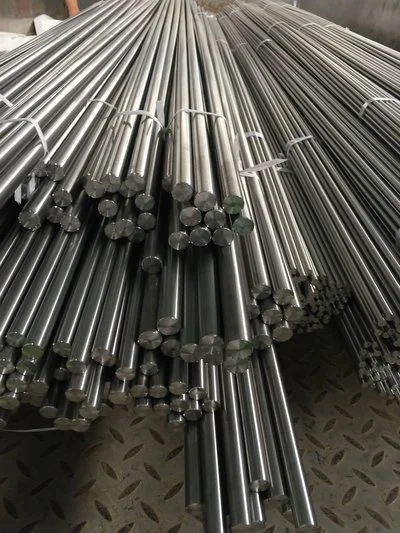
Our ASTM B348-compliant bars are made at XI'AN MICRO-A Titanium Metals Co., Ltd. They come in sizes from 6mm to 250mm, lengths up to 6 meters, and can be customized to fit your needs. Our Grade 2 bars are easy to shape and join, and our Grade 5 bars have tensile strengths of over 895 MPa, making them perfect for load-bearing uses where weight reduction is very important.
Key Mechanical and Chemical Properties
ASTM B348 titanium bars work better than other bars because of their unique set of properties. Our most-requested alloy, Grade 5, has a density of 4.51 g/cm³, which is about 60% that of steel. However, it has tensile strengths that are about the same as many heat-treated steels. This alloy has a minimum yield strength of 828 MPa and can withstand temperatures up to 400°C without losing its shape. This makes it perfect for use in chemical processing and aircraft propulsion systems where high temperatures are present.
Controlling the chemical makeup is just as important. ASTM B348 sets strict limits on interstitial elements. For example, the hydrogen content must stay below 0.015% to keep the material from becoming weak, and the oxygen amounts must be controlled to keep the strength and flexibility in balance. Our quality control lab does full chemistry research on every heat number and gives out EN 10204 3.1 Mill Test Certificates that show what each bar is made of and the results of its mechanical tests. These papers are proof that the rules were followed, which is important for procurement teams that need to be able to track materials in industries that are controlled.
Dimensional Tolerances and Surface Finishes
Tight limits on dimensions are needed for precision cutting. Our titanium bars meet h7, h8, and h9 tolerance grades, which means they waste less material during CNC processes and need fewer changes afterward. Treatments on the surface are also very important. We offer black (as-forged), pickled (acid-cleaned), peeled (rough machined), and centerless ground treatments. When the surface needs to be as smooth as possible, like when making surgical instruments or hydraulic piston rods for underwater fishing equipment, ground finishes are very useful.
The manufacturing method has a big effect on the end qualities. For controlled forging, our Baoji plant uses a 2500-ton hydraulic press and a 50 MN punching press to get the best grain structure. Solution treatment and aging (STA) are two types of heat treatment that can be used to make materials stronger for demanding aircraft uses. This level of process control makes sure that each batch is the same, which is very important for procurement managers who are in charge of managing multi-year supply deals.
Applications of ASTM B348 Titanium Bars in Engineering
Aerospace Structural Components
Manufacturers of aerospace parts need materials that can handle high temperature changes, depressurization loads, and toxic air conditions while keeping the weight of the parts as low as possible. Machining is used to make landing gear parts, engine mounts, fastener systems, and airplane structural sections out of titanium bars that meet ASTM B348 standards. The high fatigue strength of the material stops cracks from spreading under cycle loads, which is a way that aluminum alloys have traditionally failed in high-stress areas.
People really like our titanium bar Grade 5 bars because they work well at high temperatures. When used in turbine engines, parts must keep their mechanical qualities at high temperatures for long periods of time, which softens aluminum alloys. At 300°C, the Ti-6Al-4V metal still has about 90% of its strength at room temperature. This lets thinner, lighter shapes that use less fuel be made. We are AS/EN 9100-certified manufacturers, so we can give aircraft quality control systems the paperwork and lot tracking they need.
Medical Implants and Surgical Instruments
Titanium is different from other solid metals used in medicine because it is biocompatible. The extra-low interstitial content of ASTM B348 Grade 23 (Ti-6Al-4V ELI) makes it less likely that permanent implants like hip stems, spine fusion hardware, and oral abutments will cause bad tissue reactions. The low elastic elasticity of the material (about 110 GPa) is more like bone tissue than stainless steel (200 GPa), which means it doesn't protect against stress as well, which can cause bone loss around implants.
Our ISO 13485:2017 approval shows that we follow the rules for making medical devices. We have separate production lines for medical-grade products, and we do extra cleanliness tests on top of the normal ASTM B348 guidelines to make sure they are clean. Manufacturers of surgical instruments also choose our bars to make the handles for scalpels, orthopedic drills, and endoscope tools because they are resistant to rust and can be sterilized.
Oil and Gas Downhole Equipment
Sour gas service settings have a lot of hydrogen sulfide, high temperatures, and very high pressures. These conditions quickly break down normal steels through sulfide stress cracking and pitting corrosion. Titanium bars are very resistant to these processes, which means that valve stems, packer mandrels, and cutting tool parts don't need to be serviced as often. When exposed to chloride-rich brines, the material stays strong, while stainless steels rust in just a few months.
We've provided bars for underwater wellhead equipment that works at depths greater than 3,000 meters, which is a very difficult environment because of the difference in pressure and the exposure to seawater. When engineers combine the ability to resist rust with the ability to maintain strength, they can make lighter, more compact systems that are easier to install and more reliable. Assisting procurement experts with grade choices based on downhole chemistry and temperature profiles is what our scientific team does for material selection.
High-Performance Automotive and EV Components
The move toward electric vehicles in the car business has increased the need for lightweight building materials. Titanium bars are machined into suspension parts, connecting rods, and valve springs for high-performance vehicles. Titanium connecting rods have less mass when they move back and forth, which lets engines go faster without making the vibrations or bearing loads worse. Electric car makers are looking into using titanium for the cases of batteries and to strengthen structures. Less weight directly leads to longer range.
Our fast prototyping services help with the development cycles of cars by providing sample bars and first production runs with lead times that work with iterative design processes. When the right tools and cutting settings are used, the material is very easy to shape into complicated shapes that would be too expensive to make out of ceramics or carbon fiber composites.
Comparing ASTM B348 Titanium Bars with Alternative Materials
Titanium Versus Stainless Steel
When buying something, people often compare titanium to 300-series stainless steels. Titanium is more resistant to corrosion in chloride settings, coastal situations, and acidic process streams than stainless steel, which costs less to make. When you look at them side by side, you can see that Grade 5 titanium is twice as strong as 316 stainless steel. This means that designs can be made that lower the total system weight by 40 to 50 percent in structural applications.
Lifecycle cost analysis for ASTM B348 titanium bar often chooses titanium over other materials, even though it costs more at first. Because of pitting and crevice rust, chemical processing plants that use stainless steel heat exchangers usually have to replace them every 5 to 7 years. Titanium heat exchangers usually work for 20 years or more without breaking down, which saves money on repairs and replacements. We help buying teams do total cost of ownership studies that take into account things like how often something needs to be maintained, how much energy it uses, and how much it costs to get rid of.
Grade 2 Versus Grade 5 Selection Criteria
Which one to use—commercially pure Grade 2 or alloyed Grade 5—depends on the needs of the product. Grade 2 is the best grade for many chemical industry and naval uses because it is easy to shape and weld. Because it costs less per kilogram, it is a good choice for large-scale needs where corrosion protection is more important than final tensile strength.
When design decisions are based on strength-to-weight ratios, Grade 5 (Ti-6Al-4V) is the best option. The addition of aluminum and vanadium raises the tensile strength by about 60% compared to Grade 2. This makes it possible to make parts with smaller cross-sections and lower mass. Grade 5, on the other hand, needs more complex welding and heat treatment methods. Our technical consulting services help buyers choose the right grade based on their performance needs, their ability to make the product, and their budget.
Bars, Rods, and Billets: Selecting the Optimal Form
ASTM B348 covers a number of different product shapes, each of which is best for a different manufacturing process. Bars, which are usually round, square, or hexagonal, are perfect for CNC cutting tasks that need to be precise in terms of size and surface finish. For future hot forging processes, billets, which are larger diameter forgings, are used as feedstock. This lets makers make unique forms while still keeping ASTM B348 traceability.
Because we can cold-roll bars with h7 tolerances, you don't have to do any additional grinding for many precision uses. Our centerless grinding and polishing tools can get surface finishes below 0.8 Ra, which is very high. This meets the strict needs of hydraulic actuators and medical device parts where surface flaws can hurt performance or biocompatibility.
Procurement Insights: How to Source ASTM B348 Titanium Bars?
Identifying Reputable Suppliers
To build ties with skilled titanium providers, you need to check a lot of different competency factors. The basis is set by certifications. For example, ISO 9001 shows basic quality management systems, and AS/EN 9100 certifies controls for aerospace-specific processes. Medical device makers should choose providers that are ISO 13485-certified to make sure that controls for contamination and lot tracking meet legal requirements.
The position of a supply line affects how resilient it is. Baoji, which is in Shaanxi Province, is known as China's titanium production hub because it has supply lines that connect the making of sponges to the making of finished bars. XI'AN MICRO-A Titanium Metals takes advantage of this environment by keeping close ties with Baoti Group and other key producers. This stance lets prices be affordable while also guaranteeing the authenticity of the materials, which is very important because there are so many fake goods in gray market channels.
Certification Documentation and Traceability
Every shipment should have full mill test records (MTRs) that list the chemicals used, the results of any mechanical tests, and the settings for the heat treatment. The exact heat number stamped on each bar is linked to lab analysis data by EN 10204 3.1 certificates, which are an independent way to check. When a supplier is being qualified, procurement teams should ask for sample MTRs to make sure the paperwork is full and the technical skills of the seller are good.
We use our enterprise resource planning system to keep track of all of our titanium bar materials and make sure they can be tracked all the way from the raw material through the forging, heat treatment, machining, and final testing steps. This fine-grained tracking makes it possible to quickly fix quality problems in the field and meets reporting standards in regulated fields. Ultrasonic inspection and dye penetrant examination are two types of non-destructive testing that provide extra quality assurance for important medical and military uses.
Managing International Logistics and Delivery Timelines
When purchasing managers plan foreign shipments, they need to think about lead times that include planning production, holding up quality inspections, export paperwork, and freight travel. As a general rule, it takes between 6 and 12 weeks to get ASTM B348 titanium bars, but this depends on the grade, size, and number. Times may take 14 to 16 weeks if the sizes are custom or if special heat treatments are needed.
We keep a strategic stock of popular grades and sizes to meet urgent needs, and stock things can be delivered in two to four weeks. Our logistics team sets up choices for sending by air, sea, and express, choosing companies based on your time frame and budget. Having the right export paperwork, like business bills, packing lists, and material certifications, makes sure that customs clearance goes smoothly in the countries where the goods are going. We can handle complicated aerospace and military buying rules because we have experience with ITAR-controlled exports and dual-use technology regulations.
Sample Programs and Pre-Purchase Validation
Risk-averse buying strategies use pre-production samples to check the qualities of the materials and the supplier's abilities. We offer free samples of our products so that you can get a good idea of their quality. These examples include full-size bar pieces with typical finishes and test results that can be seen. With this method, your quality assurance teams can do independent compatibility and verification tests before going to large-scale production.
In addition to material samples, rapid prototyping services also make made parts from sample bar stock. Automotive and aircraft development projects can use this feature to get fully finished parts that show that the material works well and can be made. As part of the sampling phase, technical meetings are held to talk about the choice of tools, machining settings, and post-processing needs. This helps you learn more quickly, which speeds up production and lowers the amount of scrap.
Maximizing Performance and Longevity of ASTM B348 Titanium Bars
Machining Best Practices
Titanium in ASTM B348 titanium bar is hard to machine because it doesn't conduct heat well and reacts chemically with cutting tools. To run CNC processes smoothly, you need sharp tools with positive rake angles, a lot of water flow, and slower cutting speeds than with steel. Specific types of carbide tools made for titanium last longer and keep the accuracy of the dimensions. Our expert team helps producers improve cycle times and cut down on tool use by suggesting the best machining parameters for different grades and shapes.
Because work hardening tends to happen when cutting is stopped or the tool is left idle for a long time, it creates work-hardened layers on the surface that speed up tool wear. Correct chip evacuation stops re-cutting and heat building, both of which can damage the qualities of the material. We've built partnerships with companies that make cutting tools so that we can work together on trials to find the best tooling solutions for our bar goods. Customers who are setting up new production processes can use this application information to make them more valuable.
Welding Procedures and Joint Design
When welding titanium, an inert gas screen is needed to keep the atmosphere clean during the molten and high-temperature stages. Gas tungsten arc welding (GTAW) with argon protection is the best way to handle materials Grade 2 and Grade 5. Trailing screens and backup purge stop oxidation on the weld root and newly hardened areas, which are more likely to become weak from absorbing air.
Because Grade 5 has a lot of metal and an alpha-beta phase structure, it needs extra attention. It may be necessary to do a heat treatment after the welding process to get rid of any remaining stresses and improve the microstructure of highly stressed parts. Our metallurgical team can make welding process specs (WPS) that are specific to your joint designs and how they will be used. For companies trying to meet aircraft or pressure vessel codes, we also offer welding qualification help, such as creating procedure qualification records (PQRs).
Corrosion Protection and Surface Treatments
Titanium is naturally resistant to rust because it has a passive oxide film on it, but some harsh conditions need extra protection. Anodizing methods make oxide layers thicker and give them different colors for decoration. This is a common requirement for medical tools and parts that people will see. Thermal oxidation processes make surfaces that are hard and don't wear down easily. This makes them last longer in rough places like pump shafts and valve stems.
Titanium's passive film could be damaged by high-temperature chemical production conditions with fluoride ions or concentrated acids. By knowing your unique exposure conditions, we can suggest the right grade and how to prepare the surface. Regular care should include checking the surface visually for any problems and cleaning it every so often to get rid of buildups that could help rust happen in cracks. Based on your working setting and criticality factors, our application engineering team creates maintenance plans that are just right for you.
Conclusion
Titanium bars made to ASTM B348 standards are a tried-and-true way to solve technical problems where strength, resistance to rust, and weight reduction all need to be addressed. The standard framework makes sure that all the materials are the same, which lets procurement pros buy from many sellers with confidence while still meeting quality standards. These materials offer performance benefits that lead to longer service lives, lower upkeep costs, and higher system stability. They are used in everything from medical implants and offshore drilling tools to structural parts for spacecraft. Successful titanium procurement plans are built on strategic partnerships with suppliers, thorough testing of materials, and expert help that is tailored to each application. As long as businesses keep putting efficiency and environment first, ASTM B348 titanium bars will be an important part of the next age of engineering solutions.
FAQ
What distinguishes Grade 2 from Grade 5 titanium bars under ASTM B348?
Under ASTM B348, Grade 2 titanium is commercially pure and has great resistance to corrosion and shapeability. It can be used in chemical processing and marine uses where middling strength is enough. Grade 5 (Ti-6Al-4V) is an alpha-beta alloy with about 60% better tensile strength. It is chosen for use in aerospace and automotive uses that need to reduce weight and increase load-bearing capacity. It takes more care when soldering Grade 5 steel, but it performs better at high temperatures.
Can ASTM B348 titanium bars be used for surgical implants?
Due to its very low interstitial percentage, Grade 23 (Ti-6Al-4V ELI) under ASTM B348 meets the biocompatibility needs for permanent implants. Surgical tools can be made from Standard Grade 5. Suppliers should keep their ISO 13485 certification up to date and provide material certifications that show they meet ASTM F136 standards for implantable devices. This will make sure that the devices are clean and that they can be tracked.
How do I ensure timely international delivery of titanium bars?
How can I make sure that my titanium bars get delivered on time to other countries? Work with providers who give clear estimates of lead times and have well-established shipping networks. When you place your order, ask for production plans and make sure you know what export documents are needed for the country you're going to. Suppliers who keep popular sizes in stock can offer faster choices. Keep in touch during the whole production process, and if you need something quickly, think about air freight while weighing the cost against how important the deadline is.
Partner with MICRO-A: Your Trusted ASTM B348 Titanium Bar Supplier
XI'AN MICRO-A Titanium Metals offers approved ASTM B348 titanium bars that are made to meet your most challenging needs. We have our main office in Baoji, which is the center of titanium production in China. We use modern manufacturing techniques and strict quality systems to meet military, medical, and industrial standards. We have ISO 9001, AS/EN 9100, and ISO 13485 certifications. Our modern factory has Japan Mazak five-axis CNC machining centers, 3-ton vacuum furnaces, and 2500-ton hydraulic presses. This makes sure that the tolerances are accurate from h7 to h9 and that the surface finishes don't need any extra work. We have Grade 2 and Grade 5 bars with widths ranging from 6 mm to 250 mm and lengths that can be customized. All of our products come with full mill test certificates and can be tracked back to their original sources. To make sure of our high quality standards, you can ask for free samples and expert advice. Email our sourcing specialists at mayucheng188@aliyun.com or visit micro-atitanium.com to talk about your needs. You can take advantage of low prices, quick expert support 24 hours a day, seven days a week, and a history of helping makers in aerospace, medical devices, oil and gas, and cars around the world.
References
ASTM International. (2021). "ASTM B348-13: Standard Specification for Titanium and Titanium Alloy Bars and Billets." West Conshohocken, PA: ASTM International.
Boyer, R., Welsch, G., & Collings, E.W. (2020). "Materials Properties Handbook: Titanium Alloys." ASM International, Materials Park, OH.
Donachie, M.J. (2019). "Titanium: A Technical Guide, 2nd Edition." ASM International, Materials Park, OH.
Lütjering, G., & Williams, J.C. (2018). "Titanium: Engineering Materials and Processes." Springer-Verlag, Berlin Heidelberg.
Peters, M., Kumpfert, J., Ward, C.H., & Leyens, C. (2021). "Titanium and Titanium Alloys: Fundamentals and Applications." Wiley-VCH Verlag GmbH, Weinheim.
Welsch, G., Boyer, R., & Collings, E.W. (2017). "Materials Selection for Titanium Alloys in Aerospace Applications: Mechanical Properties and Corrosion Resistance." Journal of Materials Engineering and Performance, Vol. 26, Issue 4.