



Comparing Grades 1-5 Titanium Sheets: Which is Right for You?
Selecting the wrong titanium sheet grade can cost your project thousands in rework, delays, and performance failures. Whether you're designing aerospace components, medical implants, or chemical processing equipment, understanding the critical differences between Grades 1-5 titanium sheet materials is essential for engineering success. This comprehensive guide breaks down each grade's unique properties, applications, and performance characteristics to help you make the optimal choice for your specific requirements and avoid costly material selection mistakes.

Understanding Titanium Sheet Grade Classifications
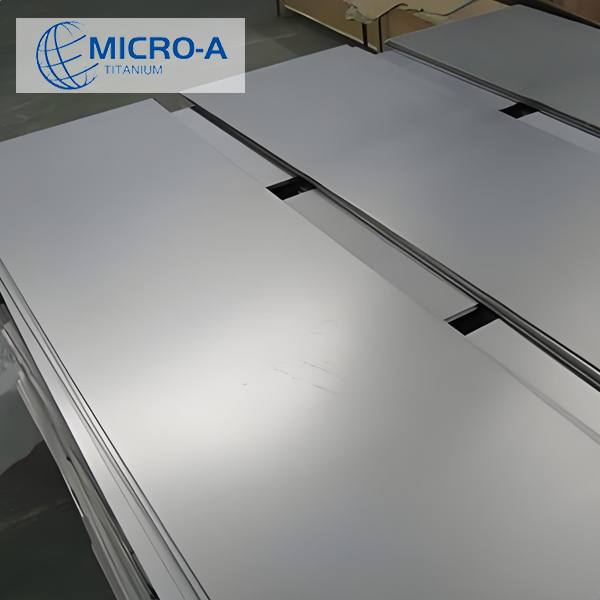
The American Society for Testing and Materials (ASTM) classification system for titanium sheet grades represents a progressive spectrum of strength, corrosion resistance, and formability characteristics. Grade 1 Titanium is favoured for its ductility and corrosion resistance, Grade 2 for its balanced strength and corrosion resistance, and Grade 5 for its exceptional strength and heat resistance. Each grade serves distinct industrial applications where specific material properties are paramount. Commercially pure titanium grades (1-4) contain minimal alloying elements, with their properties primarily determined by interstitial elements such as oxygen, iron, and nitrogen. Titanium Grade 1 contains the least interstitial elements and has the lowest ultimate tensile stress (UTS) i.e. 0.18% wt. O², 0.20% wt. Fe and 240 MPa. Titanium Grade 4, on the other hand, contains higher concentrations of these elements, resulting in increased strength but reduced ductility. The progression from Grade 1 to Grade 5 represents increasing strength capabilities, with Grade 5 being a true titanium alloy containing 6% aluminum and 4% vanadium. This titanium sheet cutting and forming becomes progressively more challenging as grades increase, requiring specialized equipment and techniques. Understanding these fundamental differences is crucial when specifying titanium sheet plate for demanding applications where material performance directly impacts project success.
Grade 1 Titanium Sheet: Maximum Formability
Grade 1 titanium sheet represents the most ductile and formable option in the commercially pure titanium family. With the lowest oxygen content and minimal interstitial elements, this grade offers exceptional corrosion resistance while maintaining superior workability for complex forming operations. The material's outstanding ductility makes it ideal for applications requiring extensive bending titanium sheet operations, deep drawing, and intricate fabrication processes. The chemical composition of Grade 1 titanium sheet includes maximum allowable levels of 0.18% oxygen, 0.20% iron, and 0.03% nitrogen, resulting in minimum yield strength of 170 MPa and ultimate tensile strength of 240 MPa. These relatively low strength values are offset by exceptional elongation properties, typically exceeding 24%, making it the preferred choice for applications where formability takes precedence over strength requirements. Industries utilizing Grade 1 titanium sheet include chemical processing, marine environments, and architectural applications where corrosion resistance and aesthetic appeal are paramount.
Grade 2 Titanium Sheet: The Industry Workhorse
Grade 2 titanium sheet has earned recognition as the "workhorse" of commercially pure titanium grades, offering an optimal balance between strength, formability, and corrosion resistance. This grade contains slightly higher interstitial element levels compared to Grade 1, with maximum oxygen content of 0.25%, resulting in increased strength while maintaining good ductility for most fabrication processes. The mechanical properties of Grade 2 titanium sheet include minimum yield strength of 275 MPa and ultimate tensile strength of 345 MPa, with typical elongation values around 20%. This combination makes it suitable for a wide range of applications including heat exchangers, pressure vessels, and marine components. The material's excellent weldability and moderate cost make it the most commonly specified grade for general industrial applications where both strength and formability are required. Chemical processing industries particularly favor Grade 2 titanium sheet for its outstanding resistance to chloride-containing environments and organic acids. The material's ability to form protective oxide layers provides long-term durability in aggressive chemical environments while maintaining structural integrity under moderate stress conditions.
Titanium Sheet Material Properties and Performance
The transition from commercially pure grades to Grade 5 titanium alloy represents a significant shift in material properties and performance characteristics. While Grades 1-4 rely primarily on interstitial element control for property development, Grade 5 achieves superior performance through strategic alloying with aluminum and vanadium, creating a material with exceptional strength-to-weight ratio and thermal stability.
Grade 3 Titanium Sheet: Enhanced Strength Profile
Grade 3 titanium sheet occupies a middle ground between the high formability of Grades 1–2 and the increased strength requirements of demanding applications. With controlled interstitial element levels, including a maximum oxygen content of 0.35%, this grade delivers a minimum yield strength of 380 MPa and an ultimate tensile strength of 450 MPa, while still maintaining reasonable ductility for most fabrication processes such as bending titanium sheet operations. The material's enhanced strength profile makes it suitable for pressure vessel applications, aerospace components requiring moderate strength, and industrial equipment subjected to higher stress levels. Grade 3 titanium sheet maintains excellent corrosion resistance properties while providing improved mechanical performance compared to lower grades. Applications include chemical processing equipment, marine propulsion systems, and architectural elements requiring both structural integrity and aesthetic appeal. Fabrication considerations for Grade 3 titanium sheet include slightly increased forming forces and potential for spring-back during bending operations. The material requires careful attention to forming parameters and tool design to achieve optimal results while maintaining dimensional accuracy.
Grade 4 Titanium Sheet: Maximum Pure Titanium Strength
Grade 4 represents the strongest commercially pure titanium sheet available, incorporating maximum allowable interstitial element levels to achieve superior strength properties. Grade 4: The strongest of the commercially pure titanium grades, with excellent corrosion resistance but lower ductility. This grade contains up to 0.40% oxygen, resulting in minimum yield strength of 480 MPa and ultimate tensile strength of 550 MPa. The enhanced strength characteristics of Grade 4 titanium sheet make it suitable for applications requiring maximum strength from commercially pure titanium, including aerospace structural components, high-performance sporting goods, and industrial equipment operating under elevated stress conditions. However, the increased strength comes with reduced ductility, typically around 15% elongation, requiring careful consideration of forming operations and joint designs. Applications for Grade 4 titanium sheet include aircraft engine components, high-performance automotive parts, and specialized industrial equipment where the combination of strength and corrosion resistance is critical. The material's biocompatibility also makes it suitable for certain medical applications requiring enhanced mechanical properties.
Grade 5 Titanium Alloy Sheet: Premium Performance
Grade 5 also known as Ti6Al4V, Ti-6Al-4V or Ti 6-4 · not to be confused with Ti-6Al-4V-ELI (Grade 23), is the most commonly used alloy. Grade 5 (Ti-6Al-4V): The most widely used titanium alloy, known for its high strength, good corrosion resistance, and excellent weldability. This alpha-beta titanium alloy achieves exceptional performance through strategic alloying with 6% aluminum and 4% vanadium, creating a material with outstanding strength-to-weight ratio and thermal stability. The mechanical properties of Grade 5 titanium sheet include minimum yield strength of 830 MPa and ultimate tensile strength of 900 MPa, representing nearly four times the strength of Grade 1 titanium. Despite this significant strength increase, the material maintains reasonable ductility with typical elongation values around 10%, making it suitable for moderate forming operations when proper techniques are employed.
Aerospace and High-Performance Applications
Grade 5 is popular in the aerospace industry for aircraft turbines as well as structural components, but it is also used in high-performance engine parts, sports equipment biomedical implants, and more. The exceptional strength-to-weight ratio of Grade 5 titanium sheet makes it indispensable for weight-critical applications where performance cannot be compromised. Aerospace applications include aircraft structural elements, engine components, and landing gear systems where the combination of high strength, corrosion resistance, and fatigue performance is essential. The material's ability to maintain properties at elevated temperatures makes it suitable for engine applications and exhaust systems. Sports equipment manufacturers utilize Grade 5 titanium sheet for high-performance bicycles, golf clubs, and racing components where weight reduction and durability are paramount. The biomedical industry relies extensively on Grade 5 titanium sheet for orthopedic implants, surgical instruments, and prosthetic devices. The material's biocompatibility, combined with exceptional strength and corrosion resistance in body fluid environments, makes it the preferred choice for load-bearing medical applications.
Processing and Fabrication Considerations
Working with Grade 5 titanium sheet requires specialized knowledge and equipment due to its increased strength and work-hardening characteristics. Titanium sheet cutting operations must utilize appropriate speeds, feeds, and tooling to prevent work hardening and achieve acceptable surface finishes. The material's low thermal conductivity can lead to localized heating during machining operations, requiring careful temperature control and coolant application. Forming operations for Grade 5 titanium sheet typically require elevated temperatures to improve ductility and reduce forming forces. Hot forming processes enable complex geometries while minimizing spring-back and potential cracking. Welding procedures must follow strict protocols to maintain material properties and prevent contamination that could compromise performance. Heat treatment capabilities allow Grade 5 titanium sheet to be optimized for specific applications through solution treating and aging processes. These treatments can enhance strength properties or improve ductility depending on application requirements, providing flexibility in material optimization for demanding applications.
Application-Specific Grade Selection Guidelines
Selecting the optimal titanium sheet grade requires comprehensive evaluation of application requirements, including mechanical properties, environmental conditions, fabrication constraints, and cost considerations. Each grade offers distinct advantages for specific applications, and understanding these characteristics is essential for successful material selection and project execution.
Chemical Processing and Marine Environments
For chemical processing applications involving aggressive corrosive environments, Grade 1 and Grade 2 titanium sheet provide exceptional performance with different strength capabilities. Grade 1 offers maximum corrosion resistance and formability for complex heat exchanger designs and reaction vessel components. Grade 2 provides enhanced strength while maintaining excellent corrosion resistance for pressure vessels and piping systems. Marine applications benefit from the natural corrosion resistance of commercially pure titanium grades, with Grade 2 being the most common choice for seawater applications. The material's immunity to chloride stress corrosion cracking makes it ideal for desalination plants, offshore platforms, and marine propulsion systems. Grade 4 may be specified for high-stress marine applications requiring maximum strength from commercially pure titanium. The self-healing oxide layer formed on titanium surfaces provides long-term protection against corrosion without the need for protective coatings or cathodic protection systems. This characteristic significantly reduces maintenance requirements and lifecycle costs in marine and chemical processing environments.
Medical and Biomedical Applications
Medical applications require careful consideration of biocompatibility, strength requirements, and fabrication needs. Grade 1 titanium sheet is preferred for applications requiring maximum formability, such as cranial reconstruction plates and dental applications where complex forming operations are necessary. The material's excellent biocompatibility and corrosion resistance in body fluid environments make it suitable for long-term implantation. Grade 2 titanium sheet serves as the standard choice for many medical applications, offering balanced properties for surgical instruments, orthopedic plates, and cardiovascular devices. The material's moderate strength and good formability enable efficient manufacturing while providing adequate performance for most medical applications. Grade 5 titanium sheet is specified for high-load bearing medical applications including hip and knee joint replacements, spinal fusion hardware, and trauma fixation devices. The exceptional strength and fatigue resistance of this alloy enable long-term performance under cyclic loading conditions typical of orthopedic applications.
Aerospace and Defense Applications
Aerospace applications demand materials capable of withstanding extreme environments while minimizing weight penalties. Grade 2 titanium sheet finds application in non-critical structural components and ducting systems where corrosion resistance and moderate strength are required. The material's excellent weldability enables efficient fabrication of complex assemblies. Grade 5 titanium sheet dominates critical aerospace applications including engine components, structural elements, and landing gear systems. The material's exceptional strength-to-weight ratio, combined with excellent fatigue resistance and thermal stability, makes it indispensable for weight-critical applications. Defense applications utilize Grade 5 for armor systems, missile components, and naval applications where performance cannot be compromised. The ability of Grade 5 titanium to maintain properties at elevated temperatures makes it suitable for engine applications and exhaust systems where thermal cycling and high-temperature exposure are common. Advanced processing techniques enable complex geometries while maintaining structural integrity under demanding service conditions.
Manufacturing and Quality Considerations
XI'AN MICRO-A Titanium Metals Co., Ltd. maintains comprehensive manufacturing capabilities for producing high-quality titanium sheet across all grades. The company's advanced production facilities include sophisticated melting equipment, precision forging capabilities, and state-of-the-art rolling mills capable of producing titanium sheet with exceptional dimensional accuracy and surface quality.
Advanced Production Capabilities
The company's melting workshop utilizes advanced vacuum arc remelting technology to ensure consistent chemistry and eliminate inclusions that could compromise material properties. Heavy lathes machine the surface of titanium alloy ingots to remove any surface irregularities and prepare materials for subsequent processing operations. This attention to detail during primary processing ensures optimal downstream processing and final product quality. Forging operations utilize 50 MN hammering presses and 2500-ton high-speed forging presses to manufacture high-quality titanium billets, slabs, and blocks with consistent grain structure and mechanical properties. The company's forging capabilities ensure batch-to-batch quality stability while maintaining tight dimensional tolerances required for precision applications. Cold rolling operations produce titanium sheets with exceptional surface quality and dimensional accuracy. The rolling equipment can manufacture titanium sheets across the full range of grades with thicknesses from 0.5mm to 100mm and widths up to 2000mm. Advanced process control ensures consistent mechanical properties throughout the sheet thickness and across the width.
Quality Assurance and Certification
XI'AN MICRO-A Titanium Metals Co., Ltd. has successfully achieved multiple quality certifications including ISO13485:2017 medical management system certification, AS/EN 9100 aerospace and defense organization quality management system certification, and ISO14001 environmental management system certification. These certifications demonstrate the company's commitment to quality and its ability to serve demanding industries with stringent requirements. The company's quality control procedures include 100% material traceability, rigorous testing at each production stage, and advanced inspection equipment including spectrometers and ultrasonic testing capabilities. These comprehensive quality measures ensure that all titanium sheet products meet international standards and customer specifications. Strategic partnerships with leading titanium producers, including Baoti Group, provide access to premium raw materials and advanced technologies. This collaboration ensures consistent material quality while enabling cost-effective production for competitive pricing without compromising performance or reliability.
Conclusion
Selecting the appropriate titanium sheet grade requires careful evaluation of application requirements, with each grade offering distinct advantages for specific uses. Understanding these differences also applies when choosing a titanium plate, as both forms must be matched to performance demands to ensure optimal material selection for your project needs.
Cooperate with XI'AN MICRO-A Titanium Metals Co.,Ltd.
As a leading China titanium sheet manufacturer and China titanium sheet supplier, XI'AN MICRO-A Titanium Metals Co.,Ltd. offers the best titanium sheet solutions at competitive titanium sheet prices. Our comprehensive titanium sheet for sale includes all grades with custom processing capabilities. Contact us at mayucheng188@aliyun.com for premium China titanium sheet wholesale options and expert technical support. Bookmark this guide for future reference when selecting optimal titanium sheet materials for your applications.
FAQ
Q: What is the main difference between Grade 2 and Grade 5 titanium sheets?
A: Grade 2 is commercially pure titanium with moderate strength and excellent formability, while Grade 5 is a titanium alloy with significantly higher strength but requires more specialized processing techniques.
Q: Which titanium sheet grade is best for medical applications?
A: Grade 1 offers maximum biocompatibility and formability for complex shapes, Grade 2 provides balanced properties for general medical use, and Grade 5 is preferred for high-load bearing orthopedic implants.
Q: Can all titanium sheet grades be welded easily?
A: Grades 1-2 offer excellent weldability with standard procedures, Grade 3-4 require more careful welding parameters, and Grade 5 needs specialized techniques and post-weld heat treatment for optimal results.
Q: How do I determine the right titanium sheet thickness for my application?
A: Thickness selection depends on structural requirements, forming operations, and application loads. Consult with material specialists to optimize thickness based on specific performance requirements and manufacturing constraints.
References
1. "ASTM B265 Standard Specification for Titanium and Titanium Alloy Strip, Sheet, and Plate" - ASTM International Committee F04
2. "Titanium: A Technical Guide, 2nd Edition" - Matthew J. Donachie Jr., ASM International
3. "Commercially Pure Titanium Grades and Their Applications in Industry" - International Titanium Association Technical Manual
4. "Mechanical Properties and Microstructural Characteristics of Titanium Alloys" - R.R. Boyer, Materials Science and Engineering Research